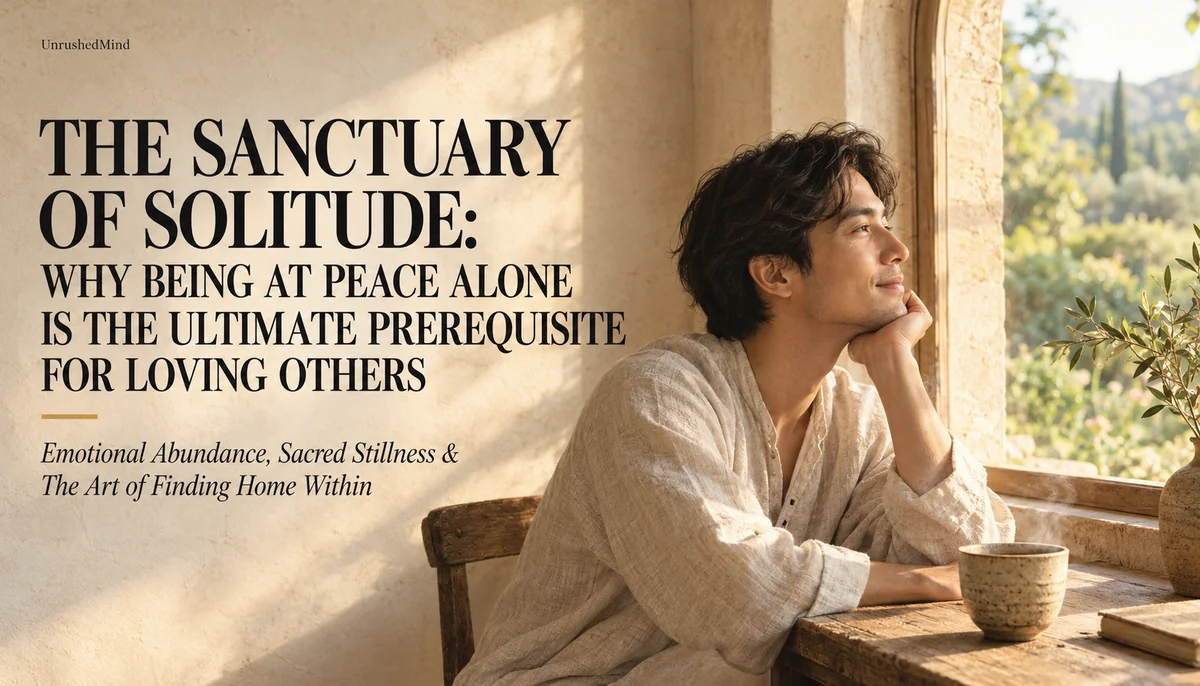
Have you ever returned to an empty home, only to feel an immediate wave of unease? Before taking off your coat, you turn on the television or scroll through social media just to drown out the silence. Your thumb sweeps across glowing glass, searching for a message to confirm that you exist. The quiet of […]
Have you ever returned to an empty home, only to feel an immediate wave of unease?
Before taking off your coat, you turn on the television or scroll through social media just to drown out the silence.
Your thumb sweeps across glowing glass, searching for a message to confirm that you exist.
The quiet of an unoccupied room feels less like rest and more like an indictment of your worth.
In a hyper-connected world, we are conditioned to view being alone as a tragedy of belonging.
We flee into crowded rooms and turbulent relationships simply to escape our own company.
Yet running from silence does not cure isolation.
It only deepens the fracture between who we are and who we pretend to be.
The Cold Void vs. The Fertile Soil: Unraveling the True Nature of Being Alone
Understanding solitude vs loneliness finding peace requires recognizing that loneliness is the painful poverty of self, while solitude is the healing fullness of self. Loneliness aches for outside attention to fill an inner void, whereas intentional solitude creates a restorative sanctuary where you can calm your nervous system, listen inward, and befriend your authentic essence.
In psychological terms, loneliness is driven by deficiency cognition.
When we feel lonely, the nervous system interprets disconnection as a survival threat.
The brain’s alarm circuits flood with cortisol, mistaking quiet for abandonment.
Solitude, by contrast, operates through abundance cognition.
It is not the absence of others, but the grounding presence of one’s own soul.
In solitude, you cease being a consumer of external validation.
You become the gracious keeper of your interior life.
The empty room is no longer an exile; it becomes fertile ground for renewal.
The Modern Fear of Silence: Why Society Pathologizes Solitude
Modern culture fears the solitary mind because a person at peace cannot easily be manipulated.
Our digital economy feeds on chronic restlessness and the constant fear of missing out.
If you believe an unoccupied evening signals unworthiness, you will readily consume and distract yourself.
We collect hundreds of digital acquaintances while our capacity for genuine intimacy withers.
Yet perpetual noise leaves the psyche drained and starved for quiet reflection.
Reclaiming solitude is not an antisocial retreat.
It is an act of emotional sovereignty in a world that profits from your fractured attention.
Comparative Sanctuary: Loneliness (Deficiency) vs. Solitude (Abundance)
To help your nervous system shift from unease to peace when alone, consider these fundamental distinctions:
| Dimension of Experience | The Prison of Loneliness | The Sanctuary of Solitude |
|---|---|---|
| Core Emotional Driver | Fear of abandonment, emptiness, and unworthiness. | Reverence for stillness, self-acceptance, and calm. |
| Nervous System State | Sympathetic arousal: chronic vigilance and anxiety. | Parasympathetic ease: somatic safety and restored calm. |
| Attentional Direction | Frantically outward, scanning for digital approval. | Gently inward, listening to intuition and sensory nuance. |
| Impact on Relationships | Clinging, possessiveness, and emotional desperation. | Unhurried grace, deep empathy, and emotional freedom. |
Three Gentle Practices to Cultivate an Interior Home
Befriending your own presence is a slow, tender practice that cannot be rushed.
Here are three simple rituals to gently turn empty space into an inner sanctuary:
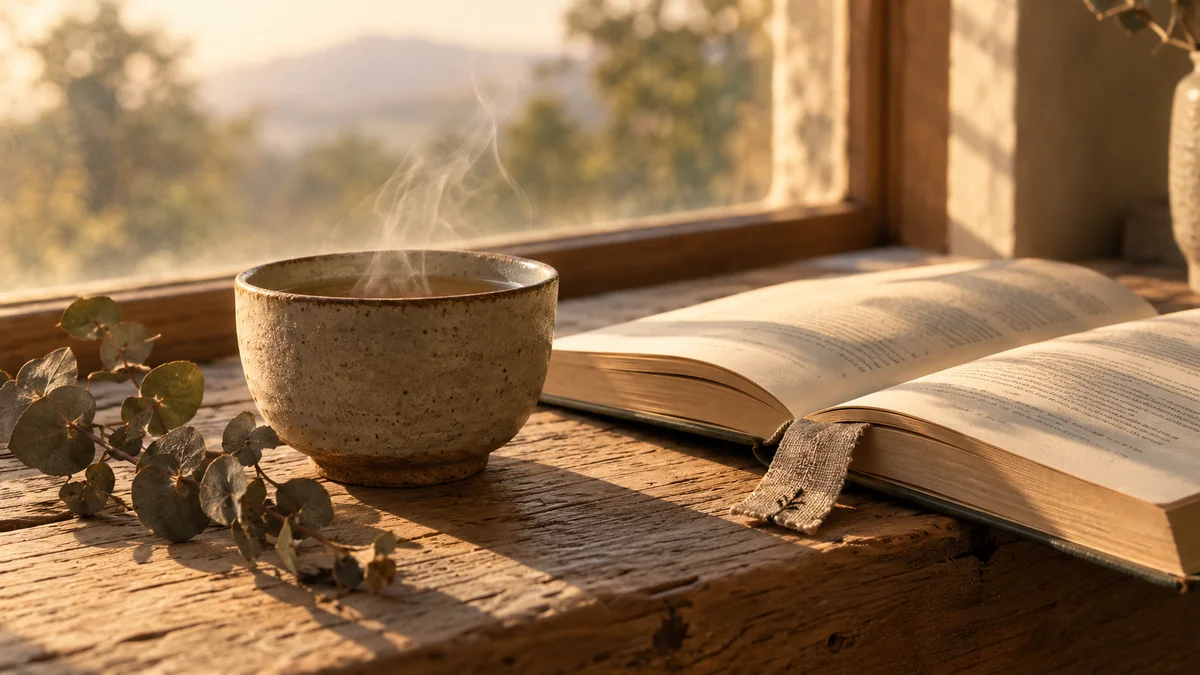
- The Morning Tea of Non-Doing: Spend ten minutes beside a window with a warm drink, free from screens. Let your senses settle into the light, warmth, and rising steam.
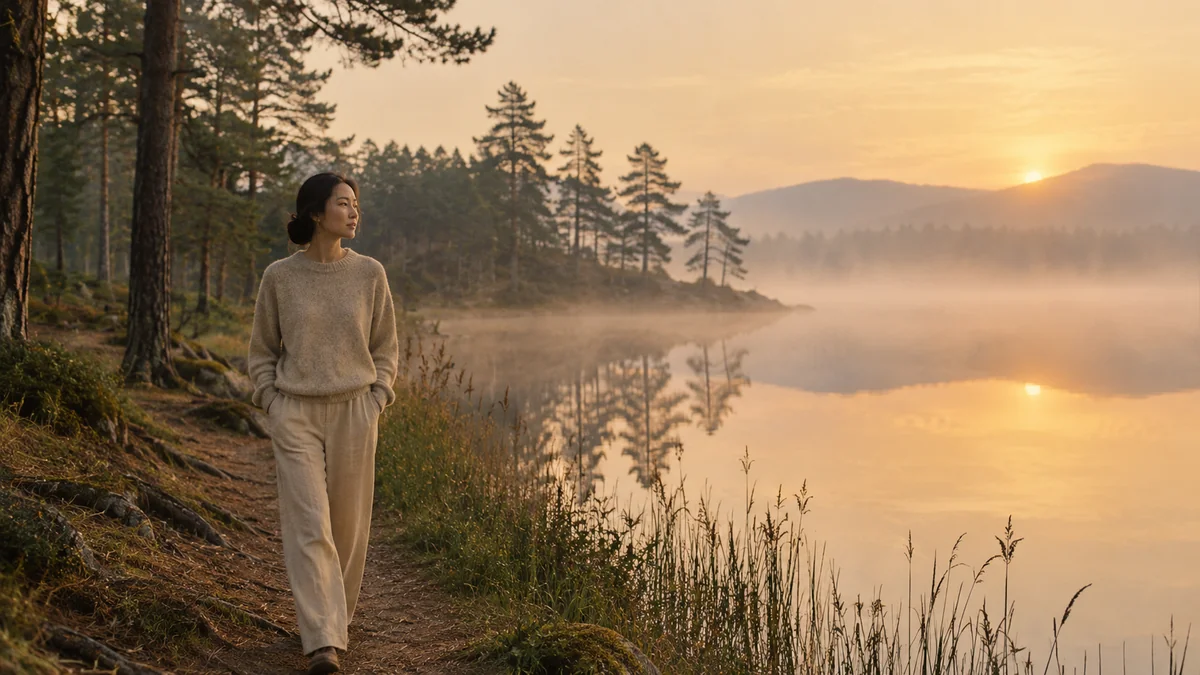
- The Unplugged Contemplative Stroll: Take a thirty-minute walk through nature without earbuds. Let your awareness rest on the rustle of leaves and the rhythm of your footsteps.
- The Mirror of Compassionate Witness: Once each evening, look softly into your own eyes for two minutes without critique. Offer yourself the gentle reassurance you have sought from others.
The Paradox of Connection: Loving from Fullness, Not Famine
The greatest paradox of love is that we cannot truly connect with another until we are at peace standing alone.
When you enter a partnership out of fear of loneliness, you do not see the other person clearly.
You treat them merely as an emotional shield against your own void.
This breeds subtle desperation and an exhausting need for reassurance.
You burden your partner with an impossible task: to be the sole architect of your peace.
True love does not begin with two empty souls grasping at each other.
It begins when two whole individuals meet in the clearing of mutual freedom.
When you have found home within yourself, your heart is no longer a beggar.
You love others not out of starvation, but because your inner well naturally overflows.
Mindful Love & Emotional Healing Grace Note
You cannot be abandoned by another person if you have never abandoned yourself.
When you build a quiet sanctuary within your own heart, being alone ceases to be an exile. It becomes your most reliable haven—a sacred space to which you can always return to remember who you are.
Frequently Asked Questions About Solitude and Relationships
Why do I feel anxious whenever I am left alone in silence?
Silence allows unprocessed emotions to surface without distraction. When you have long avoided your internal landscape, your nervous system initially treats quiet as unfamiliar. With gentle daily exposure, your body learns that stillness is restorative.
How does practicing solitude make me a better partner?
Solitude frees your relationships from codependency and unrealistic demands. When you take responsibility for your emotional grounding, you stop expecting a partner to cure your restlessness, allowing love to flourish with genuine freedom.
What is the difference between healthy solitude and social isolation?
Healthy solitude is chosen intentionally to restore perspective and replenish energy, deepening your capacity for authentic connection. Unhealthy isolation is rooted in shame or fear, pulling you away from meaningful community.
Take a long, deep breath. Soften your shoulders, release the urge to fill the room with noise, and rest peacefully in the quiet sanctuary of your own being.