Have you ever caught yourself looking at a calendar, startled by how quickly another year vanished? You tell yourself that you are working hard now only so that you can truly live later. You promise your soul that once this milestone passes or retirement arrives, you will finally rest. Yet the finish line keeps moving. […]
Have you ever caught yourself looking at a calendar, startled by how quickly another year vanished?
You tell yourself that you are working hard now only so that you can truly live later.
You promise your soul that once this milestone passes or retirement arrives, you will finally rest.
Yet the finish line keeps moving.
The days dissolve into an endless blur of urgent messages, trivial chores, and superficial demands.
You feel a quiet ache—a persistent anxiety that while you were preparing to live, life itself was slipping away.
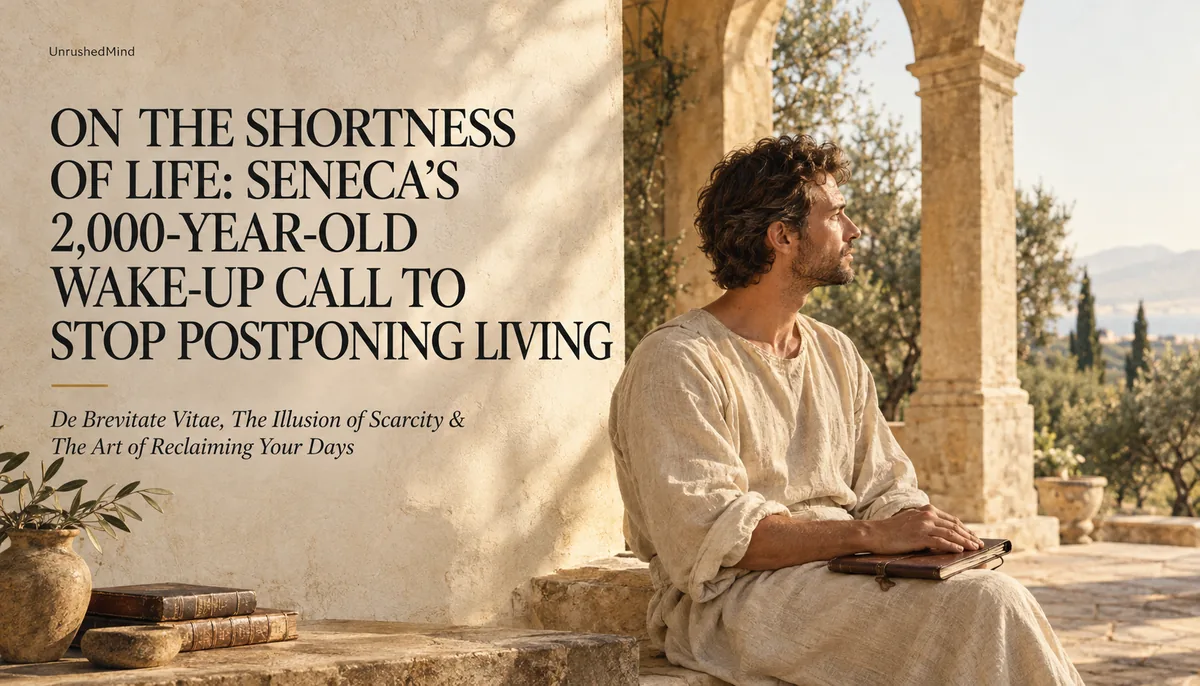
Two thousand years ago, Roman Stoic philosopher Seneca diagnosed this exact condition in his essay De Brevitate Vitae (On the Shortness of Life).
His timeless counsel offers the ultimate antidote to our chronically hurried and distracted world.
Life Is Not Short, but We Make It So: The Core Diagnosis of De Brevitate Vitae
Reflecting on Seneca on the shortness of life reveals that nature has not given us a brief existence, but rather that we squander vast portions of our days on trivia, comparison, and unwanted obligations. Life is abundant and generous for those who govern their attention, yet it slips away unlived when carelessly surrendered to others.
Seneca addressed this treatise to his friend Paulinus, noting that people constantly complain about the brevity of life while throwing their hours away.
“It is not that we have a short time to live, but that we waste a lot of it,” Seneca wrote.
We guard our money and land with locked gates and legal contracts.
Yet when strangers ask for our irreplaceable hours, we give them away without hesitation.
We allow endless meetings and idle distractions to carve up our lifetime as if it cost nothing.
You would never throw gold coins into a crowd for passersby to grab.
Why, then, do you distribute your precious days so cheaply to anyone who asks?

The Illusion of Deferral: The Tragedy of Postponing Life Until Retirement
Among all human habits, Seneca reserved his sharpest warning for deferring life to an imagined future.
We reassure ourselves with ambitious promises: “At fifty I will withdraw into quiet study; at sixty I will finally relax.”
Seneca confronted this naive belief: who gave you a guarantee that you will live that long?
How tragic it is to begin living only when living must end.
What a mistake to save for your soul only the leftover years that cannot be traded for anything else.
Spending decades in frantic burnout, hoping to buy freedom in old age, is a dangerous gamble.
By the time retirement arrives, the body is tired and the mind has forgotten how to enjoy peace.
Postponement is the greatest thief of human happiness.
It steals the only moment you actually possess—the present hour—by dangling the mirage of tomorrow.
Comparative Sanctuary: The Squandered Life vs. The Sovereign Soul
To help restore your clarity, consider how Seneca contrasted the frantic life of the busy person (occupati) with the sovereign soul:
| Dimension of Existence | The Squandered Life (The Busy Slave) | The Sovereign Soul (The Unrushed Sage) |
|---|---|---|
| Relationship to Today | Anxious about tomorrow, perpetually escaping the present. | Anchored in the present hour, receiving each moment as whole. |
| Personal Boundaries | Says yes to every summons, letting others hijack their day. | Guards their threshold, keeping their quiet hours sacred. |
| View of Mortality | Terrified of death, realizing they never truly lived. | At peace with finitude, having made every day rich with meaning. |
| Evening Reflection | Exhausted and hollow, asking where another chaotic day went. | Restful and grateful, closing their eyes in quiet completion. |
Three Stoic Prescriptions to Stop Postponing Living Today
Reclaiming your life does not require moving to a remote monastery.
It begins with simple, intentional choices to honor your time today:
- Guard Your Threshold Fiercely: Every time you agree to non-essential obligations, you sign away an hour of your life. Practice the gentle power of saying no to requests that do not nourish your soul.
- Treat Each Day as a Complete Life: Wake each morning as if stepping into an entire, self-contained lifetime. When night falls, look back on your day with gratitude, knowing you lived fully today.
- Walk with the Timeless Sages: Instead of drowning in endless newsfeeds and digital noise, spend twenty quiet minutes daily reading classic philosophy. You invite the greatest thinkers of history into your daily sanctuary.

Mindful Happiness & Stoic Wisdom Grace Note
You are not running out of time; you are merely letting go of the illusion that time is infinite.
When you stop delaying your peace and inhabit this present hour, an ordinary afternoon becomes rich, expansive, and deeply fulfilling.
Frequently Asked Questions About Seneca and Living Intentionally
How does Seneca define true living versus merely existing?
Seneca explains that surviving many calendar years is not true living. True living requires conscious presence and deliberate stewardship of your mind, whereas existing is merely being pushed along by external demands.
Why did Seneca consider chronic busyness a form of spiritual slavery?
He observed that busy people surrender their sovereignty to external masters. Because they fear stillness, they fill every hour with labor, mistaking motion for real purpose.
How can someone with modern career demands apply Seneca’s advice?
You do not need to quit your career. Set clear digital boundaries, protect an unhurried morning routine, drop unnecessary social obligations, and treat your evening rest as sacred ground.
Take a long, deep breath. Release the urge to postpone your peace, soften your shoulders, and gently inhabit this precious, unrepeatable day.