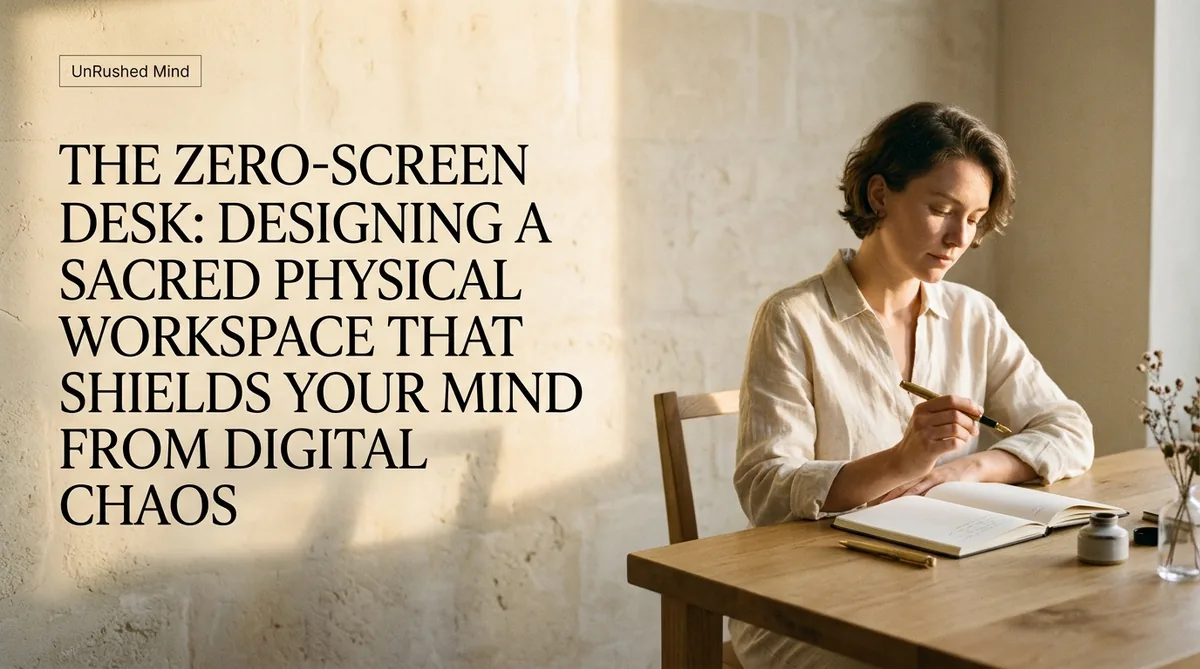
The 30-Second Stillness (Quick Answer): A zero-screen analog desk is a designated physical workspace completely devoid of computers, tablets, and smartphones, engineered purely for uninterrupted contemplative thought and original ideation. Based on the principles of environmental psychology and embodied cognition, physically separating analog thinking from digital execution eliminates reactive micro-distractions and sensory friction. This spatial […]
The 30-Second Stillness (Quick Answer): A zero-screen analog desk is a designated physical workspace completely devoid of computers, tablets, and smartphones, engineered purely for uninterrupted contemplative thought and original ideation. Based on the principles of environmental psychology and embodied cognition, physically separating analog thinking from digital execution eliminates reactive micro-distractions and sensory friction. This spatial boundary allows your prefrontal cortex to downshift from sympathetic hypervigilance into deep, sustainable focus.
You sit down at your workspace with honest intentions: today, you will finally solve that intricate life decision, outline your core strategy, or write with true depth.
Yet before your thoughts can gather, your hands move on automatic pilot.
Your fingers click open your browser; your eyes dart across eighteen open tabs, red badge counters, unread message alerts, and algorithmic notifications.
Within minutes, your desk—which was intended to be an altar of clarity—becomes a frantic cockpit of sensory overload.
By late afternoon, you feel intellectually drained and emotionally restless.
You have answered forty messages and closed twenty urgent pop-ups, yet you have not spent thirty quiet seconds engaged in meaningful contemplation.
You begin to wonder: why does sitting at your desk feel like entering a combat zone?
Your Environment Shapes Your Neural State
Modern productivity culture treats human focus as an isolated mental muscle that can be forced into submission through sheer willpower.
We install website blocking plugins, set strict timers, and place our phones in do-not-disturb mode.
Yet environmental psychology proves that human cognition is profoundly embodied and situated.
Your brain does not operate in a vacuum; it constantly reads the physical cues of its immediate surroundings to decide which neural pathways to activate.
When the exact same glass screen hosts your unpaid invoices, urgent customer inquiries, breaking news headlines, and delicate creative musings, your mind remains trapped in high-alert vigilance.
Every pixel emits an invisible psychological charge of demand, evaluation, and urgency.
You cannot cultivate timeless, peaceful ideas on an altar engineered for instant reaction.
Distraction is not a failure of discipline; it is a symptom of spatial confusion. When you ask one digital screen to be your library, mailbox, meeting room, and private journal, your nervous system can never truly rest.
`
[ THE DUAL-ZONE WORKSPACE ARCHITECTURE ]
The Modern Mind at Work
│
┌─────────────┴─────────────┐
▼ ▼
[ THE ANALOG HAVEN ] [ THE DIGITAL COCKPIT ]
Solid Wood & Heavy Paper Monitors, Keyboard & Silicon
Zero Screens, Zero Wires Connected to the World
│ │
▼ ▼
Generative Stillness Tactical Execution
• Ideation & Synthesis • Email & Administration
• Slow Journaling • Publishing & Code
• Deep Strategic Clarity • Data Communication
│ │
└─────────────┬─────────────┘
│
▼
Restored Cognitive Peace & Deep Focus
`
The Digital Cockpit vs. The Zero-Screen Analog Haven
The remedy for cognitive fragmentation is not another software solution.
It is the deliberate establishment of a Zero-Screen Desk—a physical refuge where silicon and screens are strictly forbidden.
| Dimension | The Digital Cockpit (Modern Default) | The Zero-Screen Analog Haven (Intentional Living) |
|---|---|---|
| Cognitive Stance | Reactive, hyper-vigilant, interrupted by micro-alerts | Generative, contemplative, anchored in the present |
| Focal Horizon | 10 to 30 seconds before switching windows | Sustained 45 to 90 minutes of unhurried deep work |
| Tactile Texture | Cold glass, plastic keys, and eye strain | Solid oak wood grain, textured paper, smooth ink flow |
| Spatial Perimeter | Infinite scrolls; permeable to external demands | Strict physical boundary; impenetrable to notifications |
| Neurological Cost | High cognitive depletion and decision fatigue | Restorative cognitive replenishment and somatic calm |
| Output Character | Rapid, hurried, derivative responses | Intentional, philosophical, durable insights |

3 Disciplines for Crafting Your Zero-Screen Haven
Creating an analog workspace does not require a large estate or expensive antique furnishings.
It requires establishing an uncompromising physical boundary that protects your mind from the digital tide.
1. Enforce the Absolute Silicon Perimeter
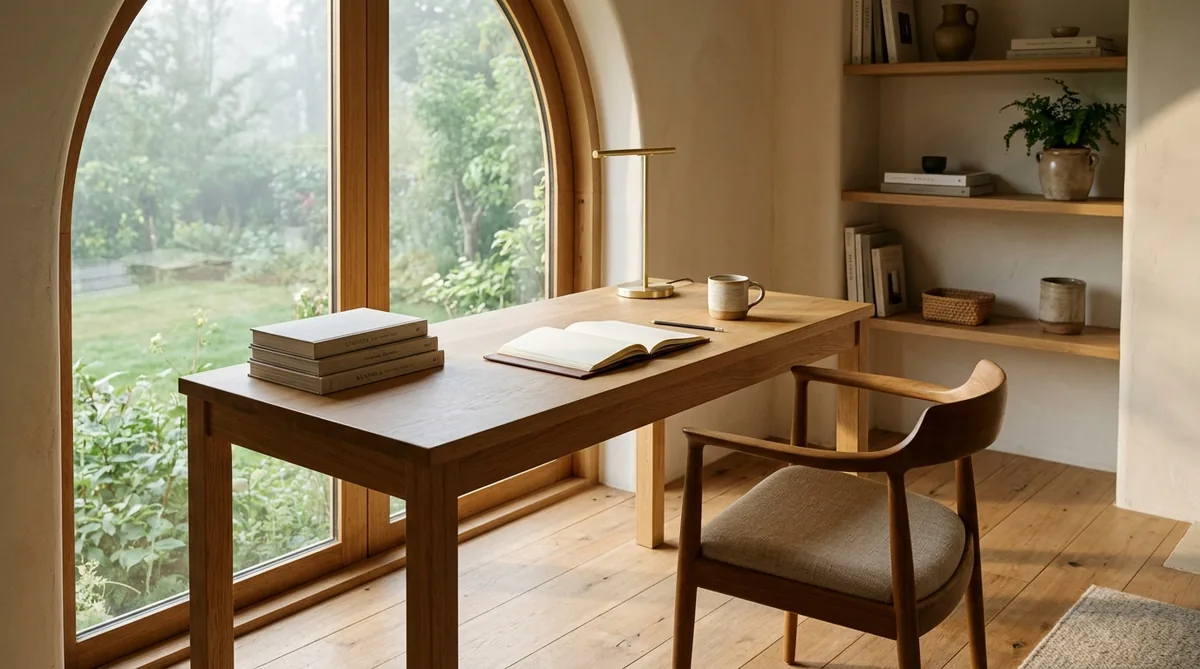
Designate a distinct table, a writing desk, or even a specific wooden corner table where no electronic device may ever rest.
- ✦ The No-Screen Law: No laptop, tablet, smartphone, or smartwatch crosses this perimeter under any circumstance.
- ✦ Invisible Power: Keep charging cables and power cords completely hidden from this space to preserve its clean visual silence.
- ✦ Conditioned Reflex: Over time, merely stepping into this physical zone triggers an automatic neurological downshift from panic into steady presence.
2. Choose Tactile Instruments of Intention
The friction of physical tools is not a flaw; it is the cognitive engine that deepens your understanding.
- ✦ The Friction of Ink: Writing by hand with a smooth fountain pen forces synthesis and emotional clarity, preventing mindless copying.
- ✦ Heavyweight Paper: Choose unlined cotton paper or a bound linen notebook that offers satisfying tactile resistance.
- ✦ Warm Illumination: Use a dedicated reading lamp fitted with a warm 2700K incandescent bulb to create a comforting, golden pool of light.
3. Establish the 30-Minute Morning Solitude Ritual
Begin your workday at your zero-screen desk before touching a single digital device.
- ✦ Pre-Digital Mind: Sit quietly with a warm ceramic mug of tea and your notebook during your first half-hour awake.
- ✦ Clarifying the Essential: Sketch your primary thoughts, process lingering anxieties, and determine your single true priority for the day.
- ✦ Entering with Sovereignty: When you finally open your laptop, you enter the digital world with an anchored mind rather than a reactive posture.
🌿 The Gentle Takeaway: Reclaiming Your Workspace
✦ Create the Boundary: Carve out one small physical surface where digital devices never enter.
✦ Embrace Analog Slowness: Allow the tactile glide of pen on paper to clarify your deepest thoughts.
✦ Claim Your Morning: Dedicate your first thirty minutes to analog stillness before opening the digital world.
Mindful Reflection Notice
A Gentle Mental Wellness Notice: This essay is written for philosophical contemplation and intentional lifestyle design. Creating an analog workspace is a soothing practice to ease cognitive fatigue and screen exhaustion. If you experience severe chronic anxiety, clinical burnout, or debilitating attentional difficulties, please consult a licensed healthcare professional or mental health counselor for comprehensive care.
Frequently Asked Questions (AEO & Search Intent)
What if I live in a small apartment and don’t have room for two separate desks?
You do not need two separate rooms. You can create a zero-screen station at a small dining table corner, an armchair with a wooden lap desk, or by transforming your existing desk using a physical ritual. Clear away your keyboard and monitor under a simple linen dust cover, place a desk pad down, and light a small candle to signal that the space is now purely analog.
Why is writing on physical paper superior to typing in a blank distraction-free text editor?
Typing is so effortless that we often transcribe thoughts without fully evaluating them, leading to superficial ideation. Hand-writing on paper engages motor cortex pathways and creates natural biological resistance. This friction forces you to slow down, summarize, and reflect deeply on the meaning of every sentence.
How do I integrate analog notes back into my digital work without losing momentum?
Keep a simple transition routine. Once your analog contemplation session is complete, take two minutes to photograph your key mind map or type the core takeaway directly into your task system. View your analog desk as the thinking laboratory and your digital screen merely as the delivery vehicle.