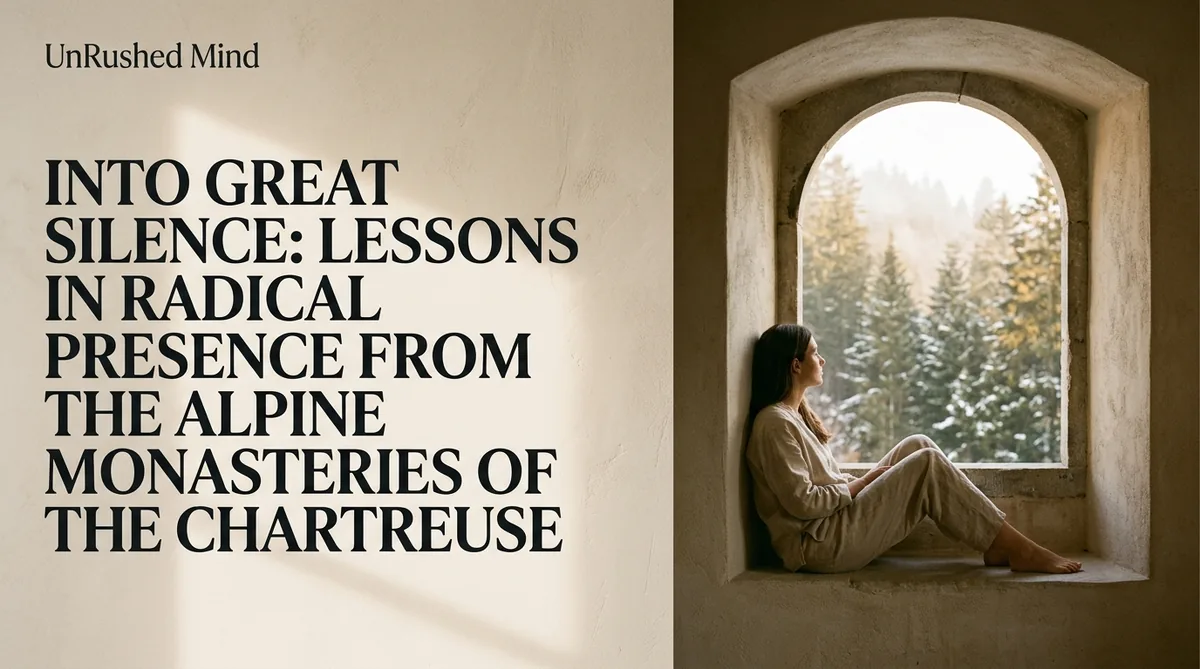
When was the last time you experienced true, uninterrupted silence? Not merely the quiet of a closed bedroom, but a stillness so profound that the hum of mental chatter finally dissolved. For modern souls, silence has become an endangered experience. We wake to alarms, commute through sirens and traffic, and fill every empty crevice of […]
When was the last time you experienced true, uninterrupted silence?
Not merely the quiet of a closed bedroom, but a stillness so profound that the hum of mental chatter finally dissolved.
For modern souls, silence has become an endangered experience.
We wake to alarms, commute through sirens and traffic, and fill every empty crevice of our day with podcasts, notifications, and endless opinion threads.
Even in solitude, our minds remain crowded with invisible voices.
We carry an unspoken fear that if the world goes quiet, we will be forced to confront our own restlessness.
Yet high within the rugged limestone crags of the French Alps, a timeless community has preserved another way of inhabiting the earth.
The Acoustic Pollution of Modern Life: Why Noise Is Exhausting Your Soul
We often recognize the toll of physical fatigue, but we rarely diagnose sensory and cognitive noise pollution.
Your brain was never evolved to process thousands of competing signals every waking hour.
When noise is relentless, the sympathetic nervous system remains in low-grade vigilance, treating constant stimulation as an environmental threat.
Monastic sacred silence—practiced for nearly a millennium by the Carthusian monks of the Grande Chartreuse—is an intentional return to radical presence.
It is the realization that silence is not an empty vacuum, but a restorative vessel that allows your soul to catch up with your body.
In our frantic culture, we mistake constant talking for connection and relentless noise for living.
Yet as the monks have shown across centuries, words gain power only when they emerge from a spacious pool of quietude.
When you remove trivial chatter, you suddenly regain the capacity to see, listen, and truly inhabit your life.
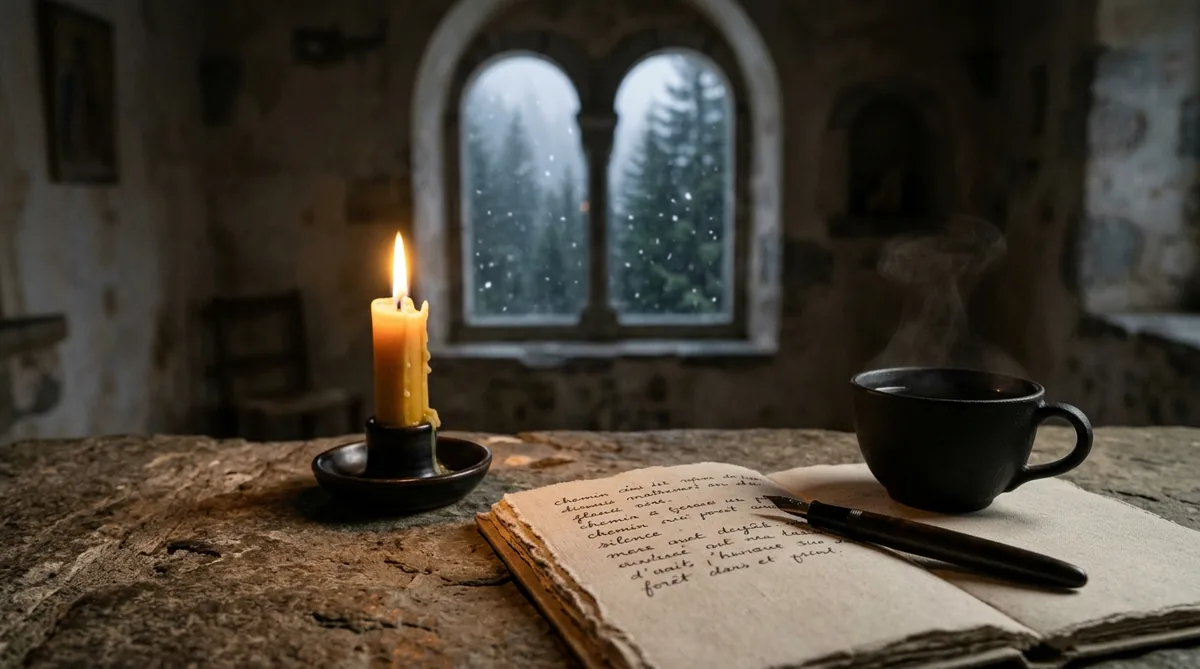
The Carthusian Way: What Centuries of Alpine Stillness Teach Us
Founded by Saint Bruno in 1084 high in the Chartreuse mountain wilderness, the Grande Chartreuse is one of the most secluded spiritual refuges in the world.
There, monks live in individual hermitage cells, dedicating their days to manual labor, prayer, and contemplation.
Their lives unfold in almost complete quiet, punctuated only by nightly communal chants and weekly walks through pine-clad valleys.
They refer to this spiritual discipline as The Great Silence (Silentium Magnum).
It is not a silence imposed through grim austerity, but an atmosphere cultivated with immense tenderness and devotion.
In the acclaimed documentary Into Great Silence, there are no dramatic storylines, no musical score, and virtually no spoken dialogue.
Instead, the camera simply witnesses the sacred texture of existence: snow drifting past stone archways, hands chopping firewood, and sunlight illuminating ancient limestone flagstones.
Silence is not the absence of sound; it is the presence of an unshakeable inner peace waiting for you to stop filling the world with noise.
The contrast between modern sensory overload and monastic stillness illuminates what our hearts are truly starving for:
| State of Being | Modern Sensory Overload | Monastic Alpine Stillness |
|---|---|---|
| Acoustic Environment | ✦ Chronic noise: Relentless alerts, urban clamor, and constant background media. | ✦ Sacred quiet: Wind through mountain pines, falling snow, and footsteps on stone. |
| Internal Mindset | ✦ Hyper-reactive: Compulsive impulse to speak, respond, react, and share opinions. | ✦ Radical presence: Observing thoughts without judgment, rooted in the present moment. |
| Quality of Thought | ✦ Fragmented attention: Superficial skimming, shallow breath, and persistent FOMO. | ✦ Deep contemplation: Sustained clarity, reverence for small tasks, and grounded calm. |
| Nervous System | ✦ Exhausted baseline: Overstimulated adrenals and hidden cognitive depletion. | ✦ Restorative ease: Deep somatic renewal, lowered cortisol, and profound gratitude. |
Three Monastic Practices to Reclaim Radical Presence in Daily Life
You do not need to take vows or retreat to a snowy French valley to harvest the healing fruit of the Chartreuse.
Here are three gentle ways to weave the Carthusian spirit into your modern routine:
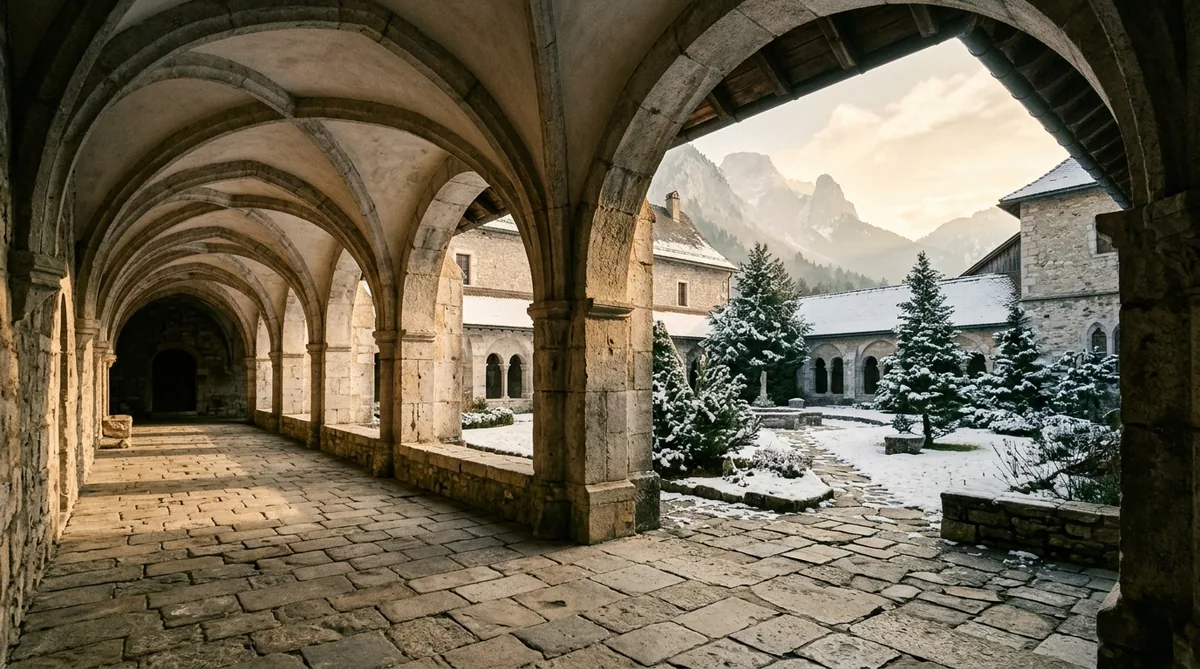
1. The Morning Window of Sacred Silence
Most mornings begin with an immediate assault of email, news headlines, and urgent requests.
Give yourself a monastic beginning by reserving your first twenty minutes for ✦ Silentium Matutinum—the morning silence.
Do not turn on the radio, check social feeds, or initiate conversation.
Drink your morning water or tea in stillness, watching the early light illuminate your room.
2. A Deliberate Speech Fast
Much of our daily speech is driven by nervous habit rather than authentic necessity.
We rush to fill awkward pauses, offer unsolicited advice, or complain about trivial inconveniences.
For one afternoon each week, practice an ✦ intentional speech diet.
Speak only when your words offer genuine kindness, clarity, or practical help.
Notice how much mental energy you conserve simply by letting silences linger without rushing to break them.
3. The Three-Second Threshold Pause
In the monastery, moving from the cloister into a cell or chapel is marked by reverence.
In our lives, we blur every transition: answering an email while walking to the kitchen, or scrolling our phones while waiting at a red light.
Cultivate radical presence through a ✦ three-second threshold pause.
Whenever you step across a doorway, enter your home, or sit down at your desk, pause completely.
Take one slow, grounding breath and feel the earth beneath your soles before engaging with whatever lies ahead.
🌿 The Gentle Takeaway
✦ Silence is a medicine, not a void: Stepping away from noise is an act of profound self-respect for your nervous system.
✦ Presence requires empty space: You cannot receive the beauty of your life if every second is crammed with input.
✦ Stillness travels with you: True monastic peace is an internal anchor you can access anywhere, even in a crowded room.
Frequently Asked Questions