




When modern demands accumulate within your muscles, the weight rarely settles as simple physical fatigue. It manifests as an iron band around your temples, a perpetual knot between your shoulder blades, and a weary ego that refuses to let down its guard. You carry your job title, your social obligations, and your unresolved ambitions like […]
When modern demands accumulate within your muscles, the weight rarely settles as simple physical fatigue.
It manifests as an iron band around your temples, a perpetual knot between your shoulder blades, and a weary ego that refuses to let down its guard.
You carry your job title, your social obligations, and your unresolved ambitions like an invisible suit of heavy armor everywhere you walk.
Even during vacations, your mind often races ahead, cataloging itinerary milestones and checking digital alerts rather than arriving in the present hour.
Yet high in the forested mountains of Japan, an ancient thermal tradition offers a profound antidote to this chronic existential exhaustion.
Quick Insight: The traditional japanese onsen ritual mindfulness practice transforms a hot thermal bath into a sacred threshold of psychological release. By shedding all social armor and stepping naked into mineral-rich earth waters, you release status and allow chronic mental resistance to dissolve into steam.
Hadaka no Tsukiai: The Radical Equality of Naked Communion
At the spiritual heart of the Japanese hot spring experience lies the timeless philosophy of Hadaka no Tsukiai, which translates poetically to “naked communion.”
Before entering the steaming waters of an onsen, every bather places their clothes, watches, wallets, and phones inside a simple woven wicker basket.
In that single, quiet gesture, the artificial hierarchies of modern society instantly evaporate.
The corporate executive, the artisan, the weary pilgrim, and the foreign traveler enter the bath in the exact same state of vulnerable equality.
There are no tailored suits to signal wealth, no business cards to establish superiority, and no digital screens to distract from somatic reality.
For centuries, Japanese culture cultivated the medicinal art of Toji—prolonged stays at remote thermal springs designed to let volcanic minerals heal illness and quiet grief.
The hot water, revered simply as Yu, does not evaluate your productivity, judge your achievements, or demand justification for your existence.
It simply receives your tired body with boundless warmth, inviting you to unburden the fragile ego you defend so tirelessly each day.
The Thermal Shift: Functional Cleansing Versus Sacred Dissolution
To fully understand the restorative power of the Japanese hot spring, one must distinguish between modern functional showering and sacred thermal surrender.
Modern bathing is hurried and utilitarian, while the onsen ritual is an inward pilgrimage of stillness.
| Ritual Dimension | Functional Modern Showering | Japanese Onsen Ritual Mindfulness |
|---|---|---|
| Primary Intention | Rapid physical cleansing squeezed between frantic schedule blocks. | Somatic surrender, nervous system regulation, and mental release. |
| Temporal Rhythm | Rushed motions accompanied by active planning and rumination. | Unhurried sensory absorption, stillness, and rhythmic breathing. |
| Social Armor | Retaining mental preoccupation with titles and future tasks. | Complete shedding of all status markers through Hadaka no Tsukiai. |
| Somatic Effect | Temporary surface refreshment with lingering muscular tension. | Deep vasodilation, vagus nerve stimulation, and muscular ease. |
| Spiritual State | Separation from nature behind synthetic shower curtains. | Harmonious alignment with raw cedar, volcanic stone, and mountain air. |
As this comparison illustrates, engaging in authentic japanese onsen ritual mindfulness is not a luxury indulgence, but an essential reset for an overstimulated mind.
When you surrender your body to geothermal waters heated in subterranean earth depths, you re-establish an intimate connection with timeless elemental stillness.
The Ritual of Thermal Surrender: Three Steps to Dissolve the Busy Mind
Experiencing the restorative magic of an onsen requires conscious reverence and careful adherence to traditional bathing etiquette.
Here are three mindful micro-practices to guide your physical and emotional release within the hot mineral waters.
1. The Mindful Kakeyu Cleansing
Before dipping a single toe into the communal bath, you sit on a small wooden cedar stool at the washing station to perform Kakeyu.
Using a handcrafted wooden pail, scoop warm water and pour it deliberately over your feet, ankles, knees, and shoulders.
✦ “With each warm ladle of water, wash away the dust of travel and the frantic chatter of the day.”
This mindful pre-bath wash gently prepares your cardiovascular system for the heat while anchoring your awareness in tactile sensations.
2. The Chin-Deep Thermal Surrender
Step slowly into the mineral bath, lowering your body until the warm water rests just below your collarbone.
Fold your modest cotton washcloth (tenugui) and rest it gently atop your head to maintain circulatory balance and prevent lightheadedness.
Close your eyes, let your jaw unclench completely, and listen to the faint murmur of thermal water trickling across volcanic stone.
✦ “Notice the sensation of buoyancy, recognizing that you no longer need to hold yourself upright against the world.”
Allow the mineral steam to soften the tightness around your eyes, letting every rigid defense mechanism melt away into the vapor.
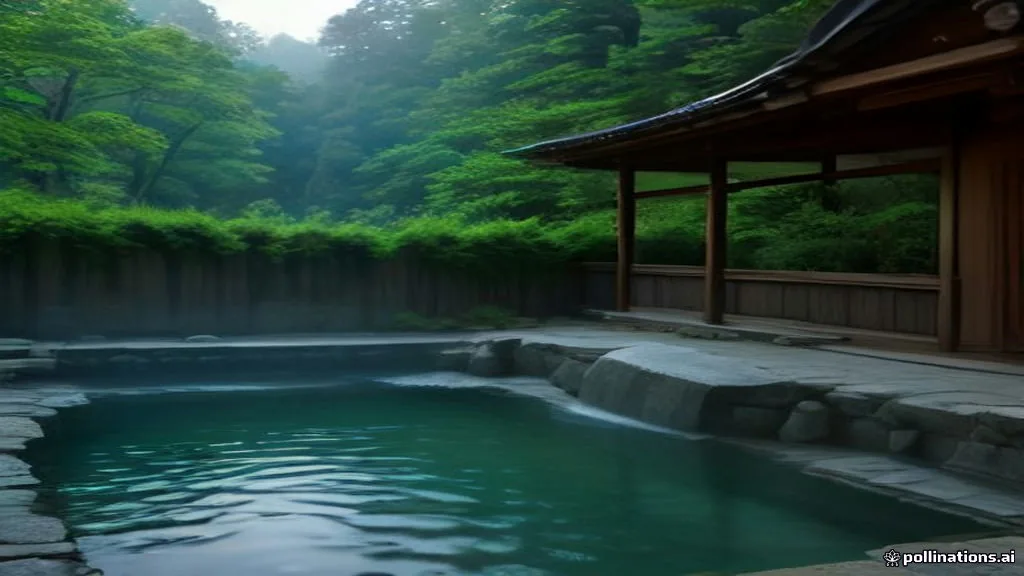
3. The Silent Engawa Wind Contemplation
After ten to fifteen minutes of soaking, step out of the bath slowly and rinse your feet in cool fresh spring water.
Wrap yourself in a crisp cotton yukata robe and sit quietly on the wooden veranda (engawa) overlooking the moss garden or forest pines.
Feel the crisp mountain breeze kissing your flushed skin, creating a delicious thermal contrast that grounds your senses.
✦ “Sip a cup of chilled roasted barley tea in unbroken silence, observing how vast and tranquil your mind has become.”
In this post-bath threshold, the frantic need to achieve gives way to profound gratitude for simple, unhurried existence.
✦ Decoding Takeaway: The Thermal Dissolution
Inner State: Cognitive fatigue, rigid muscular armor, and acute identity defense built from high-pressure responsibilities.
Core Mechanism: The traditional onsen bathing ritual dissolves social stratification through *Hadaka no Tsukiai* while geothermal minerals stimulate parasympathetic recovery.
Gentle Micro-Action: Practice deliberate Kakeyu acclimatization, submerge with relaxed posture, and integrate the experience with post-soak veranda contemplation.
Mindful Reflection Notice: Traditional Japanese hot springs maintain natural mineral temperatures ranging between 40°C and 43°C (104°F to 110°F). Individuals with cardiovascular conditions or thermal sensitivity should limit soak durations to ten minutes, stay hydrated, and exit gradually.
Frequently Asked Questions