Almost everyone carries a quiet fantasy of disappearance. When life becomes noisy, hurried, and demanding, we instinctively imagine packing a single suitcase and fleeing to a distant shore. We dream of a secluded stone cottage on a Scottish hillside, or a silent monastery tucked into the Tuscan hills. We convince ourselves that if we could […]
Almost everyone carries a quiet fantasy of disappearance.
When life becomes noisy, hurried, and demanding, we instinctively imagine packing a single suitcase and fleeing to a distant shore.
We dream of a secluded stone cottage on a Scottish hillside, or a silent monastery tucked into the Tuscan hills.
We convince ourselves that if we could only change our zip code, our racing thoughts would finally quiet down.
Yet geography has never cured an aching mind.
No matter how far you travel, the restless self inevitably unpacks alongside your luggage.
The Escape Fallacy: Why Changing Scenery Cannot Heal an Overwhelmed Mind
At its heart, the sanctuary within stoic peace is the profound realization that external stillness cannot cure internal agitation. True peace is found not by fleeing the world, but by retreating into your own sovereign, untroubled mind.
Over two thousand years ago, the Roman philosopher Seneca addressed this very delusion in a letter to his friend Lucilius.
He asked a cutting question: “Why do you wonder that travel does not help you, when you carry yourself wherever you go?”
When we attempt to outrun stress by changing our external surroundings, we commit what psychologists call the geographical fallacy.
External silence is pleasant, but it is entirely fragile.
If your peace relies upon a soundproof room or a pristine horizon, that peace will shatter the moment a car horn blares.
True tranquility must be forged out of materials that cannot be stolen by circumstances.
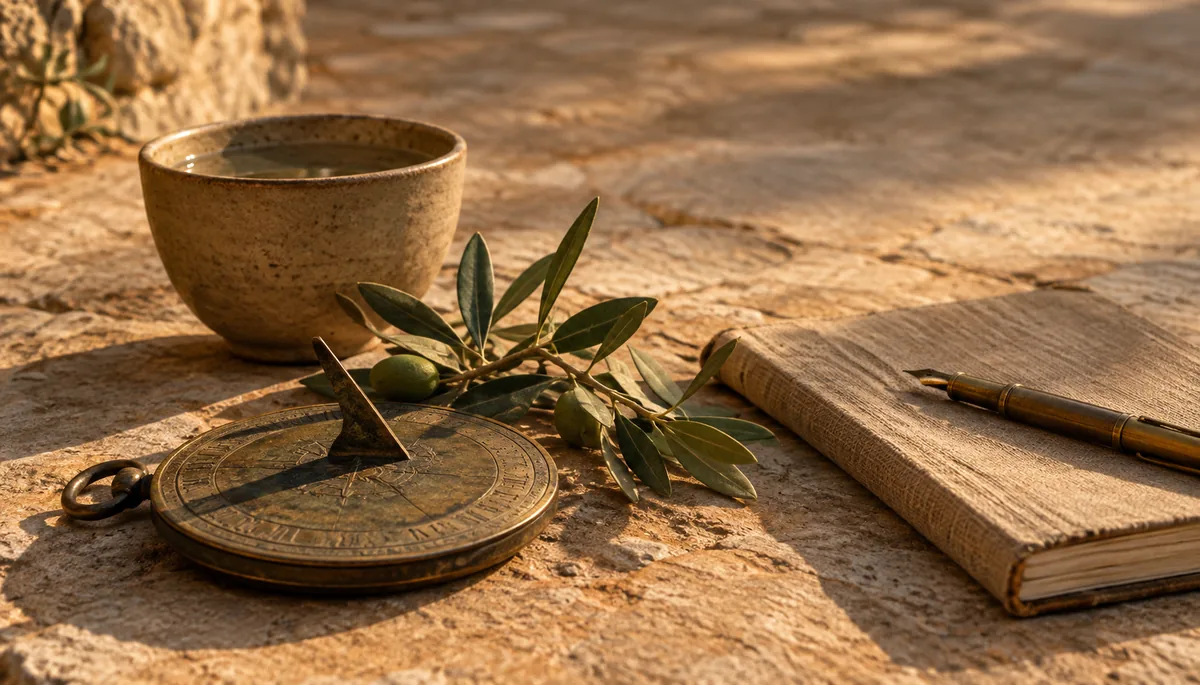
The Three Gates to Marcus Aurelius’s Inner Citadel
In the Fourth Book of his private journals, the Roman Emperor Marcus Aurelius wrote one of the most liberating passages in human philosophy.
Reflecting on his crushing imperial obligations, he noted that men search everywhere for retreats in the countryside, by the sea, or among the mountains.
Yet, he reminded himself, there is nowhere a person can find a quieter, more untroubled retreat than within their own soul.
This sovereign mental fortress is what modern thinkers term the inner citadel.
Entering this sanctuary requires passing through three distinct mental gates:
1. The Gate of Sovereignty (The Dichotomy of Control)
You enter peace the moment you draw a strict boundary between what is yours to govern and what belongs to the world.
As Epictetus taught, other people’s opinions, market crashes, and weather patterns lie entirely outside your jurisdiction.
When you surrender the impossible burden of managing external outcomes, half of your chronic anxiety evaporates instantly.
You realize that events cannot bruise your soul unless your own judgment allows them to.
2. The Gate of Assent (Refusing Anxious Commentary)
Events in life are fundamentally neutral until our subconscious mind attaches an anxious narrative to them.
A sudden traffic delay is merely an unexpected pause; your frustration is the narrative you chose to wrap around it.
The Stoic practice of mindful assent teaches you to strip events down to their bare, objective facts.
When you cease inventing catastrophic storylines about the future, you preserve the serene stillness of the present.
3. The Gate of Immediate Return (The Breath of Stillness)
Your inner sanctuary does not require hours of complex meditation to visit.
It is accessible within a single, intentional breath whenever stress threatens to overwhelm your nervous system.
You do not need to wait for your next vacation to experience deep rest.
You can retreat into your quiet center while walking through a chaotic grocery store or sitting in gridlocked traffic.
| Dimension | The Restless Fugitive | The Bitter Recluse | The Grounded Stoic Sage |
|---|---|---|---|
| Core Strategy | Constantly changes locations, chasing external quiet. | Withdraws from society out of resentment and cynicism. | Builds an unassailable sanctuary within their own awareness. |
| Source of Peace | Temporary silence of remote landscapes. | Strict avoidance of human contact. | Unshakable [ataraxia](https://unrushedmind.com/blogs/ataraxia-ancient-art-untroubled-mind/) rooted in clear judgment. |
| Vulnerability | Collapses the moment noise or obligations intrude. | Plagued by underlying bitterness and isolation. | Remains calm and gracious anywhere in the world. |
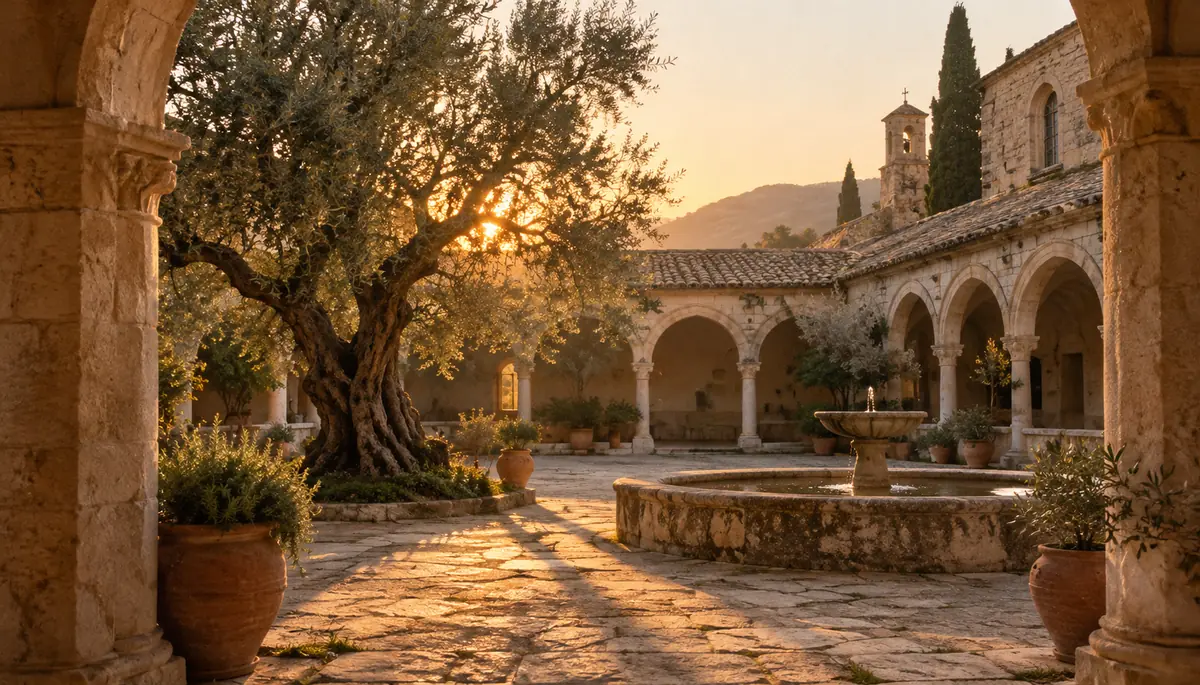
Living in the Citadel: Walking Through Modern Noise Without Losing Yourself
Cultivating an inner sanctuary does not mean becoming a detached ascetic who ignores real-world duties.
Marcus Aurelius governed the Roman Empire during a catastrophic plague and devastating border wars, all while keeping his inner temple inviolate.
He proved that peace is not an absence of chaos, but the presence of sovereign clarity amidst it.
When you master the dichotomy of control, your relationship with daily friction changes permanently.
You stop expecting people to be flawless, traffic to disappear, or deadlines to vanish.
Instead, you view the friction of daily life as the whetstone that sharpens your patience and compassion.
You learn to move through crowded streets like a person walking beneath a sturdy umbrella in a heavy downpour.
The rain continues to fall all around you, but your core remains entirely warm and dry.
Questions on Stoic Peace and the Inner Sanctuary