
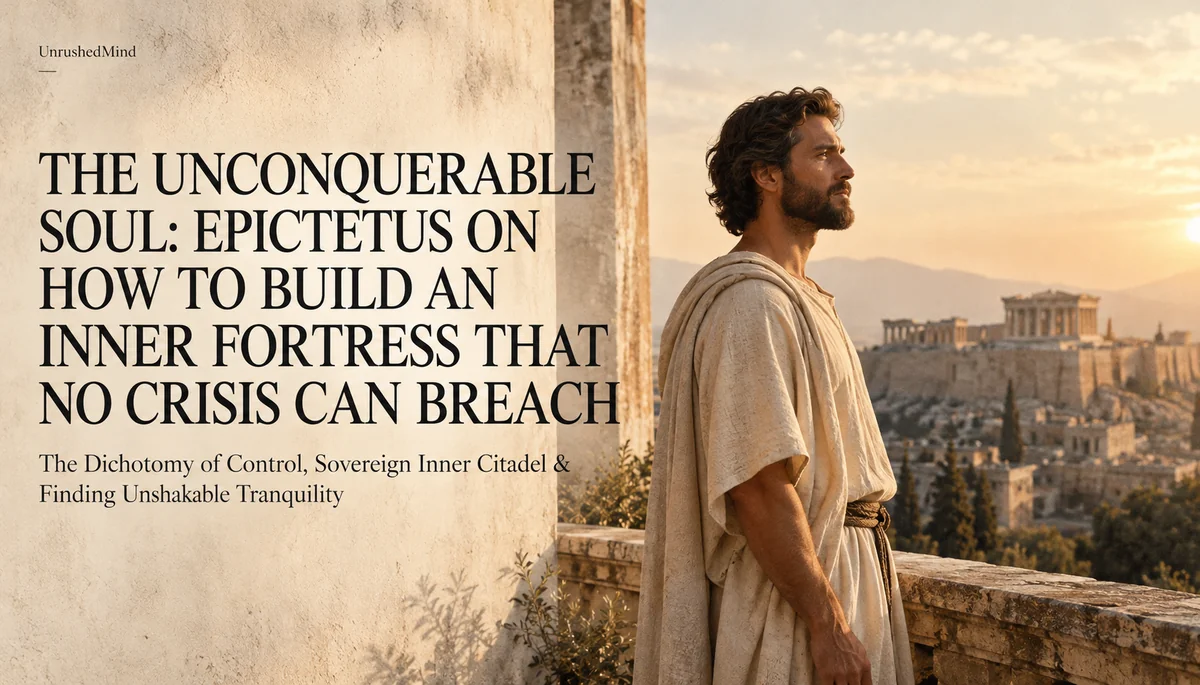
The Unconquerable Soul: Epictetus on How to Build an Inner Fortress That No Crisis Can Breach There are days when the world feels unbearably fragile, as though an unexpected crisis or an unkind word could shatter your internal equilibrium. You find yourself bracing against circumstances, waiting for the outer environment to grant you permission to […]
The Unconquerable Soul: Epictetus on How to Build an Inner Fortress That No Crisis Can Breach
There are days when the world feels unbearably fragile, as though an unexpected crisis or an unkind word could shatter your internal equilibrium.
You find yourself bracing against circumstances, waiting for the outer environment to grant you permission to finally exhale.
Yet true peace was never intended to be a hostage to external conditions.
Over two thousand years ago, an enslaved philosopher named Epictetus discovered a revolutionary truth: no crisis can breach your peace unless you willingly open the gates of your mind.
The Epictetian Inner Citadel is an invulnerable psychological sanctuary founded on the dichotomy of control. By anchoring your sovereignty strictly within your own judgments and moral integrity, external turbulence loses its power to wound your peace, cultivating an epictetus inner citadel unshakable freedom that withstands any adversity.
The Fragility of the Unguarded Mind
When we tie our serenity to outer stability, we live in constant peril.
We fret over shifting economies, unpredictable colleagues, and reputations that turn with the wind.
Epictetus observed that human suffering does not spring from events, but from the judgments we form about them.
A storm is merely moving air; it becomes a catastrophe only when we demand that skies never darken.
When you place your well-being in things you cannot dictate, you surrender sovereignty to chance.
You become a leaf swept by every gale, forever reacting and never truly free.
The Crippled Slave Who Walked Freer Than Kings
Epictetus did not formulate his philosophy in a protected ivory tower.
Born into chattel slavery in ancient Hierapolis and physically disabled by brutality, he understood visceral vulnerability deeply.
Yet, amidst chains, he recognized an inviolable space within consciousness that no master could touch.
They could break his body and banish him from Rome, but they could never conquer his moral will.
“You can chain my leg,” Epictetus wrote with calm defiance, “but not even Zeus can conquer my will.”
His freedom was not an external legal status, but an internal spiritual sovereignty.
The Hegemonikon: The Sovereign Fortress Within
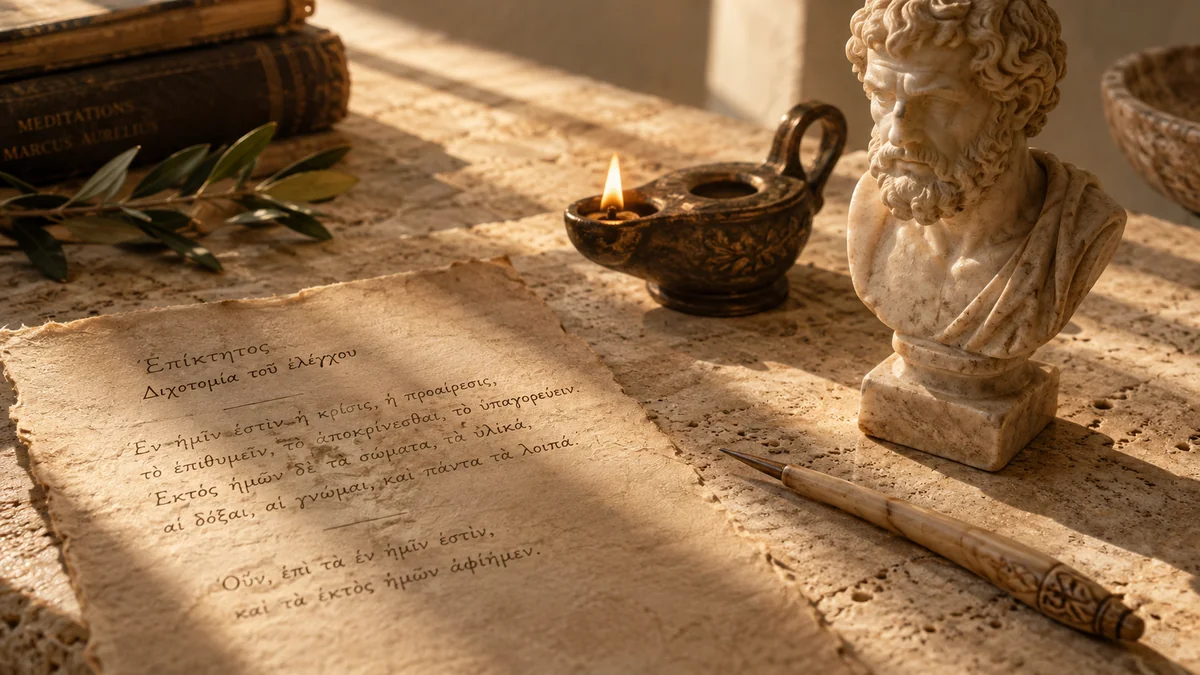
Central to Stoic wisdom is the Hegemonikon—the rational ruling center of the human soul.
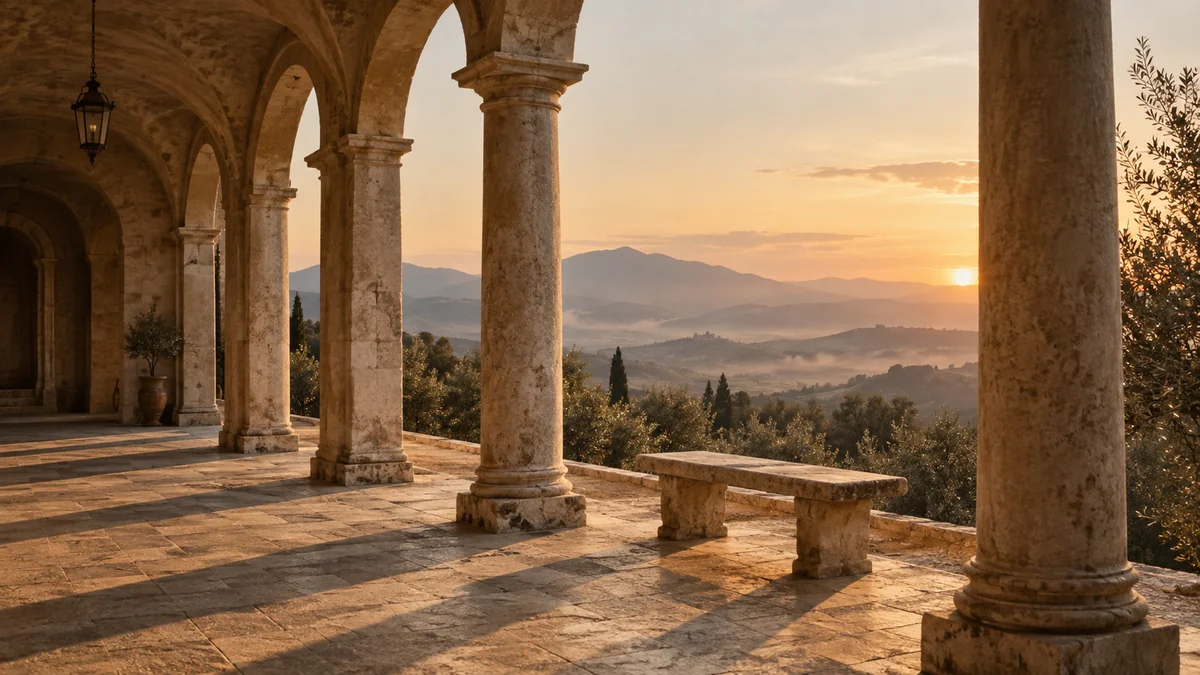
The Hegemonikon functions as an unbreachable stone redoubt perched high above the chaos of the plains.
Within this inner sanctum, you alone hold the keys.
An insult cannot penetrate this stronghold unless your ruling faculty decides to validate the wound.
Financial upheaval cannot reduce your spirit to rubble unless you equate your worth with external wealth.
Through the practice of premeditatio malorum, you calmly anticipate life’s tremors, reinforcing the ramparts before the tempest arrives.
The world can take your possessions, but an unconquerable soul remains completely self-governed.
The Architecture of Sovereignty: Two Paths Compared
To cultivate an impenetrable inner fortress, one must recognize the contrast between a reactive existence and a fortified sanctuary.
| The Reactive Mind | The Stoic Inner Citadel | Restored Sovereign State |
|---|---|---|
| Demands that external circumstances conform to personal desires. | Accepts reality as it unfolds while governing internal responses. | Deep emotional steadiness immune to outward chaos. |
| Wounded and derailed by casual criticism or disapproval. | Views insults as reflections of the speaker’s confusion, not personal truth. | Invulnerable self-respect anchored in character. |
| Paralyzed by uncertainty and the fear of losing status. | Distinguishes strictly between what is in control and what is not. | Profound liberation from societal comparison and chronic dread. |
| Exhausted from constantly firefighting external crises. | Retreats into the quiet sanctuary of the Hegemonikon at will. | Unshakable tranquility and effortless mental clarity. |
Four Daily Disciplines to Fortify Your Inner Fortress
Building an inner citadel is not abstract theory; it is a muscular, moment-to-moment spiritual craft.
1. Station a Sentinel at the Threshold of the Mind
Whenever an alarming thought arrives, do not swallow it whole.
Pause at the gate of awareness and ask: “Is this within my sphere of choice, or outside it?”
If it belongs to externals—market downturns or someone’s temper—reply calmly: “Then you are nothing to me.”
2. Disarm the Weapon of Other People’s Opinions
Epictetus reminded us that nobody can hurt you without your active cooperation.
When someone speaks ill of you, remember they act through their own clouded lens.
Pity their confusion rather than admitting their venom into your fortress.
3. Guard Your Attention as Your Most Sacred Treasury
Every time you mindlessly scroll sensational headlines, you unlock your gates to wandering vandals.
Treat your mental bandwidth as holy ground.
Refuse entry to trivial noise that bears no relevance to your virtue or peace.
4. Anchor Your Dignity in Moral Choice Alone
External fortune is merely a loan from the cosmos, easily recalled at any moment.
Your character, your patience, and your kindness are the only possessions that remain forever yours.
Focus entirely on cultivating a benevolent will, and external losses will leave your core intact.
Frequently Asked Questions
The Storm Outside, The Sanctuary Within
You cannot silence the roaring wind of modern existence, nor can you prevent unexpected sorrow from visiting your doorstep.
Yet you can build a quiet limestone sanctuary within your chest where the flame of your soul burns undisturbed.
Step inside your fortress, draw back from the edge of the world, and breathe deeply.
The storm will pass, empires will rise and crumble, but the unconquerable soul remains standing, whole and serene.