Have you ever stepped inside a bustling commercial center in late December and felt an immediate, suffocating wave of sensory panic? Your temples throb with a dull ache, your throat tightens, and the air feels dense with an almost physical intensity. Above your head, hundreds of aggressive LED lights blink in rapid sequences across glittering […]
Have you ever stepped inside a bustling commercial center in late December and felt an immediate, suffocating wave of sensory panic?
Your temples throb with a dull ache, your throat tightens, and the air feels dense with an almost physical intensity.
Above your head, hundreds of aggressive LED lights blink in rapid sequences across glittering store displays.
A relentless loop of holiday pop music blares from public speakers, competing with shrieking escalators and metallic cart wheels.
Sharp synthetic fragrances drift from cosmetic counters, colliding with the frantic murmurs of shoppers racing against the clock.
Within twenty minutes, you find yourself gripping the handrail, craving an exit while battling a sudden wave of nausea.
Yet almost immediately, the inner critic begins its interrogation: Why am I like this? Why cannot I simply enjoy the festivities?
Holiday sensory overload is not a failure of emotional stamina, but the acute breakdown of neurological sensory gating under unnatural commercial stimulation. For the highly sensitive individual, protecting your sensory boundaries is an act of sovereign self-preservation that honors the delicate architecture of your nervous system.
You do not need to endure sensory exhaustion to prove your generosity, nor do you owe the world your nervous system’s breakdown.
Let us explore why the holiday season overwhelms sensitive minds and how to cultivate an impenetrable sensory shield.
The Neurobiology of Sensory Gating: Why Commercial Noise Fractures Sensitive Minds
To understand why year-end environments feel so punishing, we must look inside the sensory filtering mechanisms of the human brain.
Deep within the cerebral architecture sits the thalamus, an ancient relay station that functions as the brain’s primary sensory gatekeeper.
In the average nervous system, the thalamus automatically dampens approximately ninety percent of background noise and ambient clutter.
This biological filter allows individuals to navigate noisy department stores without consciously registering every flicker of neon or rustle of shopping bags.
However, roughly twenty percent of the population possesses an innate trait known as Sensory Processing Sensitivity (SPS).
If you are a Highly Sensitive Person, your thalamic gate does not discard sensory data; it processes every subtle fluctuation in light, tone, and emotional subtext with extraordinary depth.
In natural environments, this evolutionary trait provides profound intuition, deep appreciation for beauty, and acute somatic awareness.
Yet when thrust into peak commercial consumerism, this gift transforms into an overwhelming biological liability.
Under the weight of artificial decibels and synthetic lighting, the sensitive thalamus experiences sensory gating collapse.
Every single acoustic frequency, fluorescent flicker, and visual billboard breaches the conscious threshold simultaneously.
When the brain can no longer categorize incoming data, the amygdala sounds a red-alert alarm, misinterpreting commercial chaos as an existential threat.
Your sympathetic nervous system floods your bloodstream with adrenaline, constricting peripheral vessels and triggering acute somatic dread.
You are not being dramatic or antisocial; your neurobiology is simply attempting to survive an auditory and visual blitzkrieg.
The Four Archetypes of Holiday Overstimulation
When our internal sensors are pushed beyond their threshold of tolerance, each individual instinctively retreats into a distinct behavioral archetype.
Recognizing your habitual posture is the first essential step toward reclaiming somatic sovereignty during the holidays:
| Archetype | Core Driving Fear | Somatic Manifestation | Nervous System Consequence |
|---|---|---|---|
| The Compulsive Endurer | Terrified of disappointing hosts or appearing difficult and antisocial. | Clenched jaw, raised shoulders, polite frozen smile, shallow chest breathing. | Post-event systemic inflammation, intense migraine, multi-day exhaustion. |
| The Guilt-Ridden Escapee | Flees the gathering in panic, followed by punishing internal shame. | Racing pulse, rapid pacing, heavy stomach churn, mental self-flagellation. | Social alienation fueled by shame; erosion of compassionate self-worth. |
| The Chronic Dissociator | Desperate to survive overstimulation when physical escape feels impossible. | Glazed stare, emotional numbness, bodily detachment, mental brain fog. | Dorsal vagal freeze state; loss of presence and inability to connect. |
| The Sensory Shield Practitioner | Honors sensory limits as an essential condition for genuine warmth. | Relaxed neck, intentional pacing, grounded breath, clear boundary setting. | Ventral vagal safety; preserves vitality to offer authentic, heartfelt presence. |
Most of us spend years oscillating between the exhaustion of the Compulsive Endurer and the agony of the Guilt-Ridden Escapee.
Yet true peace begins when you realize you do not have to apologize for how your nervous system receives the world.
You can learn to walk through the holiday season wrapped in an intentional armor of silence and gentle pacing.
The Holiday Sensory Shield Protocol: 4 Steps to Navigating Year-End Noise with Dignity
Protecting your sensory equilibrium does not require retreating into total isolation until January.
By implementing four intentional somatic practices, you can engage with the season on your own gentle terms:
1. Auditory and Visual Dampening
Modern holiday venues are engineered to keep your nervous system in a state of heightened commercial arousal.
Reclaim sensory autonomy by establishing physical barriers before entering overstimulating environments.
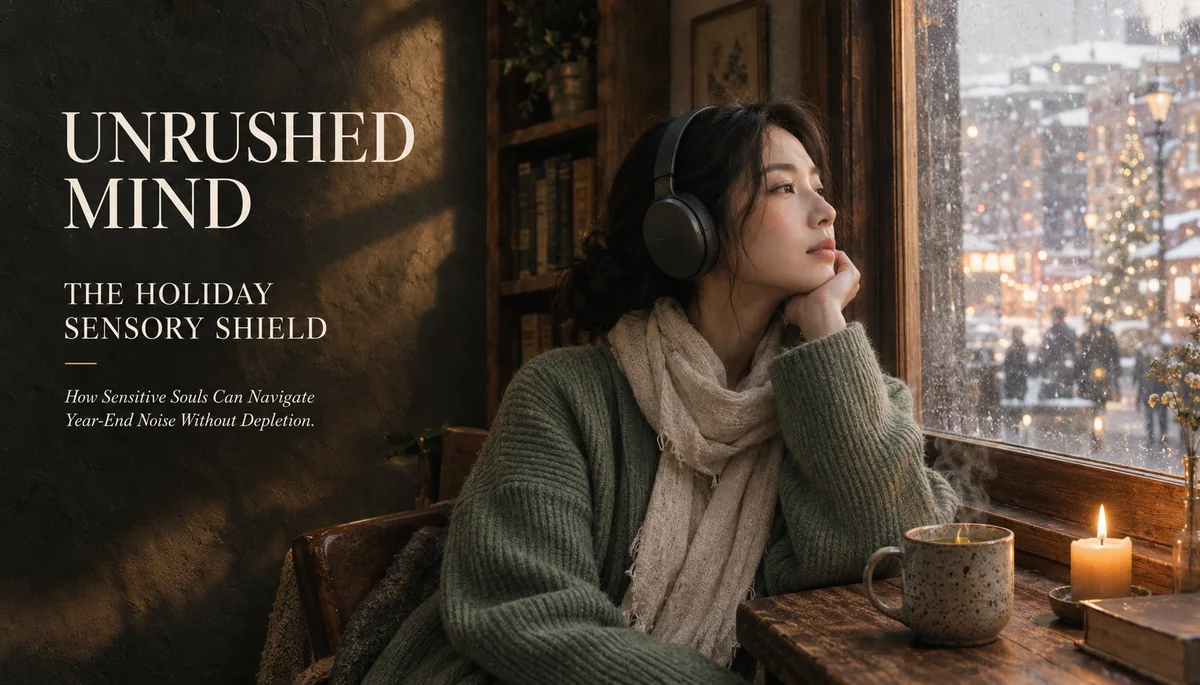
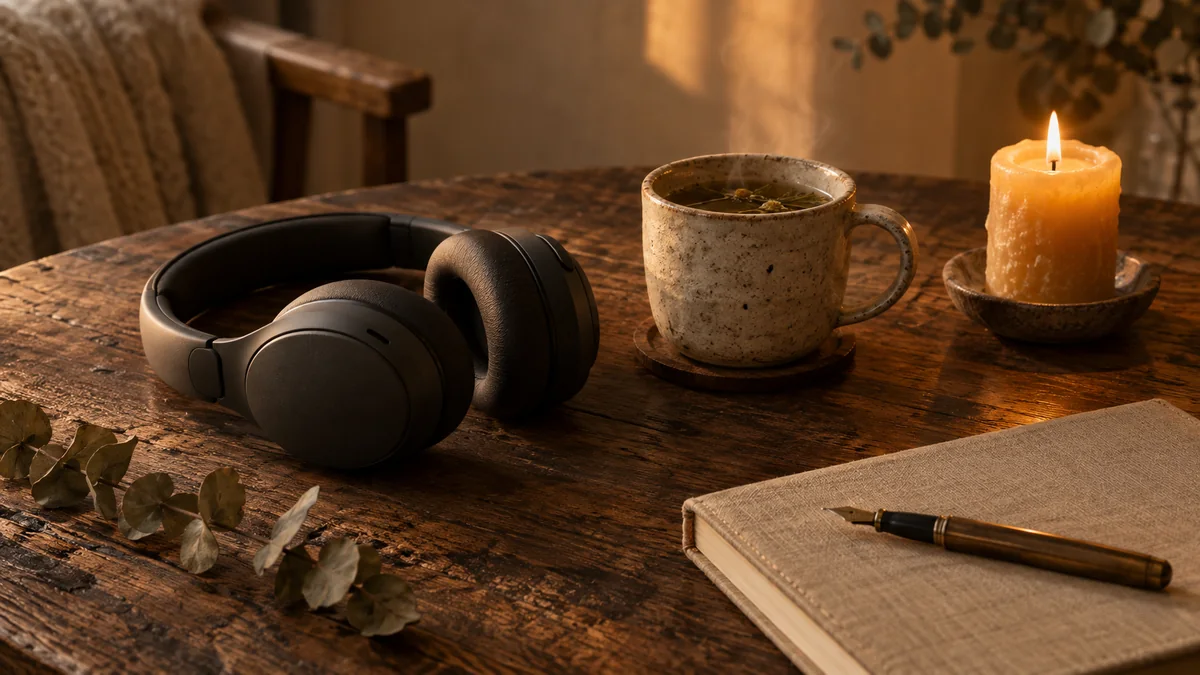
Wear high-fidelity acoustic earplugs or active noise-cancelling headphones that attenuate harsh decibels while preserving vocal clarity.
Diminishing ambient background noise by fifteen decibels cuts the metabolic workload on your auditory cortex nearly in half.
Wear amber-tinted glasses to soften LED glare, and protect your eyes from chronic digital eye strain.
2. The 5-Minute Decompression Sanctuary
Do not wait until your eyes sting with exhaustion before granting yourself permission to take a pause.
Set a silent timer to step away every forty-five minutes during large social or family gatherings.
Seek out a quiet, dimly lit space—a vacant hallway, a porch, or a private restroom stall.
Close your eyes, place one palm over your heart, and perform three rounds of physiological sighing.
Inhale deeply through your nose, take a second quick sip of air, and release a long, slow exhale through your mouth.
This somatic reset stimulates the vagus nerve, slowing your pulse and halting the cascade of stress hormones.
3. The Unapologetic Early Exit
One of the greatest gifts of adulthood is recognizing the grace of saying ‘no’ without an elaborate defense.
You do not need to invent an imaginary illness to justify leaving a noisy celebration.
Thirty minutes of genuine, loving presence is infinitely more meaningful than four hours of glazed, resentful dissociation.
When your sensory cup is full, find your host and speak with serene simplicity: “Thank you warmly for having me; my energy is spent for tonight, so I am heading home to rest.”
Practice navigating holiday boundaries with difficult family gatherings, remembering that other people’s expectations are not your burden to bear.
4. The Low-Stimulation Evening Hearth
When you return to your personal sanctuary, do not immediately collapse in front of a blaring screen.
Bombarding your frayed nervous system with algorithmic dopamine deepens exhaustion and fuels the comparison trap of curated holiday perfection.
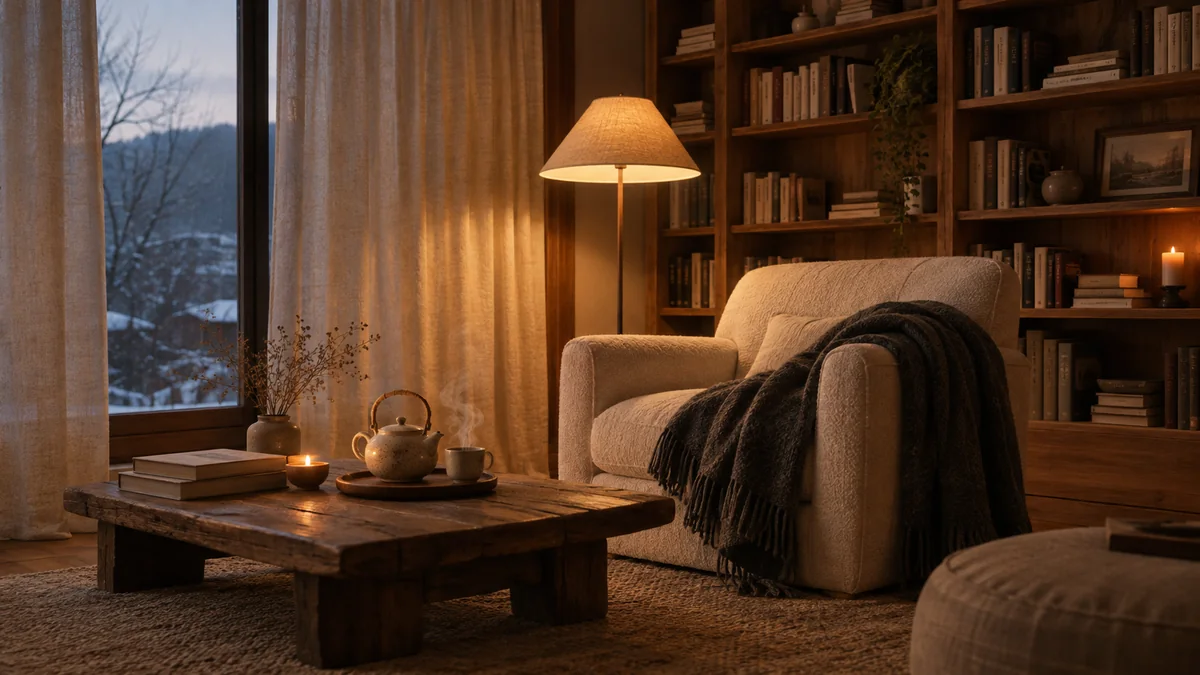
Instead, extinguish overhead lights and illuminate your space with gentle 2700K lamps or candles, learning to honor the restorative dark.
Wrap yourself in a wool blanket, brew chamomile tea, and let absolute silence wash over your senses.
Embrace the Danish wisdom of hygge in stillness, giving your mind the quiet medicine it desperately needs.
“Your sensitivity is not a broken compass; it is a finely tuned instrument that simply refuses to harmonize with artificial frenzy.”
Protecting the Sanctity of Your Inner World
In a society that equates holiday cheer with decibels and consumption, choosing quietness is a radical act.
Yet the true spirit of winter has never been about blinding neon lights, as revealed by the wisdom of the falling leaf.
Winter is nature’s solemn invitation to slow down, turn inward, and discover the warmth of quiet solitude.
Give yourself permission to move through this season at an unhurried cadence that protects your mental clarity.
When you shield your senses from meaningless noise, you preserve the peace necessary to cherish what truly matters.
Sanctuary Note on Sensory Boundaries & Nervous System Health
This editorial guide is created for somatic education, philosophical grounding, and gentle lifestyle reflection. Sensory Processing Sensitivity is an innate neurobiological trait rather than a mental health disorder. However, if extreme sensory distress, severe panic attacks, or unmanageable sensory overload significantly disrupt your daily functioning, please consult a neurodivergent-affirming therapist or medical specialist for individualized clinical support.
Frequently Asked Questions