
# Hygge in Stillness: The Danish Philosophy of Finding Refuge in Cold and Dark Seasons **Focus Keyword:** hygge winter philosophy **Meta Title:** Hygge in Stillness: The Danish Philosophy of Finding Winter Refuge **Meta Description:** Discover hygge winter philosophy to heal seasonal blues. Embrace candlelit stillness, tactile warmth, and simple presence in cold, dark seasons. As […]
# Hygge in Stillness: The Danish Philosophy of Finding Refuge in Cold and Dark Seasons
**Focus Keyword:** hygge winter philosophy
**Meta Title:** Hygge in Stillness: The Danish Philosophy of Finding Winter Refuge
**Meta Description:** Discover hygge winter philosophy to heal seasonal blues. Embrace candlelit stillness, tactile warmth, and simple presence in cold, dark seasons.
As November surrenders to December, the natural world undergoes a dramatic withdrawal. The sun retreats behind slate-grey clouds, afternoons dissolve into dusk before dinner, and the air turns piercingly cold.
For many of us, this seasonal transition triggers an instinctual resistance. We curse the encroaching shadows, turn on harsh overhead bulbs, and treat the chill as an adversarial force that must be endured until spring.
Yet in the northern latitudes of Denmark—where winters bring sixteen hours of daily darkness—an entirely different relationship with the cold exists. Rather than fighting the frost, Danish culture leans into it through the ancient, comforting art of hygge.
At its core, **hygge winter philosophy** is not about merely surviving the cold. It is the art of transforming seasonal darkness into a sanctuary of warmth, stillness, and emotional shelter.
When we stop viewing dark months as a period of deprivation and start treating them as an invitation to turn inward, our entire nervous system begins to soften.
—
## Welcoming the Dark: Why Fighting Winter Only Deepens Exhaustion
In a modern culture obsessed with constant growth, we often forget that human beings are seasonal creatures. We expect our energy, creativity, and mood to remain at peak summer levels all twelve months of the year.
When winter arrives and our metabolic rhythms naturally downshift, panic sets in. We pathologize our desire to stay home, judging ourselves for wanting to sleep more or move slower, as if our bodies were malfunctioning machines.
“`
[THE ARCHITECTURE OF WINTER RESISTANCE VS. REFUGE]
┌───────────────────────────┐ ┌───────────────────────────┐
│ Winter Resistance │ │ Hygge Winter Sanctuary │
│ (Fighting the Season) │ │ (Embracing the Season) │
└───────────────────────────┘ └───────────────────────────┘
│ │
▼ ▼
┌───────────────────────────┐ ┌───────────────────────────┐
│ Harsh Artificial Glare │ │ Living Amber Light (2700K)│
│ Productivity Guilt │ │ Unrushed Pacing │
│ Sensory Depletion │ │ Tactile Comfort & Warmth │
└───────────────────────────┘ └───────────────────────────┘
│ │
▼ ▼
┌───────────────────────────┐ ┌───────────────────────────┐
│ Chronic Nervous Strain │ │ Deep Restorative Solace │
└───────────────────────────┘ └───────────────────────────┘
“`
This resistance creates deep somatic friction. Waging war against the winter sky traps the nervous system in chronic defense, worsening the heavy fatigue explored in our study of the science of winter melancholy.
Danish wisdom offers a radical alternative: what if the darkness is not a prison, but a protective blanket?
In Nordic culture, darkness is welcomed as a necessary counterweight to the frantic energy of summer. It is the time when the earth rests, seeds incubate beneath frozen soil, and souls are permitted to retreat into quiet reflection.
When you allow the calendar to dictate an unrushed tempo, you give yourself permission to step off the treadmill of achievement and dissolve the myth of falling behind.

—
## Deconstructing Hygge: Beyond Commercial Coziness and Aesthetic Traps
In recent years, the concept of hygge has been widely commodified across the globe. Commercial advertising has reduced a profound philosophical tradition into an aesthetic checklist of expensive blankets and designer candles.
True hygge cannot be purchased in a boutique. It is not an interior design style, but an intentional psychological posture—a deliberate cultivation of emotional warmth and unconditional shelter.
The Danish cultural historian Jeppe Trolle Linnet describes hygge as an atmosphere of complete safety, where social armor can be dropped entirely. It is a space where there are no demands to impress, no competitions of status, and no urgent problems to solve.
Central to this lived philosophy is the concept of ***levende lys***, which translates literally to “living light.”
Denmark burns more candles per capita than almost anywhere else in Europe, but this is not mere ornament. A real flame brings dynamic, flickering 2700K golden amber warmth into the room, creating an island of intimacy that keeps the vast night gently at bay.
Unlike the sharp glare of computer monitors, living candlelight communicates directly with your ancient brainstem, signaling that the hunt is over and you are safe inside the cave.
Much like the Japanese appreciation for impermanence found in finding stillness in ancient temples, authentic hygge honors the raw, unpolished simplicity of the present moment.
—
## Mapping Your Response: Archetypes of Navigating the Cold Seasons
How do you typically greet the onset of short days and freezing temperatures? Recognizing your automatic coping pattern is the first step toward transforming your relationship with winter.
The table below illustrates four common ways people navigate the cold and dark months:
| Coping Archetype | Outward Reaction | Internal Emotional State | The Restorative Shift |
| :— | :— | :— | :— |
| **The Winter Resister** | Complains constantly, forces summer pacing, battles the cold | Chronic resentment, seasonal anxiety, high physiological strain | Surrendering to winter’s rhythm and softening daily expectations |
| **The Numb Hibernator** | Isolates in bed, binges digital media, avoids all movement | Dull lethargy, cabin fever, profound sensory disconnect | Replacing screen numbness with intentional tactile comfort |
| **The Commercial Consumer** | Buys endless seasonal decor, seeks happiness through goods | Superficial gratification, persistent inner emptiness | Cultivating genuine presence and safety over possessions |
| **The Sanctuary Practitioner** | Lights candles, curates cozy corners, moves unhurriedly | Deep contentment, calm inner warmth, gentle connection | Sustaining daily rituals of gratitude and quiet presence |
If you recognize yourself in the first three columns, offer yourself immediate compassion. Modern culture has trained us to fear darkness and quietness.
When you step into the role of the Sanctuary Practitioner, you stop viewing winter as a punishment and start treating it as your annual personal sanctuary.

—
## The Hygge Sanctuary Protocol: 4 Steps to Cultivate Winter Refuge
Cultivating hygge does not require renovating your home or moving to Scandinavia. It requires creating reliable, small anchors of warmth that protect your peace against external turbulence.
Here is a four-step framework to weave the **hygge winter philosophy** into your everyday life:
### 1. The Sacred Hearth of Living Light (Levende Lys)
Transform the lighting architecture of your home as twilight approaches each afternoon. Turn off harsh overhead ceiling lights and switch to low lamps with warm 2700K bulbs or pure beeswax candles.
Place a candle on your dining table, near your bedside, or by your reading chair. Watch the soft flame dance for a few conscious breaths, letting its amber glow melt the physical tension stored in your brow.
### 2. The Dedicated Sanctuary Nook (Hyggekrog)
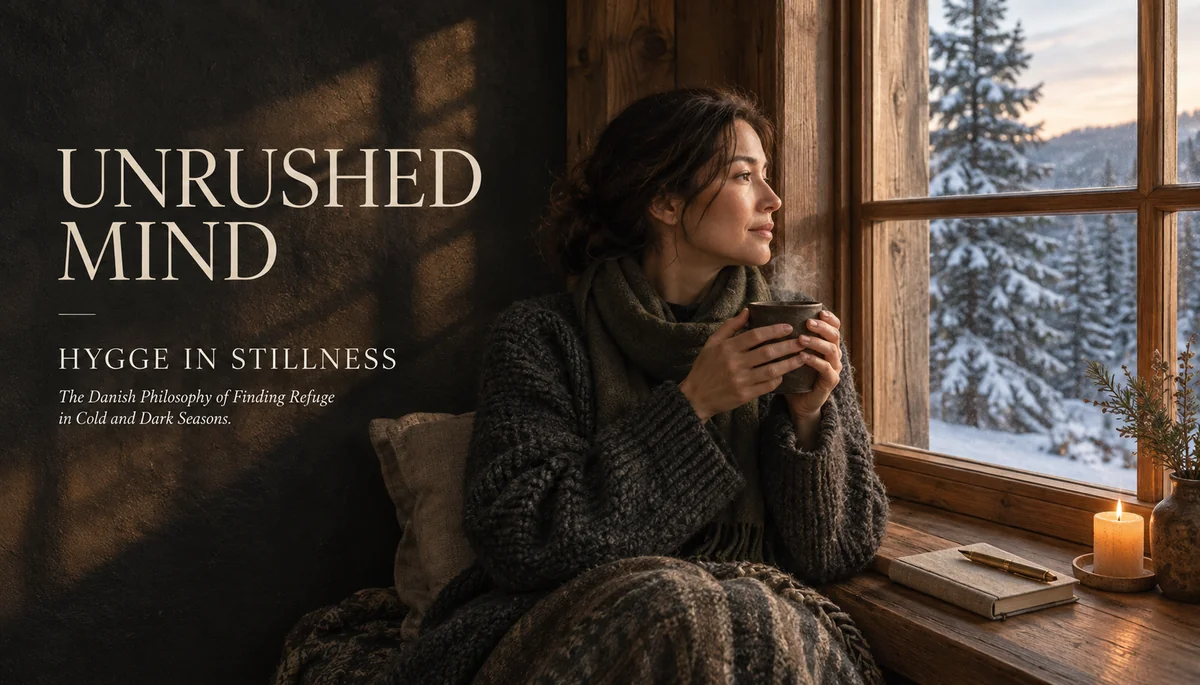
Every home needs a *hyggekrog*—a Danish term for a cozy nook or designated alcove where you feel completely sheltered and held.
Choose a quiet corner by a window or next to a bookshelf. Furnish it with tactile comfort: an unbleached linen pillow, a heavy woven wool blanket, and a low reclaimed wood stool for a warm drink.
Make this corner a screen-free sanctuary dedicated solely to contemplative reflection, reading, or the art of doing nothing.
### 3. The Unrushed Simplicity Ritual (Varm Te & Nourishment)
Winter calls for slow, grounding nourishment that engages all five senses. Create a deliberate ritual around brewing warm drinks—spiced cinnamon tea, fresh ginger infusions, or dark roasted coffee.
Never drink from a disposable cup while rushing through a digital inbox. Hold a heavy ceramic mug with both hands, feel the heat transferring into your palms, and take your first three sips in absolute silence.
Pair this presence with simple warming foods that honor bodily comfort, reminiscent of the art of cleansing away daily burdens.
### 4. The Shield of Safe Presence (Fællesskab & Quiet Solitude)
Hygge thrives in community, but only within intimate, low-stimulation environments. Gather with one or two people who do not require you to wear a social mask, where comfortable silences are welcomed and conversation remains gentle.
Equally important is solitary hygge. Spending an evening completely alone by candlelight, wrapped in a wool blanket while the wind rattles outside, is sacred companionship with your own soul.
When you need fresh air, combine this inner stillness with walking through winter fog or the art of flânerie, returning home to appreciate your refuge even more.
—
## Frequently Asked Questions
### What does the word “hygge” actually mean and how is it pronounced?
Hygge is pronounced *”hoo-guh”*. The word derives from an Old Norse term meaning “to comfort” or “to console,” closely related to the English word “hug.” Rather than just coziness, it denotes an all-encompassing feeling of warmth, safety, equality, and relaxed belonging.
### Is hygge just a temporary lifestyle trend or does it offer real psychological benefits?
While commercial brands popularized the term, hygge is an ancient coping mechanism developed over centuries in extreme Nordic climates. Psychologists recognize that the core practices of hygge—warm ambient lighting, tactile grounding, social safety, and reduced sensory stimulation—directly down-regulate the nervous system, helping prevent chronic burnout and seasonal fatigue.
### How can I practice hygge if I live in a modern apartment without a fireplace?
Hygge has nothing to do with rustic log cabins or stone fireplaces. You can create an authentic hygge sanctuary in any space by eliminating harsh blue light, lighting two or three candles, playing gentle ambient acoustic sounds, and wrapping yourself in a textured blanket with a warm drink.
### Can you experience hygge completely alone, or does it require friends and family?
Hygge can be experienced just as profoundly in quiet solitude. Solitary hygge involves treating yourself with the same tender hospitality you would offer an honored guest—lighting a candle, brewing fresh tea, and enjoying unhurried rest without digital guilt.
—
Nordic Slow Living & Emotional Wellbeing Disclaimer: The reflections and practices shared here are grounded in Danish cultural philosophy and slow living principles. They are intended for emotional comfort, mindfulness, and everyday seasonal wellbeing. If you experience severe seasonal depression, persistent lethargy, or chronic mood changes that impair your ability to function, please consult a licensed medical provider or mental health professional.