You feel the weight long before the day concludes. It is not merely that your muscles ache, but that your mind feels crowded into a corner, suffocated by an endless barrage of inputs. Every minute is scheduled, every pause is filled with screens, and every room hums with unfinished tasks. Modern culture treats an unfilled […]
You feel the weight long before the day concludes.
It is not merely that your muscles ache, but that your mind feels crowded into a corner, suffocated by an endless barrage of inputs.
Every minute is scheduled, every pause is filled with screens, and every room hums with unfinished tasks.
Modern culture treats an unfilled pause as an emergency requiring immediate extinction.
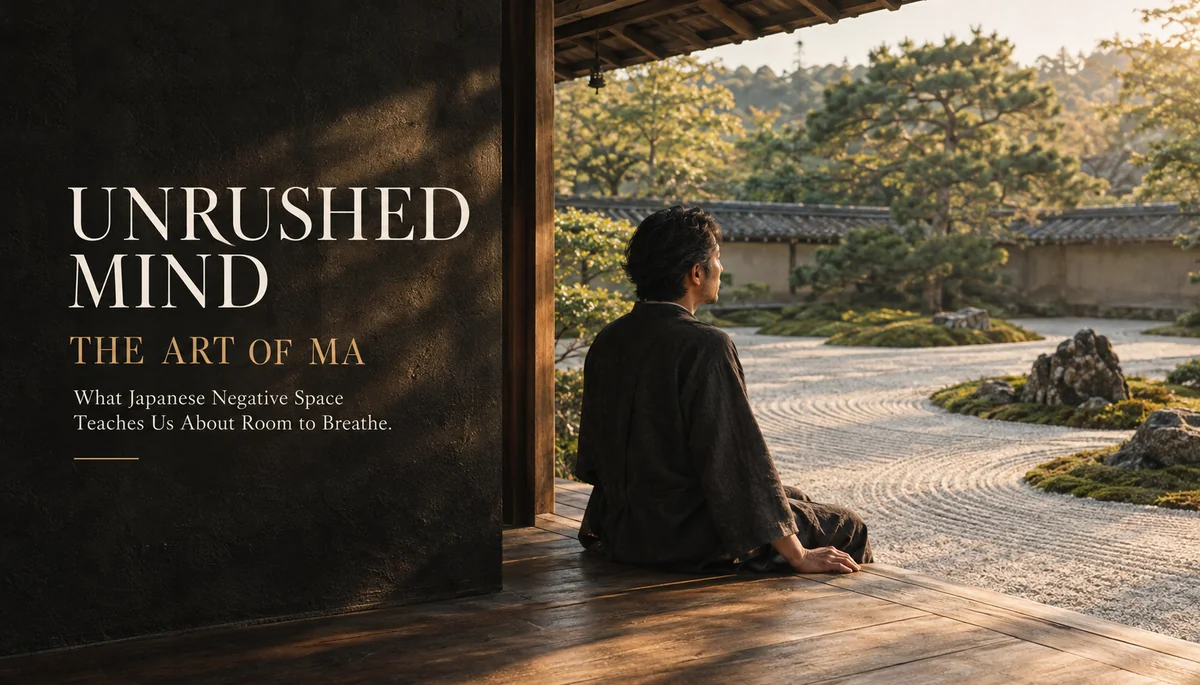
In Japanese aesthetics and philosophy, Ma (間) represents the conscious negative space or interval between objects, sounds, and moments. Rather than empty nothingness, Ma is a fertile pause that gives structure, clarity, and breath to life, allowing the mind to rest without guilt.
Without this sacred interval, we lose the room to remain human.
The Tyranny of the Filled Void
In modern culture, an ancient anxiety persists: horror vacui—the fear of empty space.
We see an empty shelf and buy an object to fill it; we see an unscheduled afternoon and invent tasks to justify our presence.
We reach for phones at traffic lights because stillness feels intolerable to an overstimulated system.
Yet as we explored in The Guilt of Doing Nothing, this reflex is not healthy ambition.
It is an anxious reaction born of a culture that equates human worth with non-stop velocity.
When every moment is occupied, the nervous system remains in chronic vigilance, unable to metabolize emotional fatigue.
The Fertile Emptiness of ‘Ma’
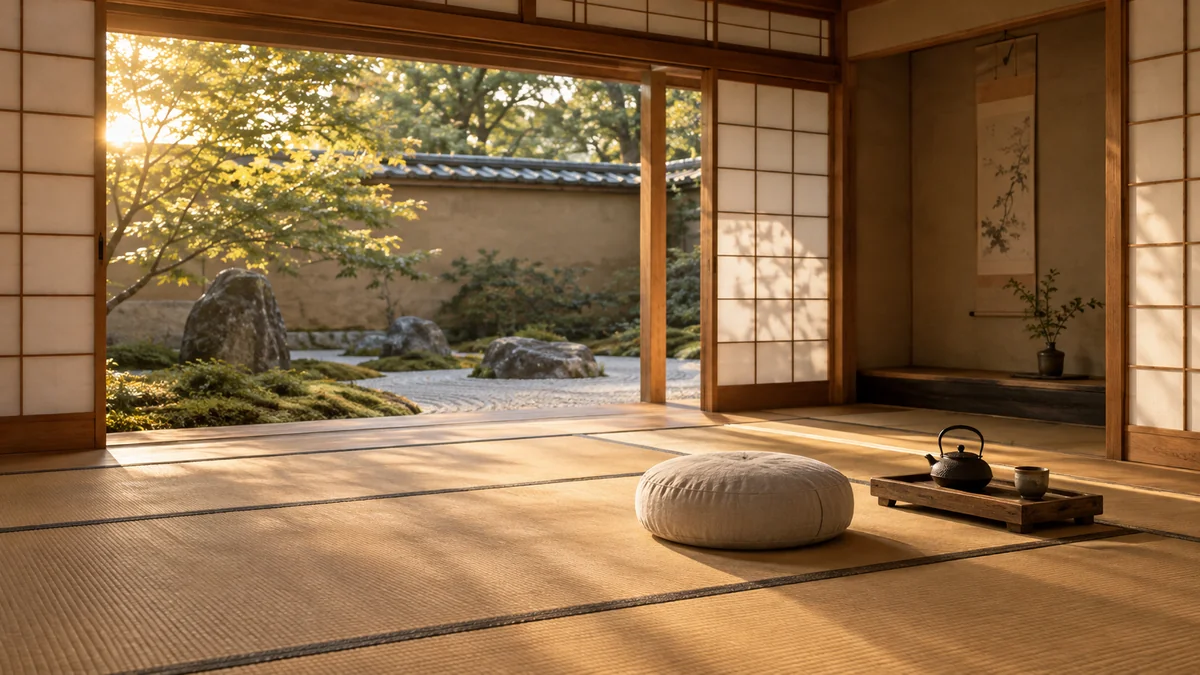
The Japanese kanji for Ma (間) depicts sunlight shining through an open temple gate.
It does not signify cold absence, but the intentional opening through which light and wind pass freely.
In Noh theater, the deepest resonance occurs in the motionless stillness between gestures.
In Ikebana, a master prunes away blossoms so a single branch can command the quiet room.
As Lao Tzu noted: we shape clay into a pot, but its usefulness lies in the empty space within.
Notes without pauses are merely jarring noise, and days without whitespace become a respectable form of self-erasure.
Diagnostic: Clutter vs. Sacred Negative Space
Understanding your current relationship with stillness reveals where attention has fractured:
| Dimension | The Vacui Panic Captive | The Restless Multi-tasker | The ‘Ma’ Sanctuary Aligner |
|---|---|---|---|
| Unscheduled Time | Triggers panic and frantic chores | Filled with browsing and background audio | Welcomed as a restorative haven for presence |
| Physical Space | Surfaces crowded with clutter | Constantly reorganizing items | Preserves bare surfaces to anchor calm |
| Transitional Gaps | Back-to-back commitments | Scans messages between tasks | Protects a 10-minute pause between tasks |
| Silence | Avoids silence; fears unaddressed feelings | Tolerates quiet only while exercising | Rests comfortably within quietude |
Recognizing where you stand is the first step toward releasing the urgency we examined in The Illusion of Urgency.
The Sacred ‘Ma’ Protocol: 4 Steps to Mental Whitespace
Cultivating negative space does not require moving to a distant Zen monastery.
It requires the courageous choice to leave margins on everyday life:
1. The 10-Minute Decompression Gap
Never schedule commitments back-to-back.
Build a 10-minute buffer after every call or meeting.
Use this window to close your eyes, breathe, and let your nervous system reset before moving forward.
2. The Sacred Unoccupied Surface
Designate one surface in your space—a desk or bedside table—that remains completely bare.
No cables, papers, or trinkets are permitted on this plane.
Whenever your eyes rest on this clean plane, let it anchor your mind in the safety of emptiness.
3. The Sunset Sensory Pause
At twilight, step away from all screens for 15 minutes.
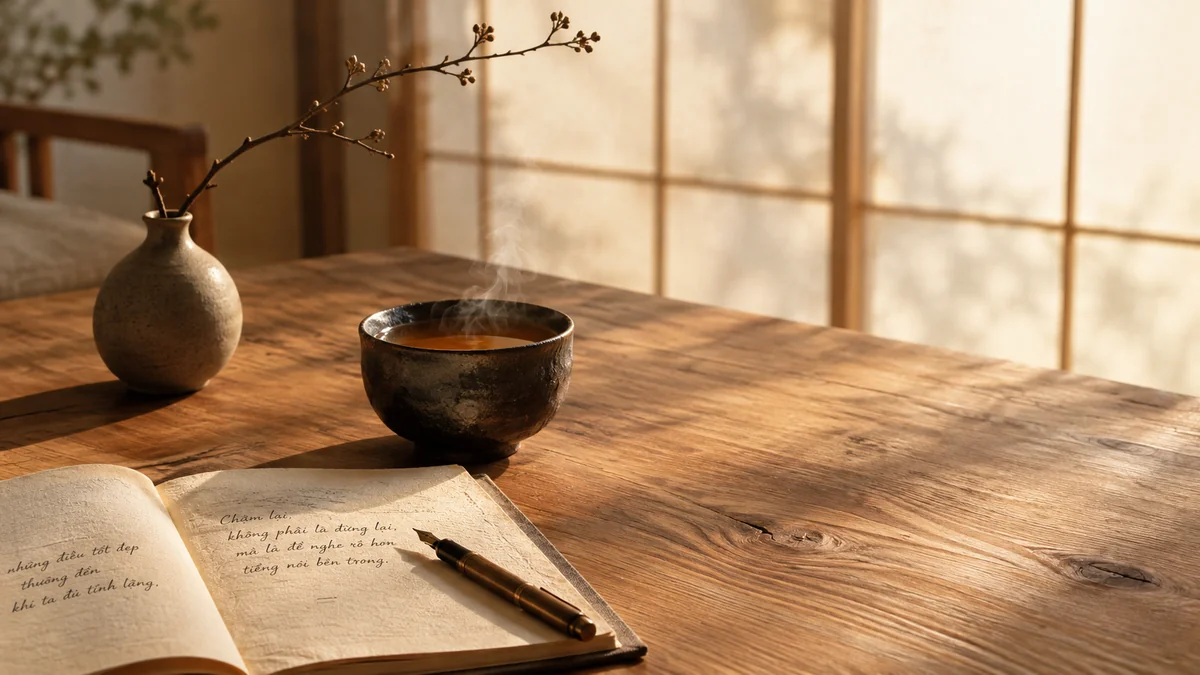
Sit beside a window in soft 2700K ambient light as shadows lengthen.
This practice honors the biological dusk that modern lighting erases.
4. Mindful Gaze at Empty Vistas
Whenever possible, rest your eyes on open horizons—a clear sky, a quiet lake, or a stone garden.
As explored in Kyoto in Stillness, gazing at open space quiets the brain’s default network, dissolving mental chatter into the landscape.
The Dignity of the Unfilled Margin
A life without negative space is like a book printed without margins: exhausting to read and painful to hold.
You do not need to fill every silence to prove your worth, nor justify an empty afternoon.
As observed in The Art of Non-Violent Detachment, true grace begins with stepping back and allowing life to breathe.
Give yourself permission to pause between the notes.
That unhurried space is where life actually happens.
A Gentle Sanctuary Note on Mindful Stillness
If entering silence triggers bodily restlessness, do not force rigid meditation.
Begin with somatic grounding, such as warm tea or a mindful walk as outlined in The Art of Flânerie.
Negative space is a gentle refuge designed to welcome you home, not a test of endurance.
Frequently Asked Questions