We inhabit a culture intoxicated by the artificial illusion of the unblemished. From backlit glass screens to sterile white interiors, society demands that nothing ever crack, fade, or age. Nowhere is this commercial cruelty more exhausting than in our fear of physical aging. We are urged to wage war against softening jawlines, silvery temples, and […]
We inhabit a culture intoxicated by the artificial illusion of the unblemished.
From backlit glass screens to sterile white interiors, society demands that nothing ever crack, fade, or age.
Nowhere is this commercial cruelty more exhausting than in our fear of physical aging.
We are urged to wage war against softening jawlines, silvery temples, and gentle wrinkles etched across our skin.
Yet in our desperate attempt to freeze time, we sever our connection to the oldest aesthetic truth on earth: wabi-sabi.
Quick Answer: Wabi-sabi is the ancient Japanese philosophy of finding serene beauty in things that are imperfect, impermanent, and incomplete. Rather than fearing physical aging or decay, it reclaims weathered transience—celebrating patina, wrinkles, and cracked clay as sacred testaments to a life deeply lived.
The Three Noble Truths of Weathered Transience
Born from medieval Zen Buddhism and rustic tea ceremonies, wabi-sabi is an intimate contemplation of reality as it is.
The philosophy rests upon three cosmic laws that industrial modernity desperately seeks to deny.
The first truth is that nothing lasts.
Every blossom must surrender its petals to autumn soil, and every stone cliff will eventually soften under the tide.
The second truth is that nothing is finished.
The universe is not a static museum, but an unhurried, unfolding dance of generation and decay.
The third truth is that nothing is perfect.
Machine precision yields sterile symmetry, while the handmade bowl carries irregularities that give it warmth and breath.
When you resist these truths, you suffer.
When you surrender to them, an overwhelming sense of relief fills your heart.
Diagnostic Reflection: Industrial Perfection vs. Wabi-Sabi Grace
Recognizing how commercial perfectionism infects our perception is essential for restoring self-compassion.
Transience is not an error to be corrected; it is the very fabric of existence.
| Domain of Life | The Industrial Perfection Trap | The Wabi-Sabi Soulful Grace |
|---|---|---|
| Physical Aging | Views wrinkles and silver hair as personal decay to be erased through cosmetic intervention. | Honors skin as a living canvas, where laughter lines and silver hair reveal earned wisdom. |
| Everyday Objects | Discards scratched timber or chipped mugs for sterile, mass-produced replacements. | Reveres the patina of aged wood, worn leather, and weathered stone as sacred history. |
| Living Environment | Demands airbrushed catalog perfection devoid of human presence or natural shadows. | Embraces raw textures, dim candlelight, and quiet breathing room for contemplative peace. |
| Emotional Scars | Hides grief and failure beneath performative smiles and toxic positivity. | Mends wounded hearts with gentle acceptance, transforming trauma into quiet strength. |
4 Contemplative Practices to Cultivate Wabi-Sabi
Embracing the quiet dignity of decay requires unlearning decades of consumer conditioning.
Here are four gentle ways to welcome wabi-sabi into your daily sanctuary.
1. Cherish the Patina of Your Space
Look around your room and notice the objects that have quietly shared your life.
The dent in your writing desk, the soft fraying along a linen throw—these are not defects.
They are the tangible footprints of your time on this earth.
Surround yourself with materials that age with dignity: unvarnished oak, rough ceramics, and porous clay.
2. Reframe Wrinkles as Maps of Meaning
When you stand before the mirror in the morning light, look past commercial critique.
The fine creases around your eyes are the geography of every smile you have ever shared.
The lines across your brow are the quiet marks of storms weathered with courage.
A flawless face tells no story, while a weathered countenance radiates the majesty of a life actually lived.
3. Mend What Is Fractured with Golden Reverence
In Japanese tradition, broken ceramics are not tossed into the bin.
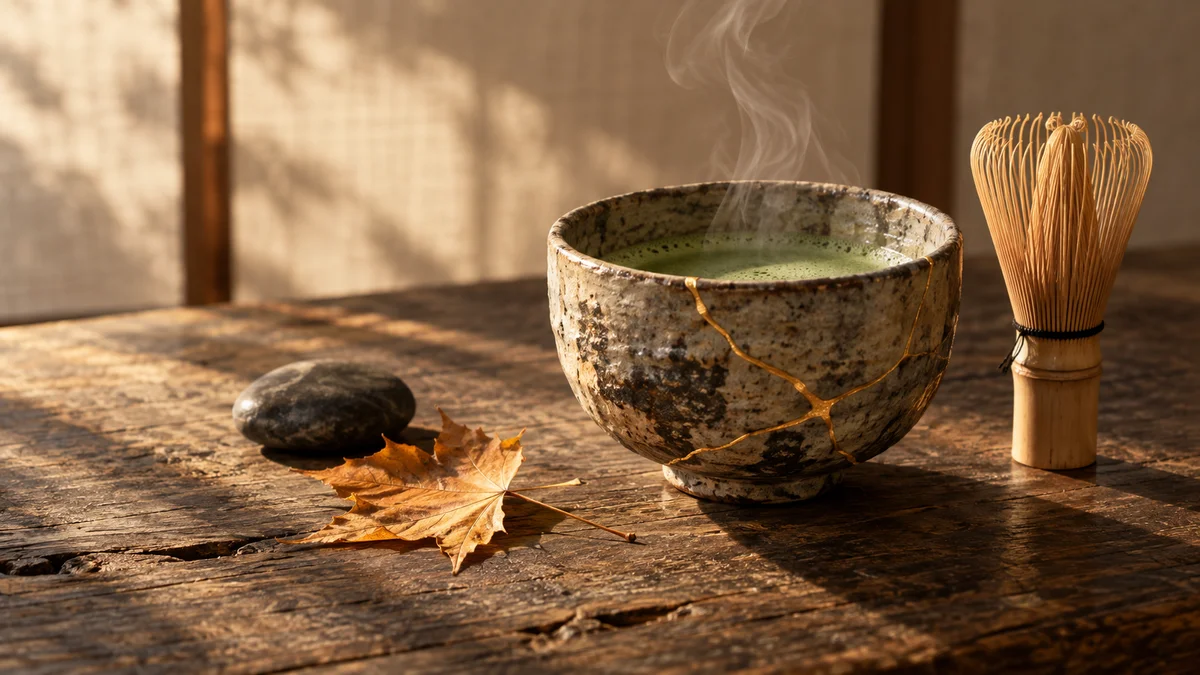
They are restored through the art of kintsugi and golden scars, using lacquer dusted with pure gold.
The mended crack is not hidden; it is highlighted as the most compelling chapter of the vessel’s journey.
Apply this same tenderness to your inner fractures.
Your heartbreaks and past missteps do not make you damaged goods; they are the gold-lined seams of your resilience.

4. Practice the Serenity of the Unfinished
Our culture convinces us that we must reach a state where life is neatly solved and complete.
Yet life will always remain deliciously unfinished.
Just as ancient masters left unpainted voids on scrolls of ink, leave space in your schedule for emptiness.
Find solace in kyoto in stillness and ancient zen temples, where weathered wooden verandas invite the mind to rest without explanation.
The Sacred Release: Surrendering to the Stream of Time
To love wabi-sabi is to make peace with the melancholy beauty of our mortality.
Things are precious precisely because they do not last forever.
A plastic blossom remains bright for decades, yet evokes no wonder because it carries no risk of dying.
A plum blossom falling in the dawn breeze breaks our heart into awe because its beauty is fleeting.
Surrendering to the passage of time is not giving up; it is coming home to your natural self.
Frequently Asked Questions