Revenge Bedtime Procrastination: Why You Refuse to Sleep Even When You Are Desperately Tired It is well past midnight, and your eyelids are heavy with exhaustion. Yet you remain awake in the dim glow of your room, scrolling endlessly and refusing to close your eyes. You know tomorrow will bring punishing fatigue and quiet regret. […]
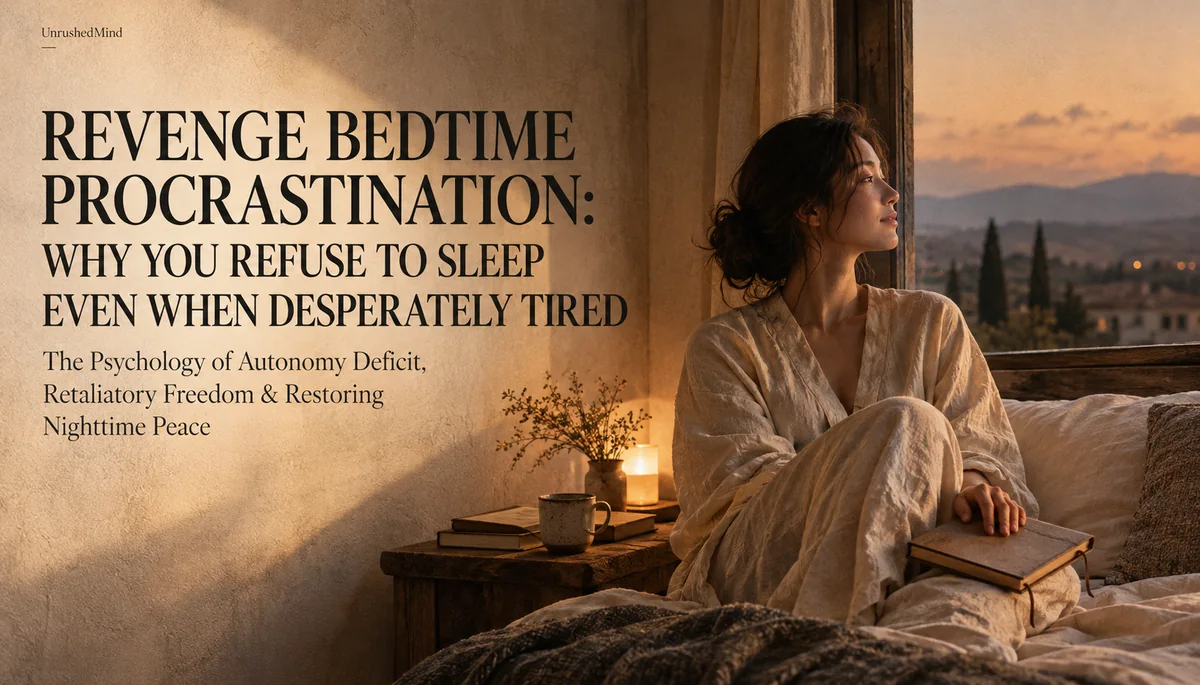
Revenge Bedtime Procrastination: Why You Refuse to Sleep Even When You Are Desperately Tired
It is well past midnight, and your eyelids are heavy with exhaustion.
Yet you remain awake in the dim glow of your room, scrolling endlessly and refusing to close your eyes.
You know tomorrow will bring punishing fatigue and quiet regret.
Still, a defiant voice whispers within: if you sleep now, tomorrow begins immediately, and your only free hours vanish.
Revenge bedtime procrastination is a psychological phenomenon where individuals delay sleep without external necessity, retaliating against daytime autonomy deficits. When daylight hours are dominated by obligations, staying awake late becomes a subconscious attempt to reclaim sleep procrastination revenge bedtime freedom.
The Midnight Revolt: Reclaiming Stolen Hours
First identified in public health research as bàofùxìng áoyè, this nocturnal revolt is rarely about loving the night.
Instead, it is a silent protest against a daylight schedule that robbed you of agency and stillness.
From morning to dusk, your hours belonged to employers, meetings, and unending obligations.
Nighttime arrives as the only remaining sanctuary free from external evaluation.
In quiet darkness, surrendering your remaining hours to sleep feels like defeat.
You cling to wakefulness because it is the solitary hour when you feel you belong to yourself.
Yet trading tomorrow’s vitality for midnight solace only deepens the underlying exhaustion.
The Autonomy Deficit: Why Willpower Fails at Night
Standard advice treats late-night scrolling as a simple failure of personal discipline.
Well-meaning guides prescribe stricter alarms, hidden screens, and rigid bedtime routines.
Yet approaching this through sheer willpower fundamentally misunderstands human neurobiology.
By midnight, your prefrontal cortex is thoroughly drained from hundreds of daily decisions.
Your inhibitory control is depleted, leaving you defenseless against algorithmic dopamine loops.
You are experiencing an acute autonomy deficit paired with cognitive exhaustion, not a moral failure.
As explored in our reflection on when the mind refuses to sleep, forcing tranquility onto a resentful mind only breeds deeper insomnia.
Healing begins when you recognize your nocturnal rebellion with compassion rather than shame.
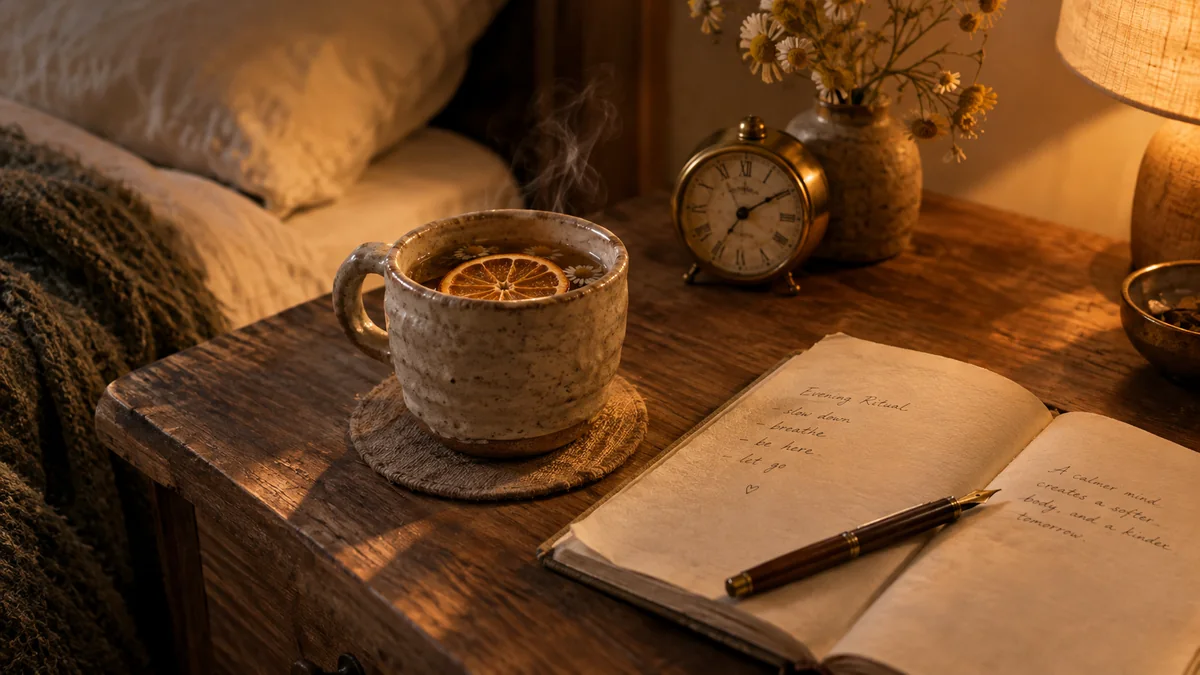
The Biological Deception of the ‘Second Wind’
Around 11:00 PM, many exhausted people experience a sudden surge called the ‘second wind.’
You mistakenly assume your mind has refreshed itself, ready for late-night creativity or entertainment.
In biological reality, this surge is not restored vitality, but an emergency release of cortisol and adrenaline.
Your brain detects that you are overriding circadian cues and triggers stress hormones to keep you upright.
Meanwhile, deeper restorative stages of slow-wave sleep and cellular repair are drastically shortened.
Breaking this cycle requires stepping out of emergency arousal and inviting true physiological safety back.
The Architecture of Evening Peace: Three States Compared
To transform midnight resistance into peaceful rest, one must recognize how our relationship with the evening evolves.
| The Reactive Resister | Somatic Realignment | Restored Nighttime Sanctuary |
|---|---|---|
| Steals back midnight hours in anger. | Introduces micro-pauses before dusk. | Nighttime feels like a sacred gift of renewal. |
| Scrolls screens to numb daytime overwhelm. | Replaces rapid dopamine with analog unwinding. | Welcomes darkness as a comforting cocoon. |
| Fears tomorrow as an inevitable ambush. | Reassures the nervous system that burdens can wait. | Awakens refreshed with grounded calmness. |
| Views sleep as an inconvenient chore. | Discovers sleep as the supreme act of self-care. | Embraces effortless natural surrender. |
Four Somatic Shifts to End the Midnight Revolt
Restoring nighttime peace does not require rigid control; it invites a gentle rebalancing of your days.
1. Claim Daytime Sovereignty Pockets
You cannot starve yourself of autonomy all day and expect to surrender peacefully at night.
Carve out ten-minute windows during daylight where you answer to nobody and produce nothing.
When your soul tastes authentic freedom during the day, it stops demanding revenge after midnight.
2. Reframe Sleep as an Act of Sacred Rebellion
Modern hustle culture convinces us that sleep is lazy and staying up late is a badge of honor.
In truth, deep sleep is the ultimate counter-cultural protest against an exploitative world.
Sleep is not lost time; it is the holy workshop where your cells and spirit are renewed.
3. Lower Your Evening Sensory Threshold
Bright overhead lighting and vibrant smartphone pixels convince your brain that it is still midday.
Two hours before bed, dim your lighting to warm amber tones below 2200K and set screens aside.
Lowering sensory input signals to your nervous system that the day is over and safety has arrived.
4. Surrender Through the Exhale
When you lie in bed feeling the residual momentum of the day, do not fight your thoughts with force.
As detailed in our guide to the practice of non-sleep deep rest, prolonged exhalations help release chronic somatic tension.
Feel the heavy weight of the mattress rising to support you, and let your body melt into the dark.
Frequently Asked Questions
The Peace of Laying Down Your Arms
You do not have to fight the night to prove that your life belongs to you.
The darkness is not an adversary trying to steal your freedom; it is a gentle sanctuary offering you refuge.
Let the unfinished emails, the unread news, and the lingering worries dissolve into the shadows.
Tomorrow will hold its own battles, but this sacred hour asks nothing of you except your presence.
Close your eyes, unclench your jaw, and sink into the quiet sanctuary of genuine rest.
You have survived the day, and you are finally home.