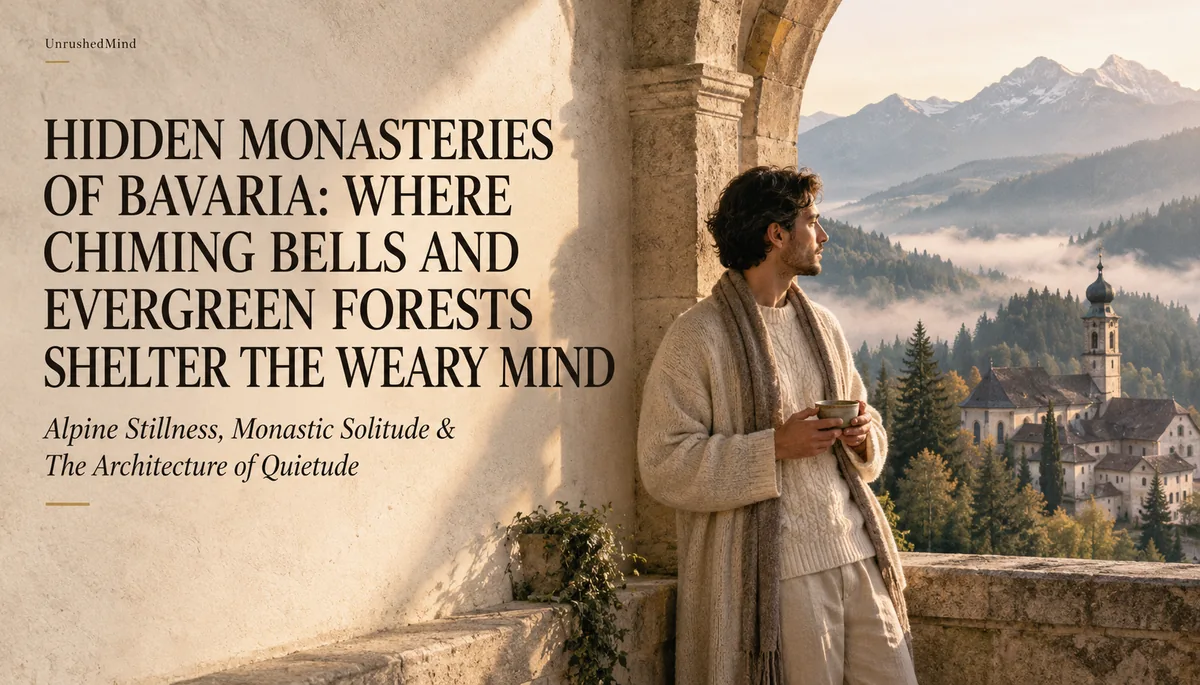
The relentless drone of city traffic, chime of notifications, and fluorescent hum of office towers leave little space for the human soul to breathe. Every morning, millions wake up to sensory stimulation that demands immediate attention and constant mental bandwidth. Even our vacations have fallen prey to modern urgency. We pack itineraries with crowded landmarks, […]
The relentless drone of city traffic, chime of notifications, and fluorescent hum of office towers leave little space for the human soul to breathe.
Every morning, millions wake up to sensory stimulation that demands immediate attention and constant mental bandwidth.
Even our vacations have fallen prey to modern urgency.
We pack itineraries with crowded landmarks, rushing from one photo opportunity to another only to return home more exhausted than when we departed.
Yet hidden deep within the forested foothills and dramatic valleys of the Bavarian Alps, an entirely different rhythm survives.
Tucked behind dense screens of spruce and fir, historic Bavarian monasteries have offered quiet refuge to weary travelers for over a millennium.
Here, beneath soaring limestone arches and amid ancient evergreen woodlands, time ceases to be a harsh taskmaster and becomes a spacious sanctuary.
To cross the threshold of a Bavarian cloister is to step into an environment where silence is revered not as a hollow absence, but as a living presence that heals the overwhelmed spirit.
The Architecture of Silence: Why the Weary Mind Craves Monastic Stillness
Hidden monasteries in Bavaria offer sacred sanctuaries where ancient stone cloisters, chiming dawn bells, and dense evergreen forests dissolve urban exhaustion. Practicing slow contemplation within these historic monastic retreats restores autonomic nervous balance, inviting weary travelers into deep, restorative peace.
Urban life subjects the central nervous system to relentless sensory overload.
Sirens, flashing advertisements, and perpetual digital demands keep the sympathetic fight-or-flight response chronically activated.
Over months and years, this unending auditory clutter drains mental bandwidth and dulls our capacity for reflection.
Monastic architecture provides an immediate physical antidote to this chronic agitation.
Thick sandstone walls, vaulted stone ceilings, and enclosed quadrangle cloisters naturally filter out exterior disruption.
When the monastery bells chime at dawn, their deep bronze resonance does not startle the senses.
Instead, acoustic studies reveal that the sustained low-frequency vibrations of traditional bells act as an acoustic anchor, slowing cardiac rhythm and deepening breath.
Surrounded by silent courtyards and ancient wood, the mind finally stops bracing for the next disturbance.

3 Ways We Travel: From Rushed Sightseeing to Monastic Presence
How we approach travel reveals our deepest relationship with time and inner peace.
When exhaustion strikes, many seek distraction without realizing that stillness is what their bodies truly require.
| The Rushed Sightseer | The Escapist Tourist | The Mindful Monastery Pilgrim |
|---|---|---|
| Counts destinations visited and consumes places as consumer commodities. | Uses luxury entertainment and digital devices to numb fatigue temporarily. | Inhabits space with reverence, listening to the quiet cadence of stone and forest. |
| Returns home physically drained with thousands of unviewed smartphone photos. | Experiences post-vacation depression when returning to ordinary urban demands. | Integrates lasting inner spaciousness, carrying quiet grace back to daily life. |
| Operates under anxiety, fearing missed sights or imperfect vacation moments. | Avoids stillness, fearing boredom or unresolved emotional thoughts. | Welcomes stillness as medicine, allowing thoughts to settle like alpine water. |
For centuries, the monks of Bavaria lived by the Benedictine motto Ora et Labora—prayer, contemplation, and mindful labor.
They recognized that a meaningful human life requires intentional white space between daily tasks.
Entering this monastic cadence allows you to release the compulsion to produce, compete, or prove your worth.
4 Contemplative Rhythms of Bavarian Monastic Retreats
When visiting these Alpine sanctuaries, adopting simple contemplative habits transforms a brief visit into lasting restoration.
Here are four grounding practices to experience the restorative magic of Bavarian monastery retreats:
- The Dawn Bell Awakening: Wake as the first bell reverberates across the valley mist. Step outside onto stone terraces to inhale crisp mountain air scented with resin and wet moss before any digital device is turned on.
- Evergreen Forest Flânerie: Walk unhurried along winding woodland trails beneath towering Bavarian spruces. Inhaling aromatic airborne phytoncides released by evergreens reduces blood pressure and lowers stress hormones naturally.
- The Monastic Communion of Plain Bread and Tea: Sit at a heavy timber refectory table to savor locally baked sourdough bread, artisanal cheese, and hot wild-thyme tea in grateful silence, honoring the simplicity of sustenance.
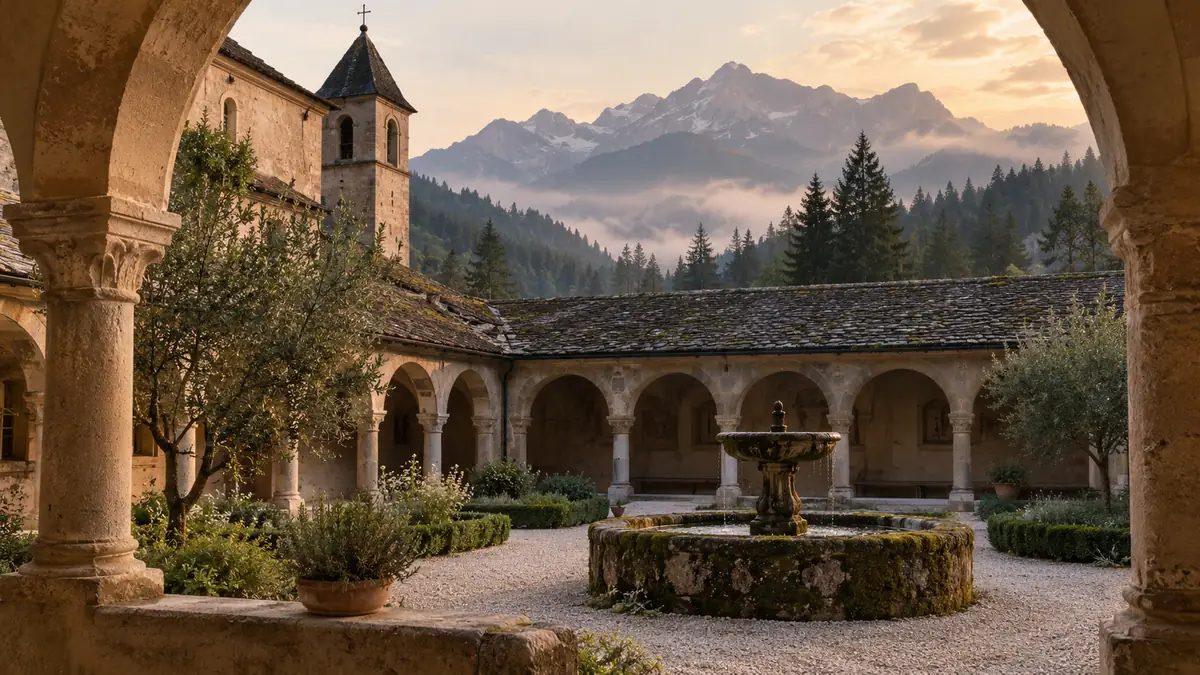
- Cloistered Twilight Silence: As dusk settles over the Alps, walk along ancient stone arcades. Trace your hand along cool limestone pillars that have stood for seven hundred years, resting in their quiet endurance.
Frequently Asked Questions About Bavarian Monastery Retreats
- Do I need to belong to a specific faith to visit Bavarian monasteries?
- No. Bavarian monasteries welcome visitors and retreat guests of all backgrounds, valuing hospitality, quiet reflection, and mutual respect above dogma.
- How does monastic silence benefit an exhausted nervous system?
- Prolonged quiet lowers baseline cortisol, shifts brainwave activity toward calm alpha rhythms, and allows the prefrontal cortex to recover from constant multitasking.
- Which Bavarian monasteries are most renowned for peaceful visits?
- Kloster Ettal in the Ammergau Alps, Weltenburg Abbey situated beside the dramatic Danube Gorge, and Andechs Abbey perched on the Holy Mountain offer profound natural tranquility.
A Quiet Note for the Weary Soul: You do not need to abandon the modern world permanently to discover peace.
When life becomes too deafening and your inner reserves run dry, remember that sacred spaces still endure.
Beneath the whispering Bavarian pines, ancient stone walls stand open and quiet bells still chime, waiting to shelter your weary heart whenever you choose to slow down.