Have you ever caught yourself staring at bleak economic headlines, feeling a quiet chill tighten around your chest? Perhaps you have watched everyday expenses climb, wondering how long your savings can endure before the ground gives way. Even when bills are settled, a phantom dread whispers that security is fragile and that one sudden setback […]
Have you ever caught yourself staring at bleak economic headlines, feeling a quiet chill tighten around your chest?
Perhaps you have watched everyday expenses climb, wondering how long your savings can endure before the ground gives way.
Even when bills are settled, a phantom dread whispers that security is fragile and that one sudden setback could ruin everything.
In our modern world, economic anxiety rarely stems from immediate physical starvation; it is born from the relentless anticipation of loss.
We exhaust our nervous systems trying to build an impenetrable fortress of wealth, hoping more income will finally silence this fear.
Yet that promised peace never arrives. The fortress merely demands more energy to defend.
The Antidote to Scarcity: Seneca’s Letter on Practiced Poverty
Two thousand years ago, Lucius Annaeus Seneca—one of the wealthiest men in imperial Rome—recognized this exact psychological trap.
Seneca observed that those surrounded by great luxury often live in terror of losing it.
His remedy was neither reckless hoarding nor despair. It was an intentional inoculation of the mind through voluntary simplicity.
In his eighteenth letter to Lucilius, Seneca prescribed a radical exercise in emotional resilience.
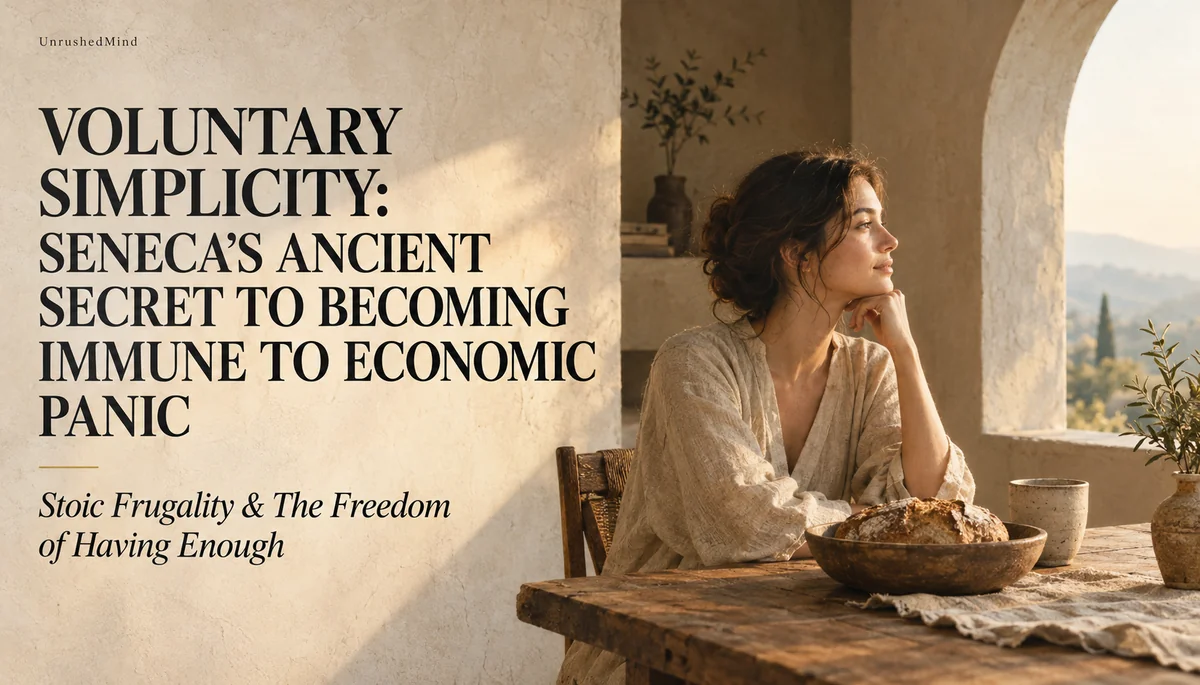
He urged Lucilius to spend a few days each month eating coarse bread, drinking water, and wearing rough clothing.
During these modest days, Seneca instructed him to look his circumstances in the eye and ask: “Is this the condition that I feared?”
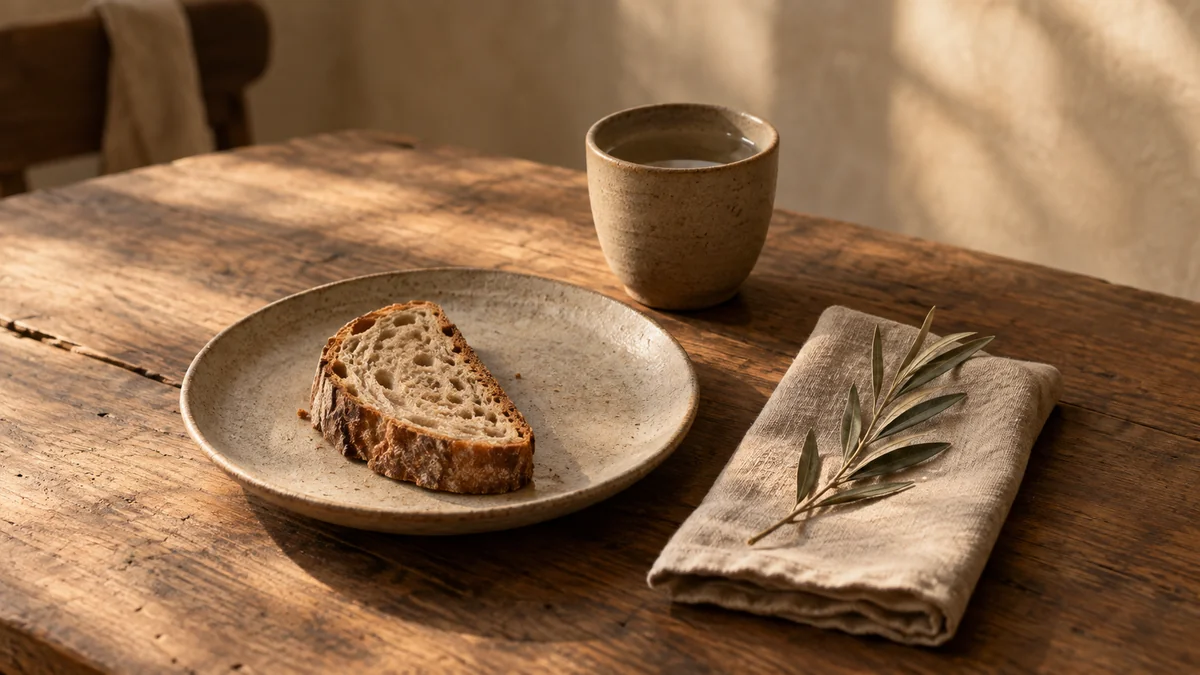
By tasting simple living willingly rather than dreading it in imagination, the paralyzing monster of financial ruin shrinks into manageable reality.
When you prove to your nervous system that you can live on very little and retain your dignity, external misfortune loses its power over you.
The Treadmill of Phantom Needs: Why More Money Never Feels Like Enough
Much of what we label financial panic is actually the hidden terror of lifestyle inflation.
When income expands, our definition of “bare necessity” quietly expands along with it.
Rare luxuries quickly harden into baseline requirements, chaining our peace to relentless consumption.
The ancient Stoics drew a sharp boundary between natural needs and phantom desires.
Biological needs are modest: nourishing food, clean water, warm clothing, and shelter. Nature asks for very little to sustain life.
It is borrowed desires—the thirst for social status and prestige—that demand an endless sacrifice of your sanity.
Voluntary simplicity is neither ascetic punishment nor hardship.
It is uncoupling your worth from what you own, reclaiming quiet sovereignty from consumer culture.
| The Consumer Treadmill | The Scarcity Panic | Stoic Voluntary Simplicity |
|---|---|---|
| Endless Upgrades | Believing safety requires more income and constant consumption. | Realizing true safety lies in needing very little to be content. |
| Living in Fear | Paralyzed by catastrophic “what-if” scenarios of financial collapse. | Rehearsing simplicity today to prove that hardship cannot break inner calm. |
| External Worth | Measuring dignity by material status and comfort. | Deriving unshakeable dignity from self-possession and presence. |

Three Gentle Micro-Practices of Modern Voluntary Simplicity
You do not need to abandon modern life to cultivate Seneca’s unshakeable calm.
You can weave small, gentle boundaries into your week to remind your body of its natural resilience.
1. The 48-Hour Pantry Weekend
Choose one weekend a month to step off the commercial wheel.
Cook simple meals using pantry staples you already own, refraining entirely from delivery apps or shopping.
Notice the stillness that emerges when you stop deciding what to buy, enjoying the uncomplicated sweetness of plain food.
2. The 30-Day Cooling Interval
Whenever an urge arises to buy a non-essential item, write it down and wait thirty days before purchasing.
In most cases, the emotional impulse evaporates, revealing that the desire was merely an attempt to soothe fatigue.
3. The Sovereignty Audit
Walk slowly through your home and observe your belongings with gentle, detached eyes.
Ask yourself: “Does this possession serve my peace, or am I working extra hours to maintain it?”
Letting go of unused objects lightens the psychic load your attention carries each day.
Frequently Asked Questions About Stoic Simplicity and Economic Peace