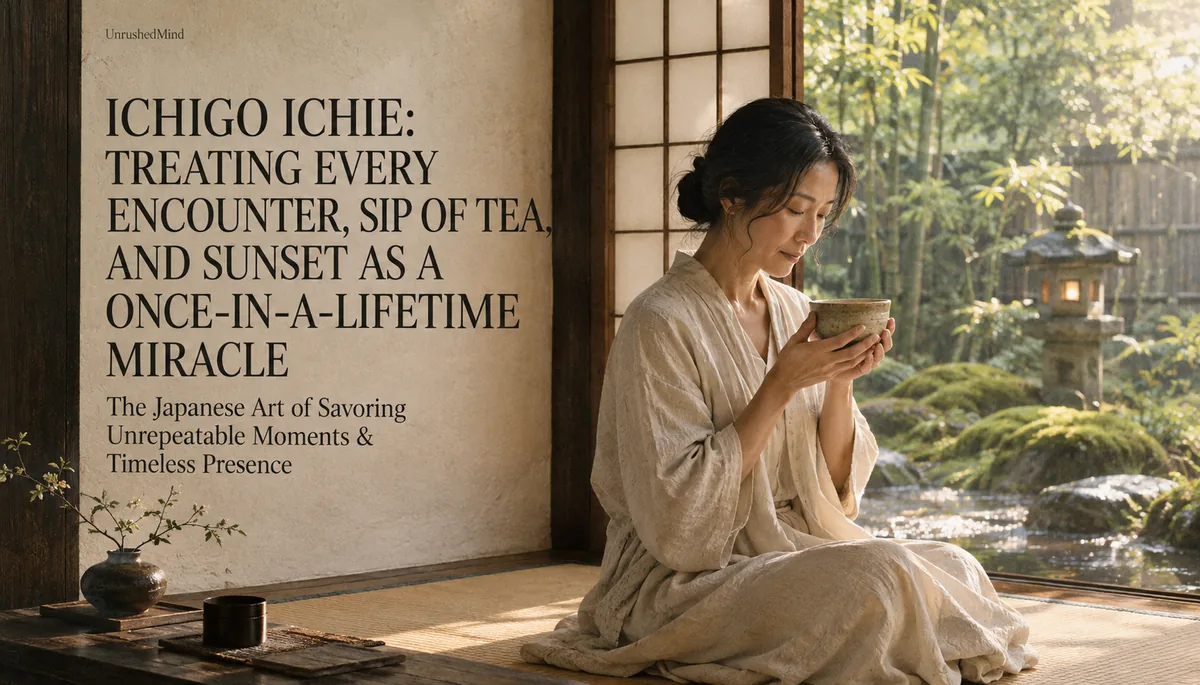
How many moments of your life have slipped by while your mind was already racing toward the next task? You drink your morning tea while skimming through frantic notifications, barely tasting its quiet earthy warmth. You sit across from someone you love, yet your eyes drift to a glowing screen while their words fade into […]
How many moments of your life have slipped by while your mind was already racing toward the next task?
You drink your morning tea while skimming through frantic notifications, barely tasting its quiet earthy warmth.
You sit across from someone you love, yet your eyes drift to a glowing screen while their words fade into background noise.
We move through our days under the comforting illusion that everything will repeat itself endlessly.
We tell ourselves there will always be another evening walk, another shared breakfast, and another quiet conversation.
Yet ancient Japanese tea masters understood a profound truth that modern culture has forgotten: no two moments ever repeat.
The Heart of Ichigo Ichie: The Miracle of the Unrepeatable Present
Ichigo Ichie (一期一会), translating to “one time, one meeting,” is the ancient Japanese realization that this present encounter will never happen again in the history of the universe. Even if the same people meet in the exact same room tomorrow, time, age, and consciousness have irrevocably shifted.
The concept was born in sixteenth-century Japan through the revered tea master Sen no Rikyu.
He instructed his disciples to approach every tea gathering as though it were the only one in their lifetime.
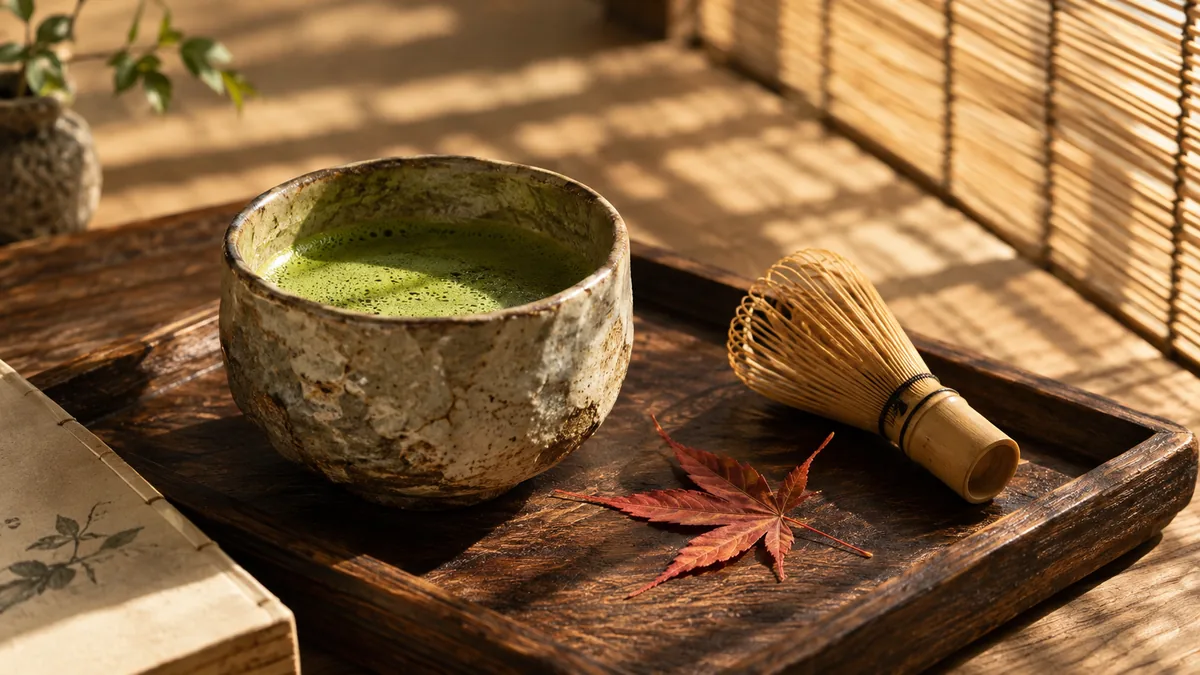
When you sit on the tatami mat and lift a warm ceramic bowl, you are not merely drinking tea.
You are participating in a fragile alignment of light, breath, and presence that can never be recreated.
In our hurried world, we defer joy, deep listening, and gentle observation to an elusive future.
Ichigo Ichie dissolves that postponement with a tender reminder: this moment is all you are ever guaranteed.
The Burden of Half-Presence: How Rushing Erodes Our Soul
The most pervasive exhaustion of our era is not physical fatigue, but chronic sensory fragmentation.
We constantly divide our attention between the physical ground beneath our feet and the digital ether in our hands.
When we offer someone half of our presence, we rob the relationship of depth and leave ourselves feeling empty.
Living without awareness turns our days into a blurry continuum where weeks vanish without leaving a meaningful memory.
| Mode of Living | Cognitive & Sensory State | Impact on Life Meaning |
|---|---|---|
| The Distracted Rusher | Body is physically present while attention is trapped in notifications, future deadlines, or past regrets. | Days blur into endless tasks; chronic emptiness and emotional detachment. |
| The Nostalgic Clinger | Mourns past seasons; constantly measures today against idealized memories that cannot return. | Unable to receive the gifts of the present; blinds the heart to fresh beauty. |
| The Ichigo Ichie Practitioner | Anchors awareness in the immediate texture of breath, eye contact, and quiet surroundings. | Deep gratitude, unshakeable inner calm, and sacred appreciation for ordinary moments. |
When you realize that an encounter is unrepeatable, rushing becomes absurd.
You stop treating conversations as obligations and begin honoring them as fragile, irreplaceable gifts.
Four Quiet Rituals to Awaken Ichigo Ichie in Daily Life
You do not need to retreat to a secluded temple in Kyoto to inhabit the grace of Ichigo Ichie.
You can begin cultivating this sacred reverence wherever you are through four gentle micro-rituals:
1. The Two-Handed Hold
Whenever you hold a cup of tea, lift it using both hands.
Feel the warmth against your palms, inhale the aroma, and take the first few sips in undivided silence.
This simple physical anchor grounds your nervous system and pulls your attention back into your body.
2. The “Last Time” Lens
Periodically ask yourself: If I knew this were the last time I would ever sit with this person, how would I listen?
Viewing everyday interactions through this gentle lens instantly dissolves irritation, impatience, and petty grievances.
3. The Unrecorded Sunset
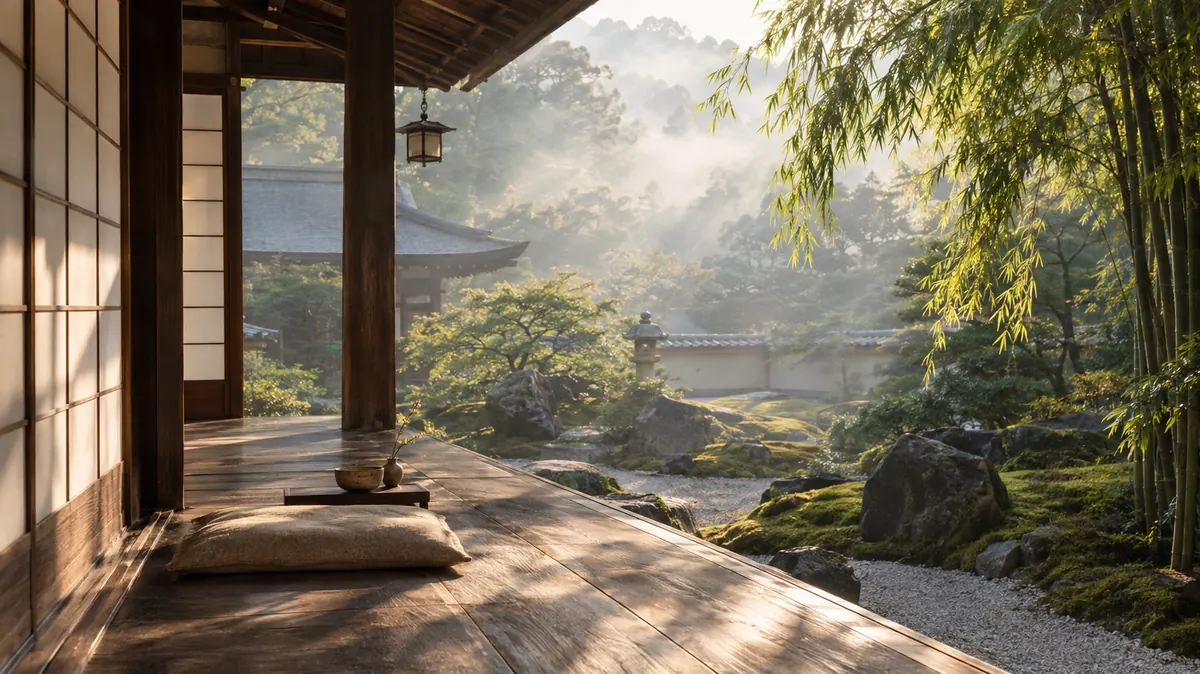
When you encounter a striking moment of beauty—an amber sunset or a gentle breeze—resist reaching for your camera.
The moment you frame an experience through a lens, you become an archivist rather than a participant.
Let the wonder wash over your senses without needing to display it to the world.
4. Entering the Chashitsu (The Threshold of Humility)
Traditional Japanese tea houses feature a miniature entrance requiring every guest to bend low and crawl inside.
All weapons and social titles were discarded before crossing that sacred threshold.
Create your own invisible threshold before entering your home: exhale deeply, leave your professional armor at the door, and step inside with an open heart.
Cultivating Presence Through Ichigo Ichie