If you sit in an empty chair for ten minutes without checking your phone, your body will likely interpret the silence as an emergency. Your shoulders tense, your pulse quickens, and a sharp internal voice whispers that you are falling behind. We live under the quiet tyranny of the utilitarian mind, where every waking hour […]
If you sit in an empty chair for ten minutes without checking your phone, your body will likely interpret the silence as an emergency.
Your shoulders tense, your pulse quickens, and a sharp internal voice whispers that you are falling behind.
We live under the quiet tyranny of the utilitarian mind, where every waking hour must justify its existence through measurable output.
Even our rest has been weaponized into self-improvement, tracking sleep stages, measuring meditation streaks, and optimizing leisure for better future performance.
When did simply being alive become something we have to apologize for?
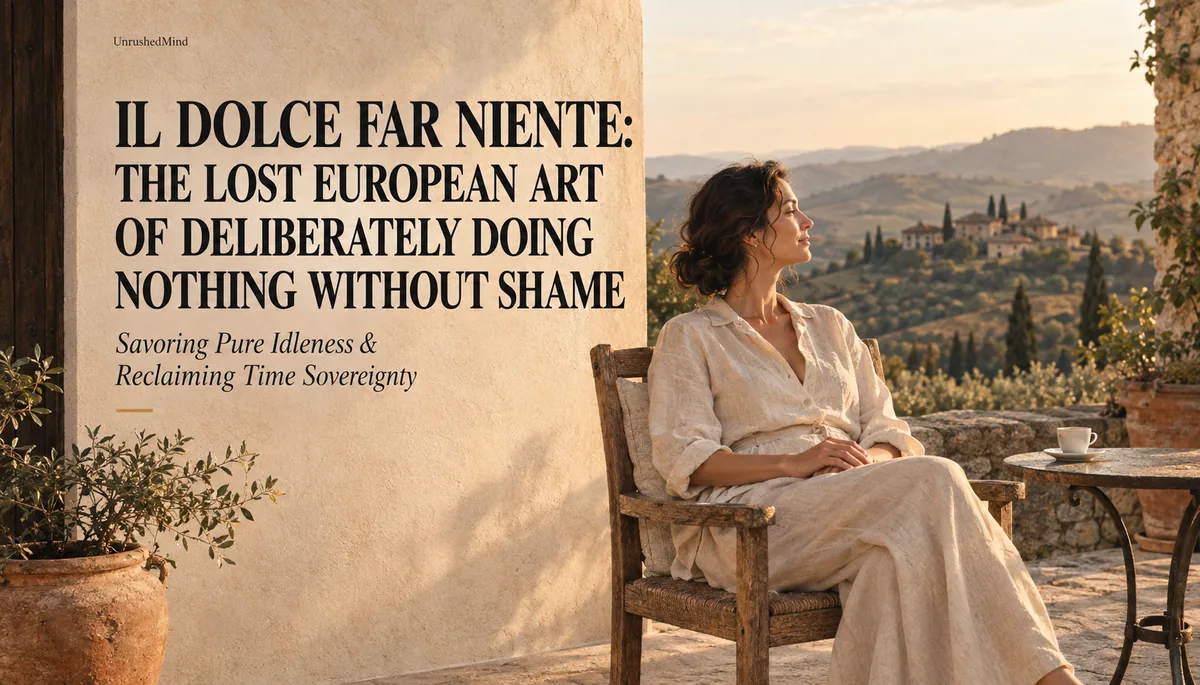
The ancient Mediterranean tradition offers a radical antidote to this modern exhaustion: il dolce far niente, the sweetness of doing nothing.
Il dolce far niente is the traditional Italian art of savoring idleness without guilt. Unlike passive numbing through screens, it is an active, conscious appreciation of pure existence—enjoying a quiet breath, warm sunlight, or conversation simply for their own sake.
The Modern Illusion: Why Scrolling Is Not Stillness
When modern workers finally collapse from exhaustion, they rarely experience true stillness.
Instead, we reach for our glowing screens, spending hours in a state of continuous partial attention and digital numbness.
You may spend three hours lying on the sofa watching short videos, yet you rise from that rest feeling more depleted, irritable, and fragmented than before.
Passive sedation drains the brain’s dopamine receptors and traps your nervous system in micro-arousal, scanning for threats and novel stimuli.
True idleness is fundamentally different: it does not numb reality; it welcomes reality with open hands.
To practice il dolce far niente is to sit by an open window, watching dust motes dance in the late afternoon sun, asking nothing of the moment and demanding nothing of yourself.
The Spectrum of Human Rest: Diagnosing Your Idleness
Understanding how you spend your unstructured hours is the first step toward reclaiming your peace.
| Mental State | Characteristic Behavior | Impact on Body and Mind |
|---|---|---|
| The Hyper-Productive Mind | Constantly optimizing free time; listening to educational podcasts on walks; feeling ashamed of unscheduled afternoons. | Chronic sympathetic arousal; high cortisol; loss of the capacity to experience spontaneous joy or presence. |
| The Screen-Numbed Mind | Collapsing into endless scrolling; bingeing content to avoid quiet thoughts; confusing dissociation with rest. | Dopamine depletion; cognitive fog; lingering guilt and lingering somatic tension after the screen turns off. |
| The Dolce Far Niente Mind | Savoring an unhurried beverage; watching clouds drift; leaning against warm stone; resting without apology. | Parasympathetic restoration; activation of the Default Mode Network; deep renewal of time sovereignty and creative ease. |
Four Micro-Protocols for Deliberate Non-Action
Relearning how to do nothing requires gentle, non-coercive practice, not another demanding regimen.
1. The Unmediated Morning Drink
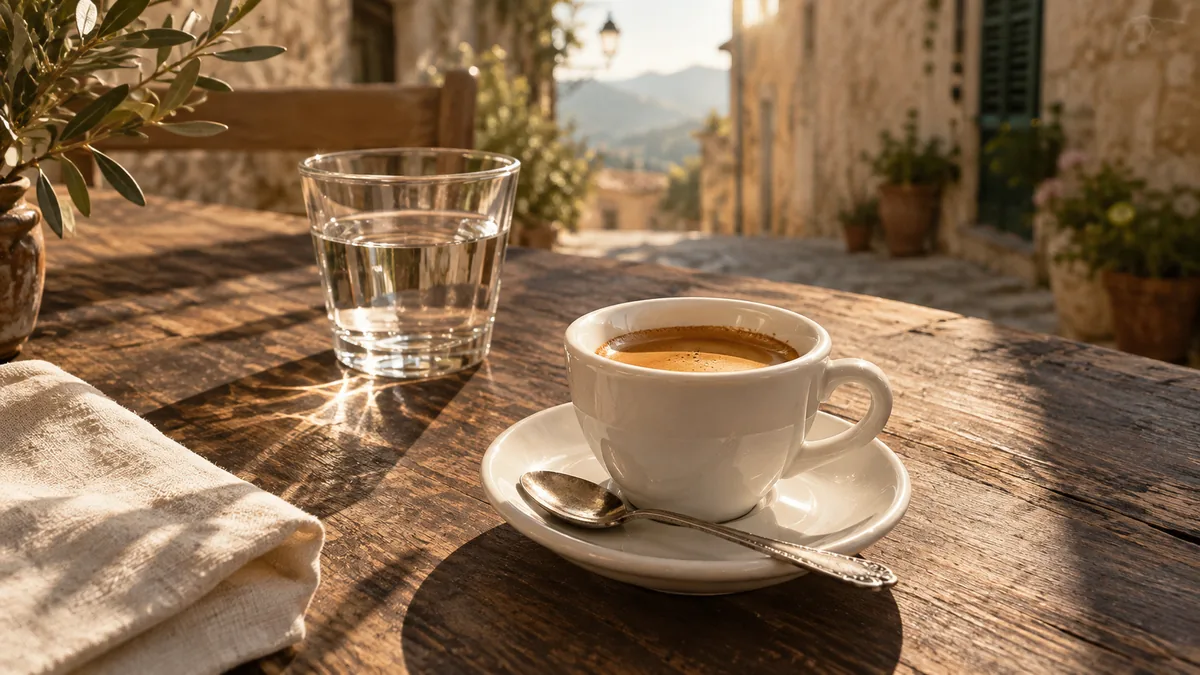
Pour your morning tea or espresso and sit in a comfortable chair without any paper, book, podcast, or screen.
Spend five minutes observing the warmth of the ceramic cup in your palms and the quiet steam rising into the air.
2. The Unrushed Public Bench
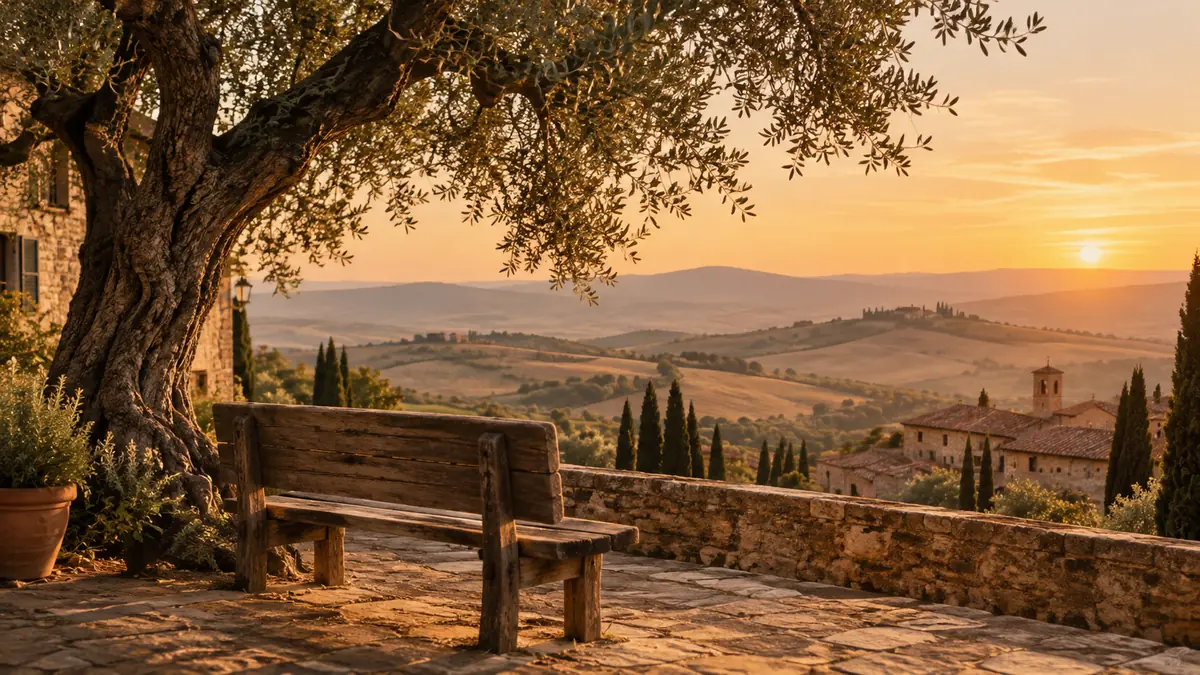
Find a bench in a courtyard, park, or city square and commit to sitting there for fifteen minutes without an agenda.
Watch the posture of strangers passing by, notice the sway of tree branches, and let your eyes soften into wide-angle peripheral vision.
3. The Unproductive Window Gaze
When fatigue strikes in the afternoon, resist the urge to open another browser tab or search for quick stimulation.
Turn your chair toward the nearest window and simply watch the changing sky, allowing your thoughts to drift away like clouds.
4. The Sacred Evening Threshold
Choose an explicit hour each evening where utilitarian production officially ends.
Close your laptop, step away from work correspondence, and declare the remaining hours of the night a sovereign sanctuary for living.
“Time you enjoy wasting was not wasted.” — Martha Troly-Curtin
True Wealth Is the Freedom to Exist
Our culture measures wealth by accumulation: more capital, more titles, more finished projects.
Yet the highest form of wealth has always been the mastery of one’s own attention and the courage to unhurry.
When you sit quietly in the warmth of the day, doing nothing, you are not wasting your life.
You are stepping off the treadmill of proving your worth to a world that will never tell you that you have done enough.
Give yourself permission to pause today, not to become more productive tomorrow, but because your life is happening right now, in the stillness.
Frequently Asked Questions About Doing Nothing
Is il dolce far niente just an excuse for laziness or procrastination?
No. Procrastination is avoiding a necessary task while feeling constant anxiety and guilt, whereas il dolce far niente is the conscious, joyful choice to pause and savor existence without any shame.
How can I stop feeling anxious when I try to sit still?
Recognize that restlessness is not a moral failure; it is simply your nervous system withdrawing from chronic over-stimulation. Acknowledge the urge to get up, take a slow breath, and remain seated for just two more minutes.
How much time each day should be dedicated to this practice?
You do not need hours of empty time. Starting with five to ten minutes of deliberate, screen-free pause during a coffee break is enough to interrupt the cycle of chronic hurry.
Can I practice this philosophy in a busy modern city?
Yes. The sweetness of doing nothing does not require an Italian villa; it requires an internal boundary. You can practice it on a crowded train, in an elevator, or sitting on your own doorstep.