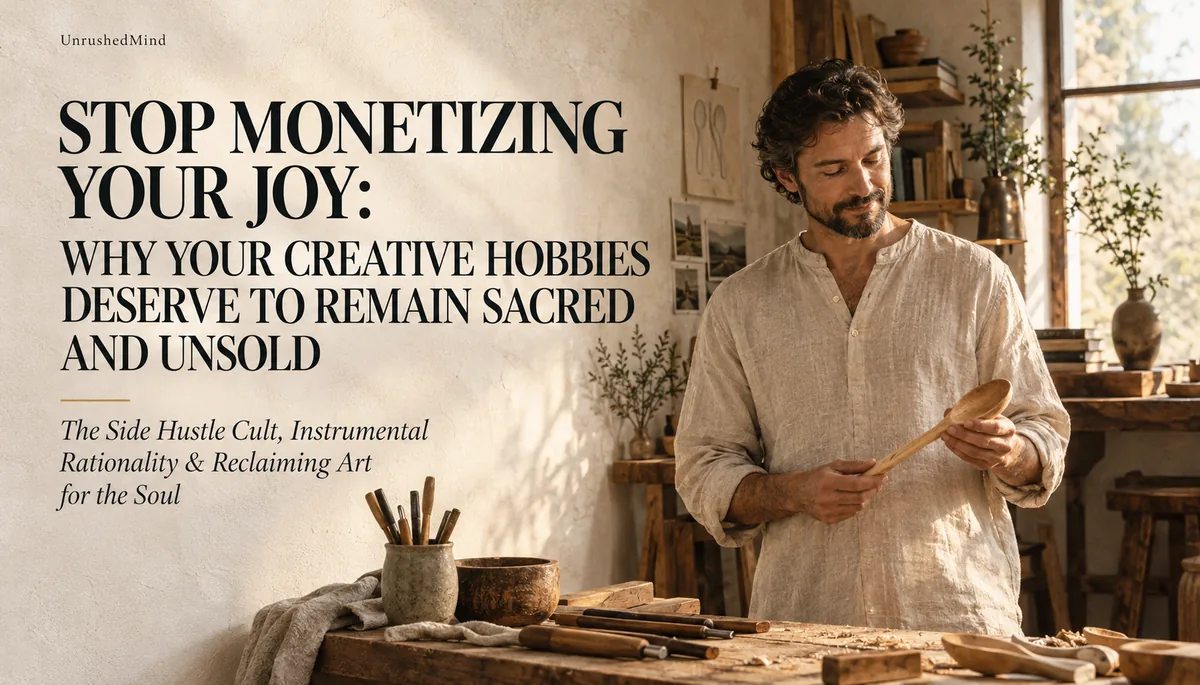
The moment you finish knitting a wool scarf, baking a golden sourdough loaf, or carving a small wooden spoon, a well-meaning voice almost always whispers the same advice. “You should sell these on Etsy. You could easily turn this into a profitable side hustle.” In our productivity-obsessed culture, a simple creative act is rarely allowed […]
The moment you finish knitting a wool scarf, baking a golden sourdough loaf, or carving a small wooden spoon, a well-meaning voice almost always whispers the same advice.
“You should sell these on Etsy. You could easily turn this into a profitable side hustle.”
In our productivity-obsessed culture, a simple creative act is rarely allowed to exist on its own merits. The modern instinct is to instantly calculate how much financial capital can be extracted from an hour of quiet human contentment.
Yet the minute a price tag touches your creative craft, the sanctuary disappears. What began as an unhurried communion with your hands becomes another spreadsheet of deadlines, customer service inquiries, and algorithm management.
The Neoliberal Trap: Why Monetizing Hobbies Kills Pure Creative Joy
Monetizing hobbies replaces intrinsic human joy with external market validation, triggering the exact performance anxiety you sought to escape. When an unhurried craft becomes a financial pursuit, the nervous system shifts from restorative parasympathetic calm into transactional hypervigilance.
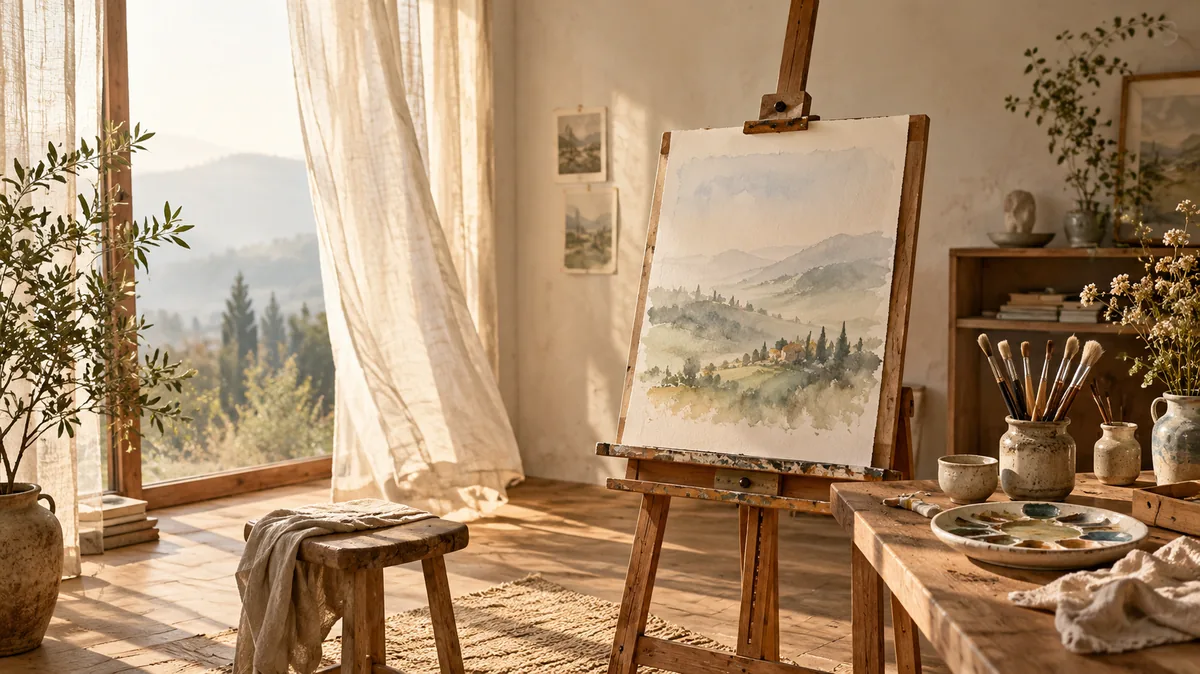
Philosophers describe this relentless cultural pressure as instrumental rationality—the toxic belief that human activities are only justifiable if they yield measurable economic utility. Under this worldview, sitting quietly with watercolors is seen as wasted time unless those paintings can be converted into inventory.
When you surrender to monetizing hobbies, your relationship with time completely inverts. You no longer paint because the blending of cobalt blue and raw umber soothes your overstimulated mind.
Instead, you paint with an eye on the clock, wondering whether the finished canvas will justify the cost of the paper and pigments. You begin catering to the prevailing tastes of strangers rather than honoring your own eccentric creative curiosity.
The psychological consequence is predictable and swift: profound creative burnout. The one corner of your life that was meant to offer refuge from work has quietly transformed into a second shift of unpaid managerial labor.
The Master Contrast: Monetized Production vs. The Sacred Creative Sanctuary
To protect your personal peace, it is vital to discern the stark psychological divide between manufacturing goods for the market and tending an unhurried personal craft.
| Dimension | The Monetized Side Hustle | The Sacred Creative Sanctuary |
|---|---|---|
| Core Motivation | External market demand, sales figures, and algorithmic visibility. | Pure intrinsic wonder, playful curiosity, and somatic rest. |
| Relationship to Error | Flaws are viewed as wasted material, lost margins, and customer complaints. | Imperfections are welcomed as unique character, experimentation, and discovery. |
| Pacing & Schedule | Dictated by shipping deadlines, inventory targets, and customer expectations. | Entirely unhurried; an unfinished piece can sit quietly for months without guilt. |
| Biological Impact | Sustained cortisol elevation, task vigilance, and performance anxiety. | Restorative parasympathetic flow, lowered heart rate, and mental stillness. |
How to Reclaim Your Hobbies as Unsaleable Havens for the Soul
Reclaiming your leisure requires conscious rebellion against the cultural mandate to monetize every waking second. Here are three gentle principles to preserve your creative sanctuary.
1. Take the Noble Vow of Amateurism
The word amateur originates from the Latin verb amare, meaning quite literally “to love.” An amateur is not a failed professional; an amateur is someone who pursues a craft out of pure, unadulterated devotion.
Give yourself explicit permission to remain gloriously mediocre at your favorite pastimes. You do not need to become a master potter or a bestselling novelist to enjoy the tactile sensation of wet clay or the rhythmic tapping of typewriter keys.
2. Erect an Impenetrable Offline Boundary
The fastest route to turning a hobby into a job is broadcasting your creative process to social media. When you film your hands carving wood for an aesthetic reel, you are already inviting the digital panopticon into your sacred room.
Keep your materials strictly analog and private. Let your messy sketches, lopsided ceramic mugs, and awkward poetry remain between you and the four quiet walls of your room.
3. Eradicate Commercial Vocabulary from Your Leisure
Notice the subtle language you use to describe your downtime. If you catch yourself speaking of your gardening or knitting in terms of “productivity,” “batching,” or “portfolio building,” pause and take a long breath.
A hobby does not require an executive summary or a five-year roadmap. It is an uninvaded garden where you are permitted to waste time beautifully.
Frequently Asked Questions About Protecting Your Leisure