Modern travel has quietly evolved into an exercise in endurance rather than restoration. We endure invasive security lines, fluorescent boarding gates, and cramped fuselages that reduce passengers to packaged freight. In our obsession with velocity, we compress our lives into two stressful coordinates: departure and arrival. The vast terrain between those points becomes an invisible […]
Modern travel has quietly evolved into an exercise in endurance rather than restoration.
We endure invasive security lines, fluorescent boarding gates, and cramped fuselages that reduce passengers to packaged freight.
In our obsession with velocity, we compress our lives into two stressful coordinates: departure and arrival.
The vast terrain between those points becomes an invisible blur, leaving our spirits stranded miles behind our exhausted bodies.
To heal this chronic disorientation, we must rediscover the art of slow train travel.
Nowhere is this sanctuary more profound than upon the winding mountain tracks of the Swiss Alps.
Quick Answer: The art of slow train travel restores a rushed mind by combining rhythmic auditory entrainment from iron rails with panoramic optic flow. Traveling at unhurried speeds through scenic landscapes soothes the sympathetic nervous system, creating a contemplative liminal space that dissolves modern cognitive overload.
The Neurobiology of the Rails: Entrainment and Optic Flow
Stepping aboard an alpine train shifts your sensory environment from friction to flow.
As the locomotive departs, a steady mechanical cadence vibrates beneath your seat.
Neuroscientists describe this acoustic phenomenon as auditory entrainment.
The rhythmic click-clack of steel wheels upon iron tracks mimics the calming maternal pulse in the womb.
This gentle frequency entrains erratic brainwaves, coaxing tense Beta states down into tranquil Alpha and Theta rhythms.
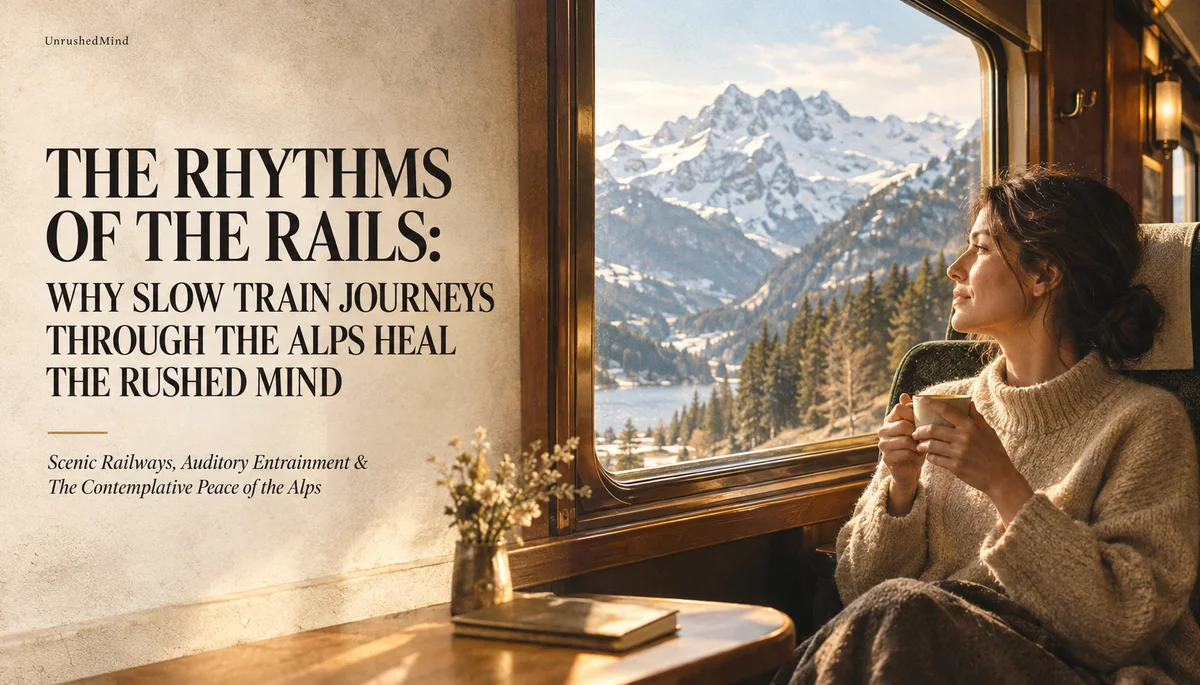
Simultaneously, looking through an expansive panoramic window activates restorative optic flow.
Unlike the claustrophobic focal vision of smartphones, sweeping your gaze across distant mountain ranges engages panoramic vision.
This lateral visual motion signals directly to the amygdala that you are safe, turning down biological alarm sirens.
Much like the art of flânerie and mindful walking, slow rail transit liberates the eyes from digital fixation and re-anchors the nervous system in physical reality.
Diagnostic Reflection: High-Velocity Transit Panic vs. The Scenic Railway Sanctuary
To understand why air travel drains us while rail travel restores us, we must examine our somatic experience.
The contrast between modern mechanical haste and unhurried passage illuminates how our environment shapes our inner peace.
| Travel Dimension | The High-Velocity Transit Panic | The Scenic Railway Sanctuary |
|---|---|---|
| Physical Experience | Compressed posture, dry cabin air, sensory confinement, and chronic hyper-vigilance. | Spacious seating, fresh mountain air, gentle rhythmic rocking, and somatic ease. |
| Neurological State | Elevated cortisol, high Beta brainwave tension, and digital alert fatigue. | Auditory entrainment, restorative optic flow, and natural Alpha-Theta calm. |
| Perception of Time | Time viewed as dead lost hours to be killed through mindless scrolling. | Time experienced as an open canvas for daydreaming and presence. |
| Relationship with Landscape | Abstract geography skipped at thirty thousand feet without connection. | Intimate topography of pine forests, snowy gorges, and stone viaducts. |
4 Contemplative Practices for Scenic Train Journeys
Transforming a train ride into an inner sanctuary requires conscious intention.
When you board a slow railway carriage, adopt these four mindful practices to deepen your restoration.
1. Surrender to the Liminal Space
Sociologists describe travel corridors as liminal space—a sacred threshold between where you were and where you are going.
Aboard a mountain train, you cannot perform domestic chores or attend office crises.
Resist the urge to turn this sacred pause into a mobile workstation.
Close your laptop, silence notifications, and give yourself full permission to be wonderfully unproductive.
2. Practice Window Meditation Through Optic Flow
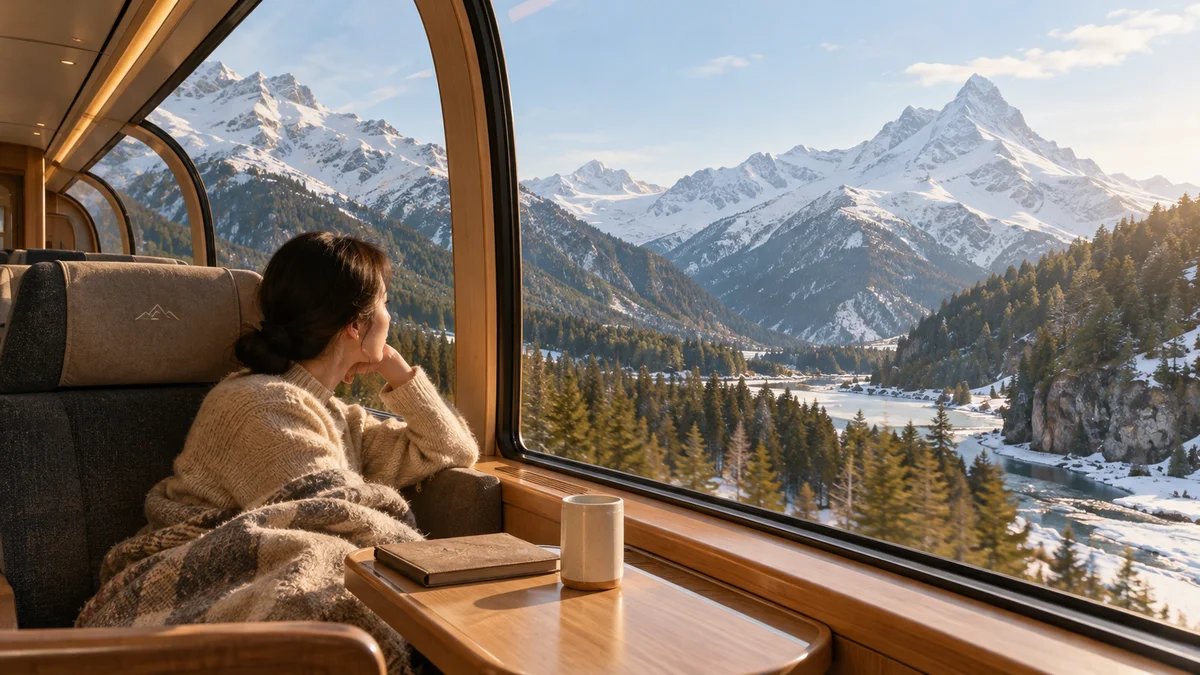
Gazing out the window is not idle boredom; it is a restorative contemplative practice.
Soften your eyelids and release tension in your jaw and brow.
Watch granite cliffs, emerald valleys, and glacial streams drift across your visual field.
Allow thoughts to arise and pass, mirroring the effortless flow of the passing landscape.
3. Anchor into Tactile Cadence
Rest your palm flat upon the polished wood of your window table.
Feel the subtle, steady mechanical vibrations reverberating through the train carriage.
Listen closely to the low-frequency rumble as the wheels cross stone bridges and mountain viaducts.
As highlighted in solo travel as an inner pilgrimage, true sacred journeys occur when we anchor our senses into the physical textures of transit.
4. Cultivate the Unhurried Travel Journal
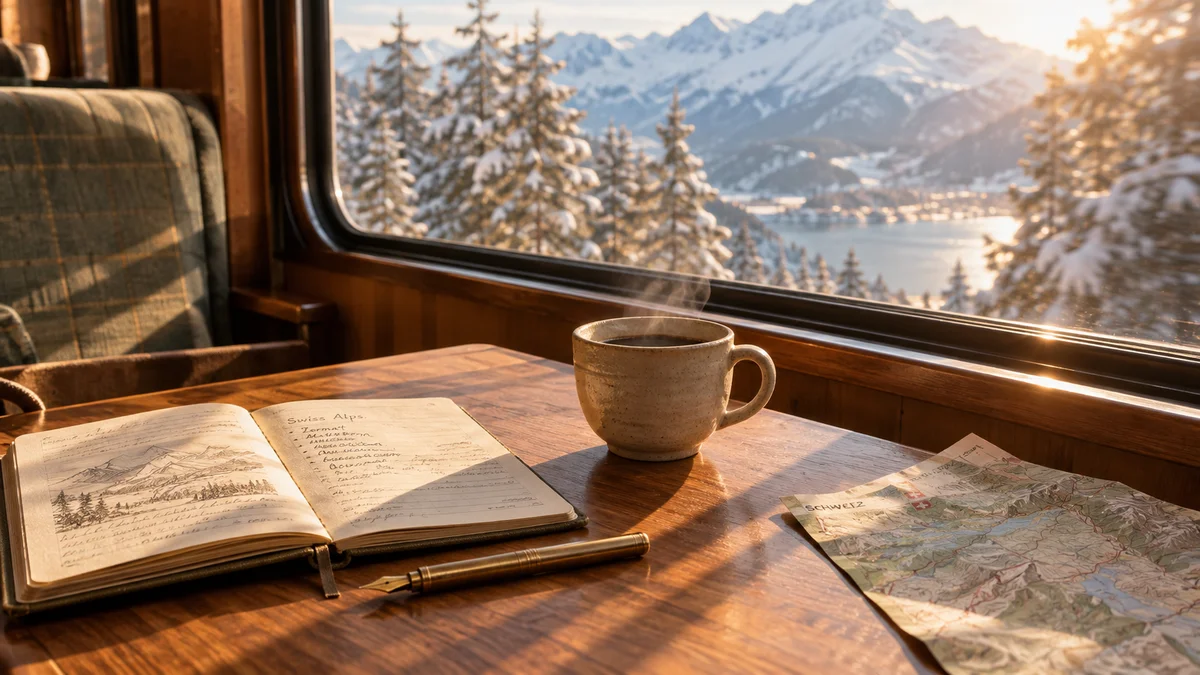
Place a tactile, unlined notebook on your table beside a warm cup of coffee or tea.
Do not force structured essays or comprehensive itineraries.
Jot down fleeting sensations: the angle of morning sunlight on snow, a sudden wave of gratitude, or a forgotten memory.
Writing with an analog pen slows down your cognition, matching the unhurried speed of your carriage.
The Sacred Solitude of the Open Track
In our hyper-connected world, unhurried time has become the rarest luxury.
A scenic train journey reminds us that life is not a frantic sprint toward an elusive milestone.
When you watch the sunset cast golden amber hues across alpine ridges while gliding along steel tracks, the urgent clamor of the world softens.
You realize that traveling slowly is not about arriving late.
It is about allowing your soul to arrive whole, rested, and deeply at peace.
Frequently Asked Questions