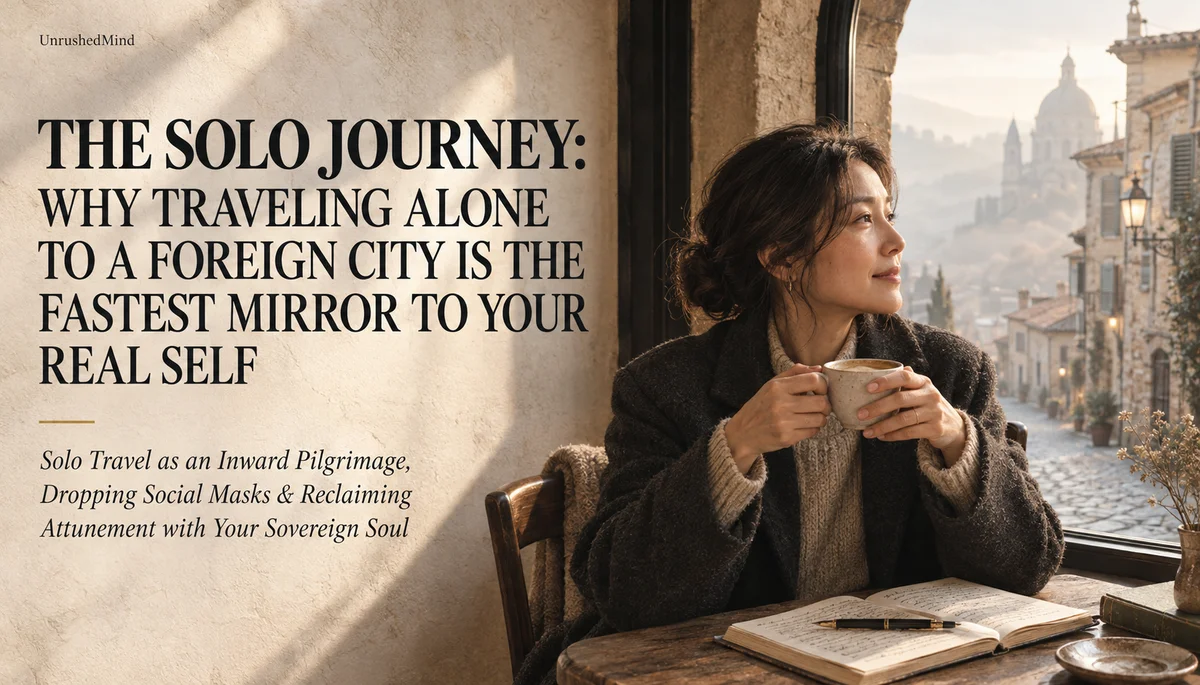
You return from another crowded group vacation feeling strangely more depleted than when you departed. You navigated conflicting agendas, mediated group fatigue, and rushed between obligatory tourist monuments to capture fleeting photographs. Yet despite traveling thousands of miles, you carried the same exhausting internal companion with you: the chronic habit of performing for others. You […]
You return from another crowded group vacation feeling strangely more depleted than when you departed.
You navigated conflicting agendas, mediated group fatigue, and rushed between obligatory tourist monuments to capture fleeting photographs.
Yet despite traveling thousands of miles, you carried the same exhausting internal companion with you: the chronic habit of performing for others.
You spent the entire journey attuned to everyone else’s emotional temperature while remaining completely deaf to your own.
Beneath the surface of polite compliance, a quiet hunger begins to stir within your chest.
You yearn to wake up in a city where no one knows your name, your job title, or your relational history.
Venturing alone into an unfamiliar land is not an act of selfish escapism; it is a sacred return to your unadorned soul.
The Great Unmasking: Why Distance Dissolves the Social Persona
The Quick Answer: Solo travel acts as an inward pilgrimage because entering a foreign culture strips away the social expectations, habitual roles, and emotional compromises of daily life. Free from performing for familiar audiences, your nervous system decompresses, allowing you to confront your authentic desires and reclaim internal sovereignty.
In your everyday routine, your personality is largely sustained by a complex web of external mirrors.
Colleagues, family members, and friends hold invisible scripts detailing how you should speak, react, and present yourself.
Without conscious awareness, your nervous system constantly expends immense energy maintaining this social armor.
When you step onto the damp cobblestones of a foreign town where you do not speak the local language, that theater instantly collapses.
The waiter delivering your morning coffee has zero expectations regarding your professional status or emotional past.
This radical anonymity offers an exquisite psychological liberation.
Practicing the art of flânerie through unknown streets allows your genuine instincts to resurface from beneath decades of polite accommodation.
You are no longer an employee, a caregiver, or a pleasing companion; you are simply an aware consciousness experiencing the vast beauty of the world.

The Mirror of Solitude: Navigating the Discomfort of Being With Yourself
The initial hours of an unaccompanied journey often provoke an unexpected tremor of existential discomfort.
Standing alone on a windy train platform or sitting unaccompanied at an evening bistro table can trigger deep-seated anxieties.
Conditioned by modern culture to equate solitude with abandonment, your mind initially searches for an emergency distraction.
You reach impulsively for your smartphone, desperate to dilute the raw silence with familiar digital noise.
Yet if you summon the courage to leave the screen in your pocket, an extraordinary alchemy occurs.
The awkwardness softens into a profound, grounding stillness.
You discover that solitude is not an empty vacuum to be feared, but a fertile soil where self-trust takes root.
Applying the Stoic dichotomy of control to travel mishaps teaches you that lost luggage or wrong turns are not catastrophes, but gentle invitations to cultivate resilience.
| Travel Dimension | Consumptive Tourism (The Masked Tour) | Solo Pilgrimage (The Mirror of Self) |
|---|---|---|
| Primary Orientation | Performing for social media approval and ticking off rigid checklist monuments. | Cultivating inward presence, emotional attunement, and somatic replenishment. |
| Pacing & Decision-Making | Compromising daily rhythm to appease collective anxiety and group consensus. | Honoring intuitive internal timing—eating when hungry, resting when weary. |
| Encountering the Unknown | Frustration and panic whenever reality diverges from the curated commercial script. | Surrendering to spontaneous detours as sacred opportunities for self-discovery. |
The 4 Sacred Disciplines of the Mindful Solo Traveler
Transforming an ordinary solo trip into a life-altering pilgrimage requires deliberate intention.
These four mindful practices protect your inward journey from becoming another exercise in mindless consumption.
1. Dismantle the Tyranny of the Itinerary
Resist the compulsive urge to schedule every hour of your foreign retreat into spreadsheets and ticketed tours.
Dedicate at least one full day to total aimlessness, allowing your eyes and feet to guide you down unexplored alleyways.
2. Savor the Dignity of the Solitary Table
Claim your bistro seat with quiet pride rather than apologetic hesitation.
Eat slowly, savoring the fragrance of fresh bread and wine without seeking refuge behind a glowing mobile screen.
3. Trust Your Intuitive Compass
When you travel alone, every micro-choice—from which bridge to cross to where to pause—belongs entirely to you.
Reclaiming this decision-making authority repairs fractured self-confidence and restores faith in your own inner guidance.
4. Anchor in the Stillness of Arrival
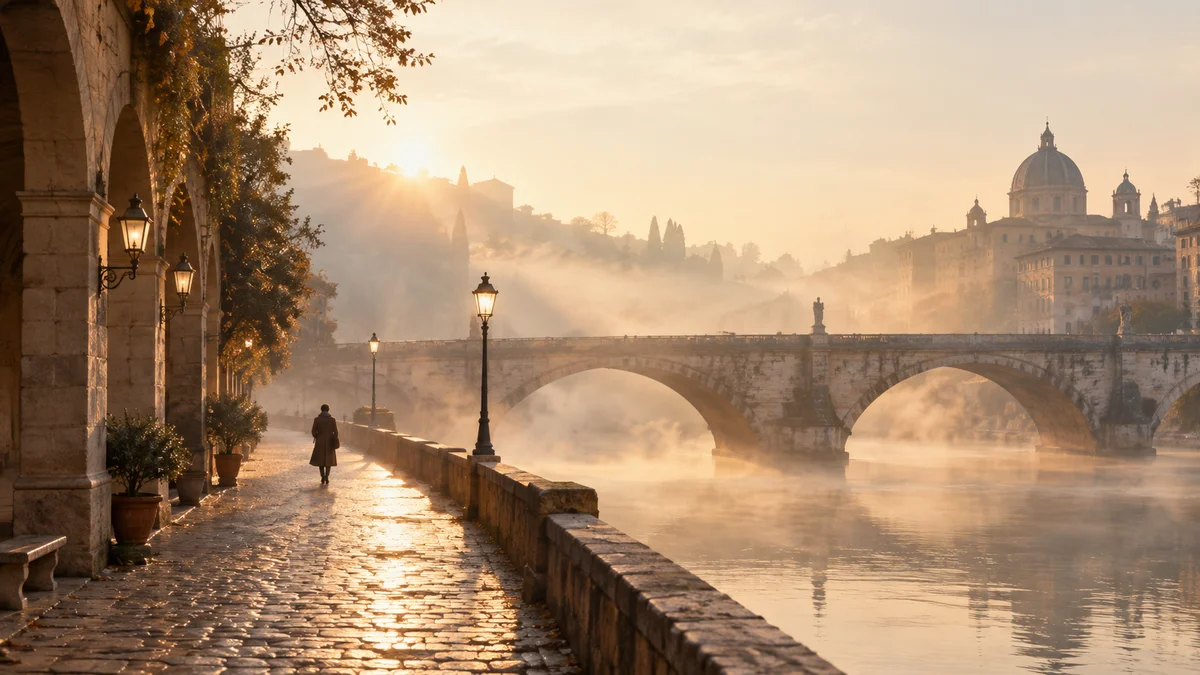
Seek out a quiet bench overlooking an ancient river, monastery garden, or sun-drenched town square.
Sit motionless for thirty minutes, letting the ambient symphony of the unfamiliar city wash gently over your sensory awareness.
Frequently Asked Questions About Solo Travel as a Spiritual Pilgrimage
How do I overcome the acute fear of loneliness when traveling alone for the first time?
Acknowledge loneliness as a natural biological reaction to unfamiliar surroundings rather than a sign that something is wrong.
Reframe your solitude as a rare date with your own soul, grounding yourself through tactile anchors like a notebook, warm tea, or slow walking.
Is solo travel considered self-indulgent or emotionally avoidant?
Stepping away to heal your nervous system and recover your authentic voice is the highest act of personal responsibility.
You cannot bring genuine presence, generosity, or clarity to your relationships when your own internal reservoir is completely dry.
What should I do when unexpected travel anxiety strikes in a foreign country?
Pause immediately and step inside a quiet cathedral, library, or unhurried park to regulate your breathing.
Remind yourself that confusion is simply your brain expanding to integrate novel horizons, and take one gentle breath at a time.
Returning to Yourself as Sanctuary
When your solo pilgrimage concludes, you pack your belongings with a quiet, unshakeable serenity.
The foreign city did not hand you a new personality or magically solve all your earthly problems.
Instead, its quiet alleys and patient squares acted as an untarnished mirror, reflecting the sovereign soul you had temporarily forgotten.
You return to your everyday life knowing that you are capable of navigating the unknown with elegance, poise, and courage.
You have discovered the greatest truth of the solitary wanderer: peace is never an external destination, but a sanctuary you carry within yourself.