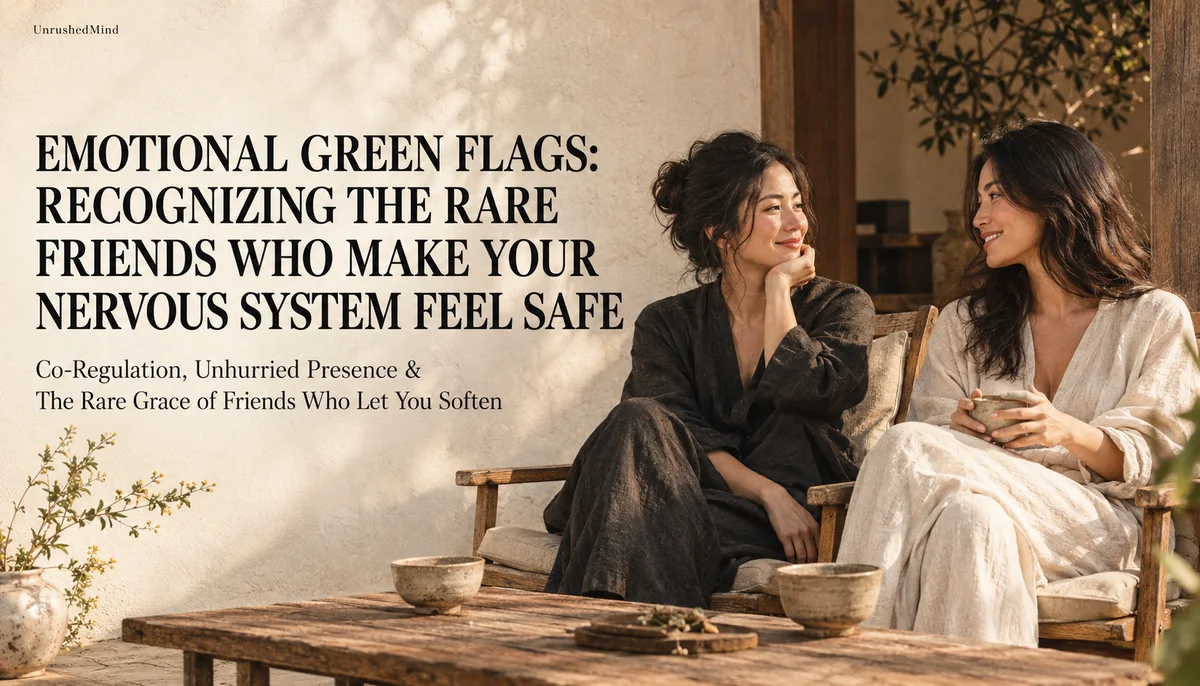
Have you ever returned from meeting friends feeling hollowed out? Your shoulders are tense, your jaw aches from polite smiles, and your body desperately craves silence. You were not physically exerted, yet your energy feels completely drained. This quiet exhaustion is not a personal failing, nor does it mean you are antisocial. It is your […]
Have you ever returned from meeting friends feeling hollowed out?
Your shoulders are tense, your jaw aches from polite smiles, and your body desperately craves silence.
You were not physically exerted, yet your energy feels completely drained.
This quiet exhaustion is not a personal failing, nor does it mean you are antisocial.
It is your nervous system signaling that you spent hours where it was unsafe to lower your guard.
True friendship is never measured by loud banter or years known.
It is measured by biological safety—the physical sensation of your body exhaling the moment they arrive.
What Is Emotional Safety in Friendship?
Emotional safety in friendship is the profound biological experience where your nervous system senses zero threat of judgment, abandonment, or performance. In the presence of a safe friend, your autonomic defense mechanisms disarm automatically, replacing chronic social vigilance with calm physiological co-regulation and effortless mutual belonging.
When you sit across from someone emotionally safe, your heart rate naturally settles.
Your mind stops burning energy calculating every word before speaking.
You move out of survival-driven vigilance into ventral vagal calm, where authentic human connection begins.
High-Performance Friends vs. Biological Co-Regulation
Many of us spend years collecting relationships that resemble an audition rather than a sanctuary.
We stay because history binds us, even while our bodies silently register the emotional strain.
| High-Performance Connection | Nervous System Cost | The Rare Safe Friend |
|---|---|---|
| Demands continuous cheerfulness, witty banter, and polished success. | Tight jaw and shallow breathing to sustain the social mask. | Gives you permission to be quiet, uninspired, or tired without apology. |
| Conversations revolve around status, comparison, and subtle critique. | Chronic micro-surges of cortisol scanning for hidden judgment. | Holds space for genuine vulnerability, honest doubt, and quiet sorrow. |
| Disagreements trigger defensiveness, passive aggression, or cold withdrawal. | The amygdala activates an overwhelming fear of sudden exile. | Conflicts are approached with gentle curiosity and a shared desire to repair. |

4 Emotional Green Flags of a Grounded Friend
Recognizing an emotionally safe human being is rarely about grand gestures.
It lives in subtle micro-moments of mutual presence that tell your biology it is safe to rest.
1. The Sanctuary of Low-Effort Silence
In an anxious relationship, silence feels like an impending verdict.
You rush to fill empty space with nervous chatter, fearful that a pause means disapproval.
With an emotionally safe friend, silence is a soft linen blanket.
You can sit side by side reading or watching rain without anyone apologizing for the quiet.
The silence does not signal distance; it honors the peace of simply sharing oxygen.
2. Emotional Consistency Over Explosive Chemistry
Modern culture often mistakes chaotic chemistry for deep soul connection.
Yet relationships that swing between intoxicating warmth and sudden coldness keep your nervous system in distress.
A safe friend offers the quiet beauty of predictable warmth.
They do not punish you with cold silence when having a hard day, nor is care conditional on performance.
Knowing exactly who will show up at the door allows your alarm systems to rest.
3. Unconditional Room for Your Messiness
Most social circles require you to tidy up your life before you are deemed acceptable company.
You feel pressured to package heartbreak into a joke or pretend your career is thriving.
A safe friend is an unshakable harbor for your unfinished thoughts.
They do not rush to rescue you with cheap toxic positivity or unsolicited advice.
They simply pull up a chair, brew tea, and sit with you until your breath returns.
4. Friction Without Threat of Destruction
Every meaningful human relationship inevitably encounters friction and misunderstandings.
In unsafe dynamics, expressing a personal boundary is treated as a betrayal.
An emotionally safe friend treats disagreement not as a battlefield, but as an invitation to deeper understanding.
They say, “I hear how that hurt you, let us slow down and untangle it together.”
When you realize an uncomfortable conversation will not end in abandonment, your soul uncurls.

Becoming the Sanctuary You Seek
It is easy to audit our friendships and wonder why so few offer this soothing presence.
Yet biological safety is never a one-way transaction; it is an ongoing ecosystem of mutual care.
To attract safe companions, we must first learn to soften our own defensive armor.
Notice when you are tempted to perform, rush someone out of grief, or judge an awkward pause.
When we practice dropping our shields, we quietly grant others permission to do the same.
A Grounding Sanctuary Note: True emotional intimacy is not the absence of boundaries, but the presence of kindness within them. Honor your energetic capacity gently, and remember that depth of connection always transcends quantity.
Emotional Safety in Friendships