You have walked twelve thousand steps before noon across the stone pavements of Florence. Your feet ache, your neck feels stiff from high ceilings, and your camera roll holds hundreds of paintings you barely glanced at for three seconds. There is a peculiar, hollow exhaustion that comes from checklist tourism. You traveled across oceans to […]
You have walked twelve thousand steps before noon across the stone pavements of Florence.
Your feet ache, your neck feels stiff from high ceilings, and your camera roll holds hundreds of paintings you barely glanced at for three seconds.
There is a peculiar, hollow exhaustion that comes from checklist tourism.
You traveled across oceans to witness sublime human genius, yet you navigate velvet ropes like a commuter boarding a crowded train.
When you rush through five cavernous galleries in one afternoon, art ceases to be a sanctuary.
It becomes another demanding spreadsheet of cultural obligations waiting to be checked off.
The Checklist Epidemic: How Museum Fatigue Robs You of Wonder
Museum fatigue is not a personal failure, but an involuntary biological defense against chronic visual overstimulation.
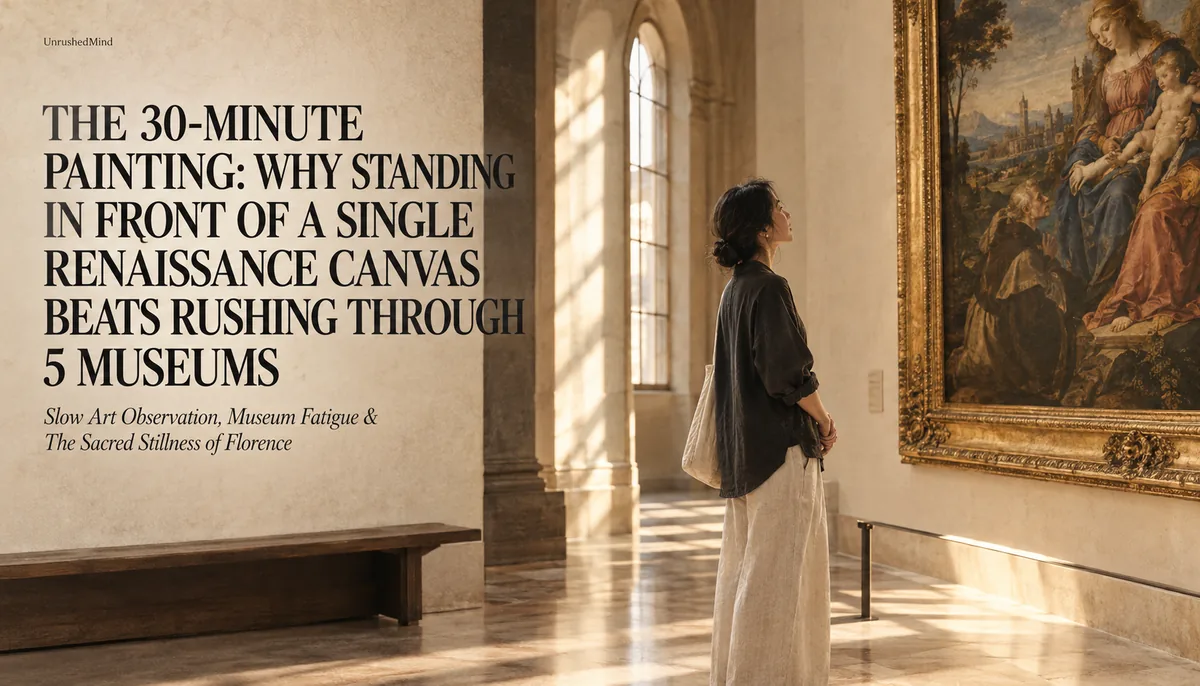
Standing motionless for thirty minutes before a single Renaissance canvas in Florence silences the frantic urge to consume everything, transforming art observation into a restorative sanctuary for an overloaded nervous system.
In cognitive psychology, our eyes operate in rapid saccadic bursts when confronted by overwhelming visual input.
When hurrying through the Uffizi Gallery, your brain absorbs thousands of stimuli every minute: gilded frames, dramatic allegories, tourist murmurs, and camera flashes.
The prefrontal cortex rapidly depletes its energy reserves trying to categorize this relentless influx.
By the third gallery room, your perceptual faculties numb, leaving you irritable and disconnected from wonder.
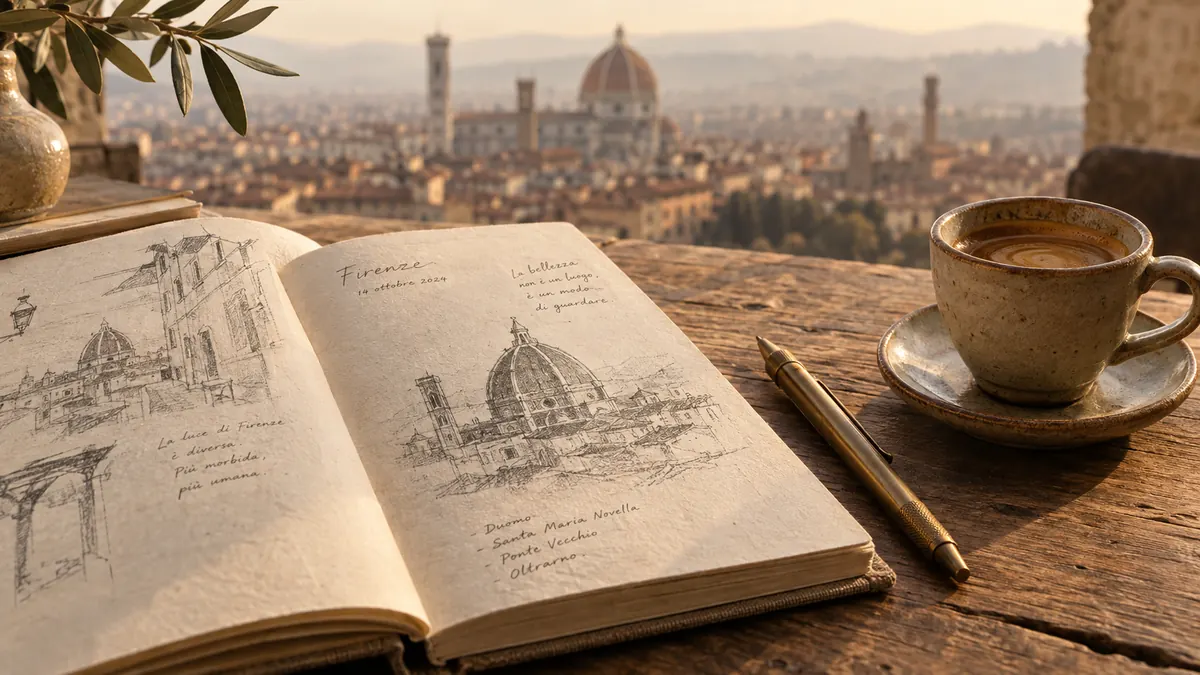
We have confused the quantity of sights recorded on our devices with the depth of impressions etched into our souls.
A masterpiece was never painted to be digested in a three-second glance, but to be inhabited like a quiet cathedral of oil and pigment.
The Neuroscience of Slow Gaze: What Unfolds in 30 Minutes
What happens when you sit down and give a single canvas thirty uninterrupted minutes?
The first five minutes are almost universally uncomfortable.
Your dopamine-conditioned mind will fidget, urging you to check your phone, look around, or take a quick photo to prove your attendance.
If you breathe through this restlessness, a neurobiological shift occurs around ten minutes.
Your heart rate decelerates, your breathing deepens, and the brain’s default mode network softens its internal chatter.
The canvas ceases to be a flat relic and reveals its hidden architecture.
| Dimension | The Check-In Museum Sprint | Sensory Overload & Museum Fatigue | The 30-Minute Slow Canvas Sanctuary |
|---|---|---|---|
| Visual Rhythm | Rapid saccadic scanning (3 to 8 seconds) driven by documenting. | Visual exhaustion, blank staring, and sensory overload. | Sustained panoramic gazing (30 minutes) revealing hidden layers naturally. |
| Nervous System State | Mild fight-or-flight: hurried pacing and time scarcity. | Sensory burnout, mental fog, and midday exhaustion. | Parasympathetic calm: dropped shoulders, slow breath, and deep neural restoration. |
| Emotional Residue | Anxious obligation: digital photos rarely revisited. | Irritability, physical fatigue, and subtle disappointment. | Profound intimacy: a soul imprint staying vivid for decades. |
Between fifteen and twenty-five minutes of quiet looking, you perceive what hurried eyes never catch.
You notice the subtle glaze of egg tempera over Florentine gesso, the deliberate asymmetry in a subject’s melancholic eyes, and the way light breathes from within the dark folds of a linen tunic.
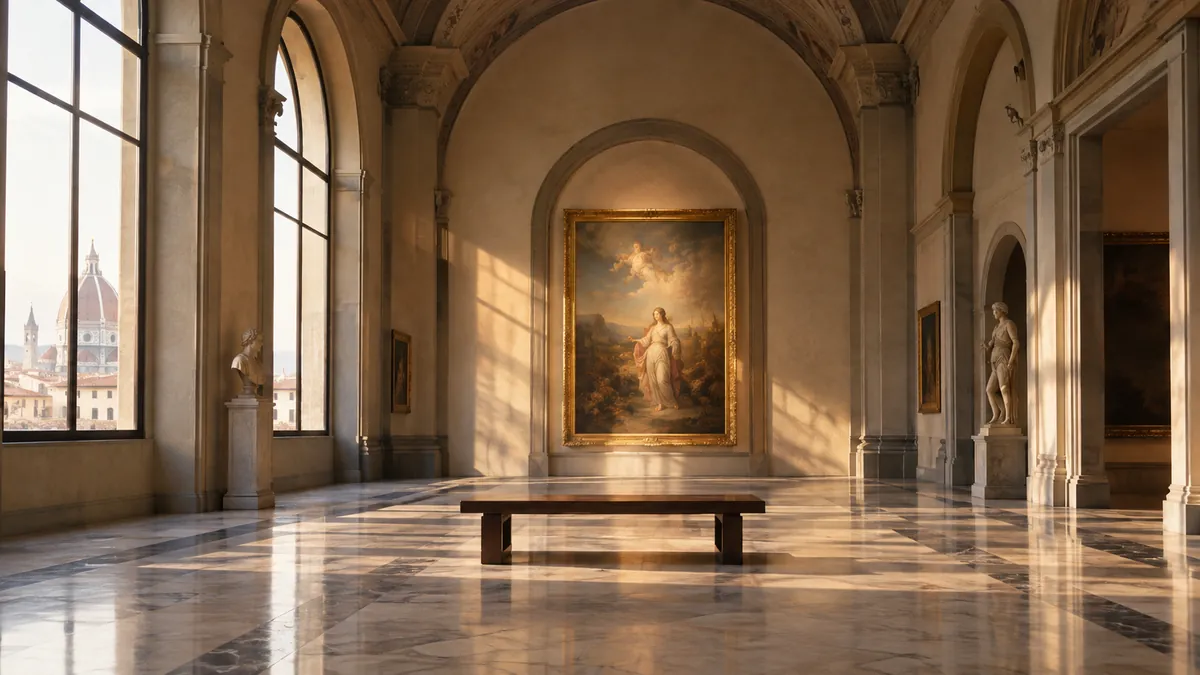
To practice slow art observation without feeling lost, you can anchor your attention across four gentle phases:
- Phase 1: Initial Breath (Minutes 1–5): Sit comfortably, soften your gaze, and allow the whole composition to wash over you without analyzing.
- Phase 2: Physical Craft (Minutes 6–15): Trace the tangible craftsmanship: brushwork texture, directional light, and the geometry of figures.
- Phase 3: Interior Dialogue (Minutes 16–25): Notice what human emotion is captured here—grief, longing, or devotion—and where it resonates in your body.
- Phase 4: Sacred Stillness (Minutes 26–30): Close your eyes for thirty seconds, then open them to seal the painting’s quiet presence into memory.
When you grant thirty minutes to a single painting, you cease being an outsider hurrying through a monument and become a participant in timeless contemplation.
Florence as an Inner Sanctuary: Allowing Art to Look Back at You
There is an old aesthetic paradox in Italian philosophy: you do not merely observe a sacred artwork; you allow the artwork to observe you.
Renaissance masters like Sandro Botticelli and Leonardo da Vinci did not create for tourists on tight vacation schedules.
They labored for months in quiet studios with crushed pigments and linseed oil to create contemplative mirrors for the restless human spirit.
When you stand still before their work, centuries of rushing collapse into a luminous present moment.
After your thirty minutes, leave the gallery.
Do not force your weary mind through twelve more rooms simply because your ticket covers the entire palace.
Step out into the crisp Florentine air, walk slowly along the Arno river, and sit at a corner cafe with a quiet espresso.
The stillness you cultivated inside that gallery room will radiate through your footsteps, turning the entire ancient city into your personal sanctuary.
Frequently Asked Questions About Slow Art in Florence
How do I handle the urge to check my phone during the 30 minutes?
Treat your phone as an anchor that keeps you tethered to the rushed digital world.
Keep your device on silent inside your bag; if you wish to document the canvas, take exactly one photograph after your thirty minutes are finished.
Which gallery in Florence is best suited for slow art contemplation?
While the Uffizi holds magnificent works, smaller sanctuaries like the San Marco Museum offer serene monastic cells painted by Fra Angelico that naturally inspire quiet meditation.
Choose any quiet room where you can find an empty wooden bench and steady natural light.
Won’t I miss out on seeing other famous masterpieces if I spend so long on one?
Skimming fifty masterpieces in two hours yields only superficial memories that fade within weeks.
Truly absorbing one painting creates a profound emotional anchor that will nourish your soul and remain vivid for the rest of your life.
A Grounding Sanctuary Note: Travel is not an athletic contest of sights checked off, but an invitation to soften your perception. One canvas deeply loved is worth more than a thousand corridors rushed through in exhaustion.