

You collapse into bed after a demanding day, longing for the restorative embrace of sleep. Yet, as soon as your head touches the pillow, your body remains oddly hummed and vigilant. Your pulse feels elevated, your jaw remains clamped, and an invisible restlessness thrums beneath your skin. You sleep for eight hours, yet you wake […]
You collapse into bed after a demanding day, longing for the restorative embrace of sleep.
Yet, as soon as your head touches the pillow, your body remains oddly hummed and vigilant.
Your pulse feels elevated, your jaw remains clamped, and an invisible restlessness thrums beneath your skin.
You sleep for eight hours, yet you wake up feeling as though you ran an emotional marathon.
This lingering exhaustion is rarely a deficit of physical tiredness.
It is the direct consequence of a bedroom that bombards your sensory biology with invisible friction.
The Vigilant Chamber: Why Modern Bedrooms Trigger Subconscious Alarm
A sensory haven sleep chamber recalibrates your nervous system by eliminating low-grade sensory friction, such as electromagnetic hums, parasitic blue LEDs, and acoustic bounce. Purging these subtle triggers signals physiological safety to the brainstem, unlocking restorative slow-wave sleep and cellular repair.
Your primitive neuroception—the neural circuitry scanning for safety—never switches off when your eyes close.
Even in slumber, your sensory gateways remain open, constantly sampling ambient room frequency, illumination levels, and auditory vibrations.
When your sleeping quarters are cluttered with blinking chargers, pulsing routers, and humming transformers, your autonomic system stays trapped in vigilance.
✦ Unconscious does not mean resting: your physiology remains on call throughout the night.

The Invisible Noise: Parasitic Glows and Electromagnetic Tension
Modern bedrooms have quietly evolved into satellite extensions of digital offices and media hubs.
A smartphone charges inches from your temple, emitting high-frequency pulses while tethered to a power brick.
Across the room, pinpricks of blue, green, and red LED lights glare from air purifiers and standby monitors.
To your conscious mind, these tiny lights seem harmless and easy to dismiss.
To your retinal ganglion cells and pineal gland, however, even a micro-lux of blue light penetrating eyelids disrupts melatonin synthesis.
Simultaneously, the subtle magnetic hum from unshielded wall cables and transformers creates an imperceptible electrical field around your bed.
✦ Elevated nocturnal cortisol: your nervous system interprets this ambient electronic density as persistent environmental static.
Evaluating Your Sleep Environment: Cluttered Chamber vs. Restorative Haven
The difference between a room that drains vitality and one that restores your cellular baseline lies in sensory clarity:
| Environmental Dimension | The High-Stimulus Modern Bedroom | The Restorative Sensory Haven |
|---|---|---|
| Nocturnal Light Profile | Parasitic standby LEDs, thin window blinds | ✦ Zero-Lux Darkness: Total blackout, zero visible diodes |
| Electrical Density | Phones charging on nightstands, tangled cords | ✦ Analog Perimeter: Active electronics kept 6+ feet away |
| Acoustic Texture | Hard reflective walls, humming AC units | ✦ Softened Acoustics: Dense linen, natural wool rugs |
| Tactile Materials | Synthetic polyester fibers, static memory foam | ✦ Breathable Naturals: Washed organic linen, untreated wood |
| Morning Neural State | Grogginess, elevated heart rate, somatic tension | ✦ Restored Coherence: Soft somatic ease, clear mental horizon |
3 Architectural Shifts to Design Your Sensory Haven
Transforming your sleeping quarters into a restorative haven does not require an expensive remodel; it demands intentional subtraction.
1. Enforce the Zero-Lux Standard
True nocturnal cellular repair requires absolute darkness to allow your circadian rhythm to complete restorative cycles.
✦ Eliminate Parasitic Diodes: Inspect your room in pitch darkness and cover every glowing power light with black tape or fabric dimming dots.
✦ Invest in Blackout Barriers: Replace porous blinds with heavy blackout linen drapery that creates an impenetrable barrier against artificial street lighting.
When your eyes register total darkness, your fight-or-flight circuits naturally yield to restorative parasympathetic dominance.
2. Establish an Uncompromising Analog Perimeter
Your bed should serve as a calm perimeter reserved exclusively for restorative slumber and emotional intimacy.
✦ Banish the Nightstand Charger: Relocate your phone charging station outside the bedroom or at least far across the room.
✦ Return to Simple Mechanical Tools: Replace smartphone screens with an analog mechanical alarm clock emitting zero blue light.
✦ Remove Anticipatory Tension: Physical distance from electronic devices dissolves the subconscious readiness to answer incoming alerts.
3. Soften the Room’s Acoustic Resonance
Subtle auditory reverberations and resonance prevent your brainstem from entering deep slow-wave slumber.
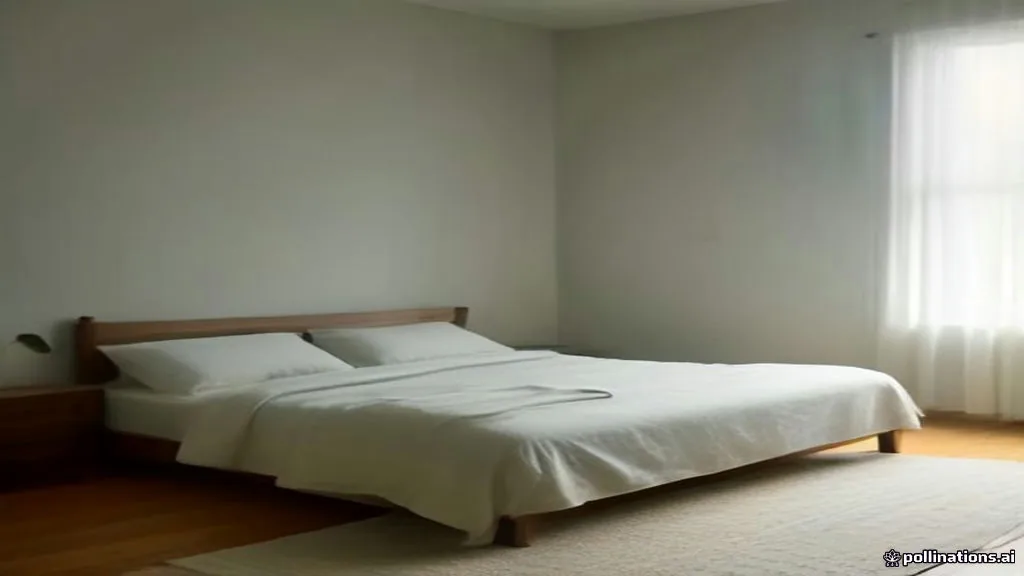
✦ Incorporate Tactile Sound Dampening: Hang heavy woven textiles, position dense natural wool rugs beside the bed, and favor solid timber furnishings over hollow plastics.
✦ Tame Environmental Rumble: If street traffic produces unavoidable noises, use a mechanical fan or steady low-frequency sound mask.
Softer room acoustics absorb erratic noise spikes, giving your nervous system the tactile reassurance of an unhurried cocoon.
“Falling unconscious from sheer exhaustion is not the same as resting. Your body only repairs its tissues when your surroundings whisper to your oldest survival circuits that it is safe to let go.”
The Evening Crossing: A Gentle Threshold Ritual
Before crossing the doorway into your sensory haven tonight, pause for ten quiet seconds at the threshold.
Leave your laptop, your unresolved to-do lists, and your digital attachments behind in the living area.
Lower ambient lighting to warm amber tones below 2200K, or light a single beeswax candle as you prepare for rest.
✦ Take three unhurried breaths: feel the cool air enter your nostrils and the warm weight of your shoulders dropping toward the earth.
Allow your chamber to embrace you not as another workspace to manage, but as a silent haven built to honor your living body.
🌿 The Gentle Micro-Takeaway
Choose one single adjustment tonight: unplug the glowing power strip beside your bed, cover the blinking air purifier LED with black tape, or place your phone in another room. Observe how much lighter your chest feels when dawn arrives.
✦ Somatic Reflection Notice: Environmental sleep hygiene provides a foundational layer of somatic reassurance for your central nervous system. However, if you experience chronic insomnia, sleep apnea, or severe restless legs, please seek thorough evaluation from a qualified medical sleep specialist.
Frequently Asked Questions