
You return from your long-awaited vacation, drop your heavy suitcase onto the bedroom floor, and feel an unexpected pang of exhaustion. Your camera roll is packed with hundreds of photographs of iconic monuments, cathedral facades, and picturesque street corners. Yet as you sit down on the edge of your bed, your chest feels remarkably tight. […]
You return from your long-awaited vacation, drop your heavy suitcase onto the bedroom floor, and feel an unexpected pang of exhaustion.
Your camera roll is packed with hundreds of photographs of iconic monuments, cathedral facades, and picturesque street corners.
Yet as you sit down on the edge of your bed, your chest feels remarkably tight. You do not feel rested; in truth, you feel as though you need another week off just to recover from your holiday.
It is one of the quietest ironies of modern life: we spend months yearning for an escape from overwork, only to turn our travels into another high-stakes corporate sprint.
We set predawn alarms, consult color-coded spreadsheets, wait in two-hour ticket lines, and rush across crowded cities with an anxious eye on the clock.
Unrushed travel is a deliberate philosophical posture that trades the frantic consumption of tourist sights for deep, sensory presence in a single place, recognizing that true rejuvenation comes not from collecting landmarks, but from allowing your nervous system to fully arrive where your body is.
The Checklist Trap: When Holiday Becomes Another Sprint
Why do so many of us turn our precious days off into an endurance test?
Much of this urgency is driven by what psychologists call destination status anxiety—the subconscious belief that a journey is only justified if you have “ticked off” the canonical highlights.
Social media algorithms amplify this pressure by rewarding photogenic velocity, encouraging us to collect postcard moments rather than cultivate genuine memories.
When you approach a destination as a checklist, your brain remains locked in the same high-beta cognitive state that governs your workday.
You are still managing logistics, mitigating delays, and monitoring performance metrics.
The only difference is that instead of checking off quarterly deliverables, you are checking off museum rooms and viewpoint summits.
In doing so, you exchange the sacred quiet of leisure for the frantic exhaustion of holiday consumption.
Receptive Travel: The Restorative Power of Depth Over Breadth
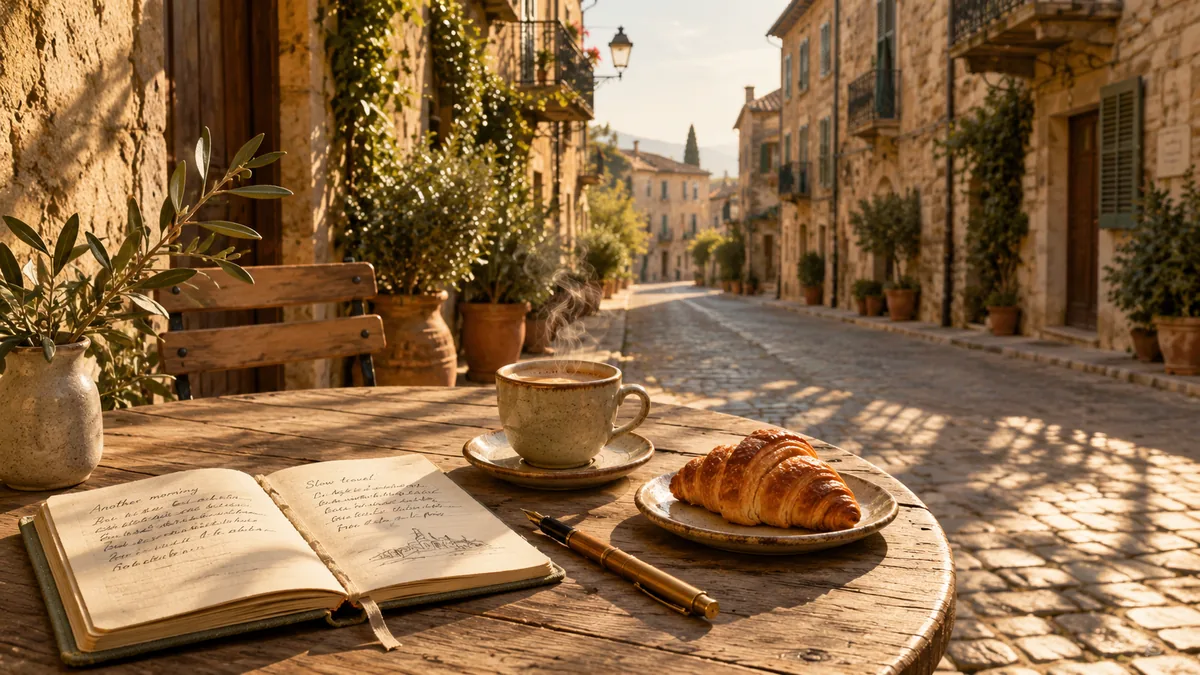
In contrast to checklist tourism, receptive travel asks you to become a quiet guest rather than a hurried consumer.
When you slow down and spend an entire morning in a single public garden or quiet neighborhood cafe, something profound happens to your physiology.
Your heart rate decelerates, your breathing naturally drops into your belly, and your sensory awareness awakens.
You begin to notice the subtle aromas of roasted espresso drifting through stone archways, the changing angle of morning shadows against old plaster, and the unhurried cadence of local conversation.
Neurologists note that chronic stress narrows our visual field, trapping us in tunnel vision. Unhurried wandering restores panoramic vision, signaling safety to the autonomic nervous system.
You remember that a city is not a theme park built for your entertainment; it is a living, breathing tapestry of human lives that unfolds best when observed with stillness.
The Master Diagnostic Architecture: Four Archetypes of Modern Travel
How do you typically inhabit a new landscape? Examine the diagnostic framework below to see where your travel habits currently reside:
| Travel Archetype | Core Motivation | Typical Day Structure | Somatic & Emotional Outcome |
|---|---|---|---|
| The Checklist Tourist | Status validation; fear of missing top-rated sights. | 10–12 attractions per day; rigid hourly schedule; constant transit. | Sensory overload; physical exhaustion; superficial memory recall. |
| The Anxious Escapist | Fleeing internal burnout or unresolved life stress. | Constantly moving from place to place to outrun quiet moments. | Restlessness; inability to be present; dreading the return home. |
| The Digital Documentarian | Capturing aesthetic content for social audiences. | Experiencing sights through a phone screen; staging moments. | Emotional detachment; performative fatigue; diminished felt awe. |
| The Unrushed Traveler | Nervous system renewal; receptive presence; slow wonder. | One gentle priority per day; open wandering; unhurried lingering. | Deep somatic calm; enduring psychological restoration; vivid presence. |
Notice the vital distinction: the Unrushed Traveler does not measure a journey by how much territory was covered, but by how deeply they allowed the territory to touch them.
The Unrushed Slow Travel Protocol: 4 Steps to Reclaim Wonder
Embracing unrushed travel does not require months of sabbatical time. It is an intentional mindset you can apply to a weekend getaway or a two-week journey through four simple boundaries.
1. The One-Thing Rule
Dismantle the impulse to schedule morning, afternoon, and evening events. Instead, commit to one meaningful priority each day.
Whether it is visiting a specific art collection, walking along a coastal path, or browsing an old bookshop, dedicate yourself entirely to that single experience.
Once it is concluded, consider your daily agenda complete. The rest of your hours are sovereign, open territory.
2. The Anchor Cafe Ritual
In every new town or neighborhood, choose one modest cafe and return to it every single morning.
Sit at the same outdoor table. Order the same tea or coffee. Greet the barista with familiar courtesy.
By establishing an anchor point, you cease to be a transient ghost drifting across the surface of the city.
You create an island of domestic stability that grounds your nervous system amidst unfamiliar surroundings.
3. The Sacred Unplanned Afternoon
Leave your phone in your pocket, tuck your map away, and allow yourself to wander purely by intuition.
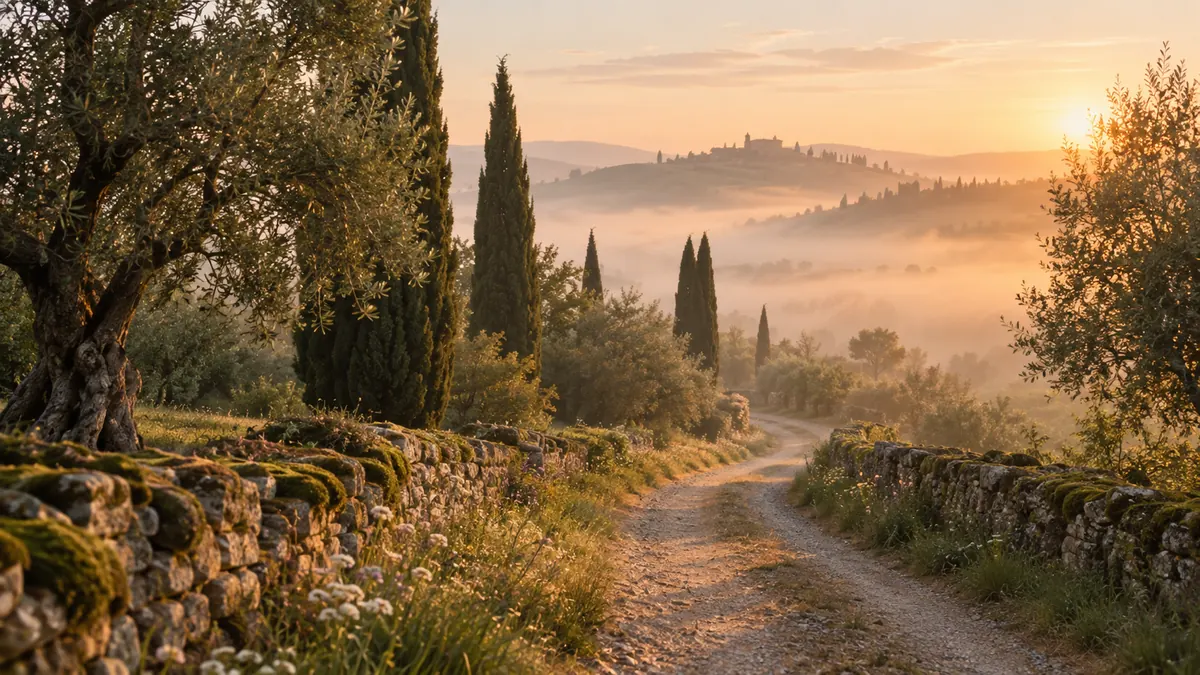
Turn down the narrow cobblestone alley simply because the afternoon light looks beautiful on the old brickwork.
Stop to watch children feeding pigeons in an uncelebrated square, or rest on a stone bench under a canopy of chestnut trees.
Serendipity cannot find you if every fifteen-minute block of your day is already booked.
4. Leaving the Shutter Closed
When you encounter a moment of breathtaking beauty—a crimson sunset melting over terracotta rooftops or mist rolling over a valley—resist the urge to instantly reach for your phone.
Take three slow, conscious breaths through your nose. Feel the cool air against your cheeks and listen to the ambient hum around you.
Allow your eyes to record the scene onto your heart before you ever think of recording it for a digital audience.
The memories that nourish you five years from now will rarely be the photos in your cloud storage; they will be the moments where you were fully, vibrantly alive.
Philosophical & Travel Wellbeing Disclaimer: The practices and reflections shared here are intended for lifestyle contemplation and personal rejuvenation. They do not constitute formal travel advisories, logistical guarantees, or medical recommendations. Always exercise thoughtful situational awareness and respect local cultural norms when exploring unfamiliar destinations.
Frequently Asked Questions