




You spent months saving, weeks packing, and hours crossing oceans to reach a dream destination. Yet, by day three of your long-awaited holiday, your alarm still blares before dawn. Your phone screen buzzes with color-coded spreadsheets, tickets, and an unrelenting list of landmarks you feel obligated to witness before sunset. Instead of feeling restored, an […]
You spent months saving, weeks packing, and hours crossing oceans to reach a dream destination.
Yet, by day three of your long-awaited holiday, your alarm still blares before dawn. Your phone screen buzzes with color-coded spreadsheets, tickets, and an unrelenting list of landmarks you feel obligated to witness before sunset.
Instead of feeling restored, an all-too-familiar heaviness tightens across your shoulders.
You find yourself standing before an ancient cathedral or a storied museum, yet your mind is already calculating train schedules and dinner reservations. You are physically abroad, but your spirit is stranded in transit.
This is the quiet exhaustion of modern sightseeing.
Without noticing, many of us have imported the toxic urgency of our workdays into our sacred escapes, turning restful travel into another unpaid shift of high-stress logistics.
What Is Slow Travel?
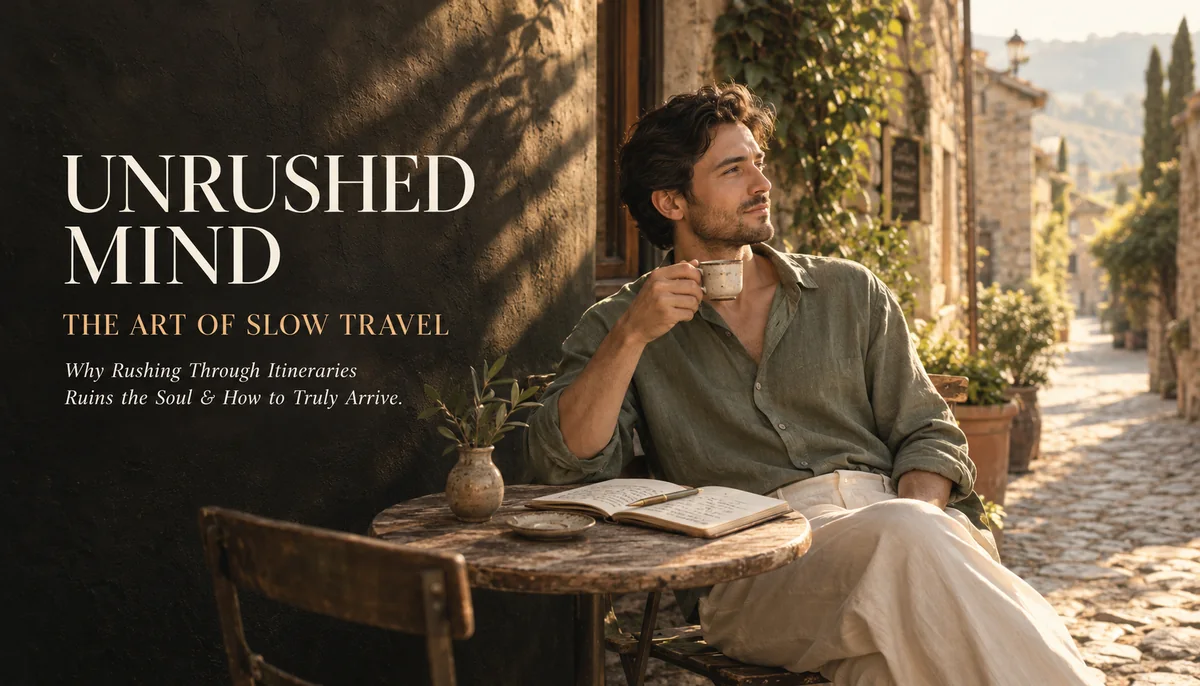
Slow travel is an intentional philosophy of exploration that prioritizes presence over pace, connection over checklists, and depth over distance.
Rather than consuming iconic sights as commodities, the slow traveler lingers in fewer places, allowing a culture’s daily rhythm to restore their overwhelmed spirit.
It is not an excuse for inactivity, nor is it a luxury reserved solely for those with endless sabbaticals.
Rather, it represents a conscious rebellion against the frantic pace of consumerist tourism, choosing to let a single landscape touch your heart instead of racing across ten borders just to collect digital proof.
The Tyranny of the Checklist: Why Speed Ruins Wonder
When we treat travel as a scavenger hunt, our nervous systems never truly downshift.
The human brain is simply not wired to process dozens of unfamiliar stimuli, foreign transit networks, and surging crowds every single hour without triggering hurry sickness.
Moreover, the modern pressure to curate photographic trophies creates a perpetual distance between you and reality.
You view the sunset through a six-inch glass screen, framing the light for people thousands of miles away while failing to feel the cool twilight breeze touching your own skin.
True recovery requires what we describe in our guide to the 7 types of rest: sensory quietude and emotional unburdening.
When every hour is pre-allocated, serendipity is suffocated. The greatest memories rarely happen while standing in two-hour ticket lines; they blossom in the unplanned pauses along the margins.
How Do You Move Through the World? A Diagnostic Mirror
To cultivate an unhurried journey, we must first recognize the unspoken patterns driving our itineraries.
Examine how your habits align across these four distinct travel mindsets:
| Dimension | The Checklist Tourist | The Instagram Trophy Hunter | The Exhausted Escapist | The Sanctuary Slow Traveler |
|---|---|---|---|---|
| Core Motivation | Fear of missing out (FOMO) and ticking boxes | Collecting visual validation and status symbols | Numbing out and running away from daily burnout | Cultivating deep presence, spiritual recovery, and soul connection |
| Itinerary Design | Rigid 8-to-10 stops daily, timed to the minute | Optimized around golden hour photo backdrops | Scattered, chaotic, and reactionary | One anchor experience per day with open afternoons |
| Relationship to Time | Constant rush, checking watches, anxiety in lines | Performing for external audiences | Sleeping late yet waking up feeling depleted | Sovereign, unhurried, attentive to natural rhythms |
| Post-Trip State | Physical soreness, sensory overload, needing another vacation | Dozens of edited photos, zero true memories | Dread of returning to ordinary routines | Grounded clarity, nourished spirit, lasting inner peace |
The 4 Pillars of Unhurried Exploration
Shifting from checklist tourism to slow travel does not require radical upheavals; it requires gentle, deliberate boundaries.
Consider anchoring your next journey around these four restorative practices:
1. The Rule of One
Instead of cramming three museums, two monuments, and four cafes into a single afternoon, adopt the Rule of One.
Choose one meaningful destination for your morning—perhaps a quiet contemplative garden, an ancient library like those found in Europe’s sanctuaries of silence, or a local artisan workshop. Leave the rest of the day entirely unscripted.
2. Sacred Unscheduled Hours
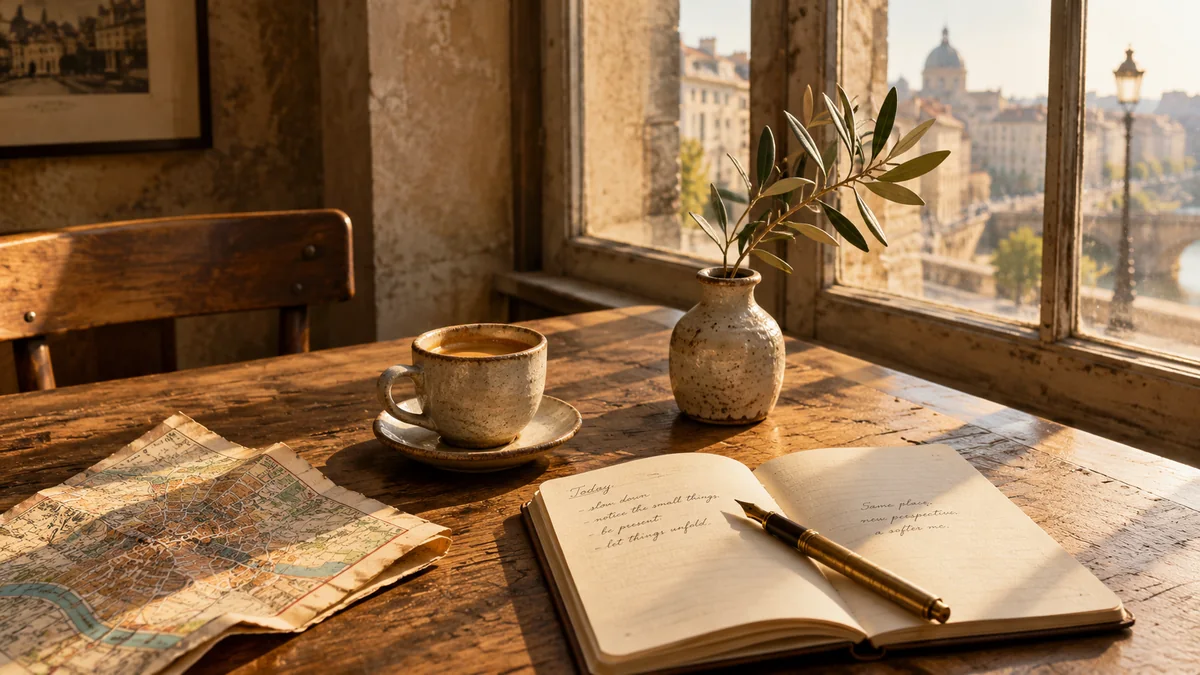
Reserve at least three to four hours each afternoon without a map, a compass, or a timetable.
Channel the timeless French philosophy of the art of flânerie—the sacred practice of aimless, reverent wandering through cobblestone alleys, letting your curiosity steer every turn.
3. Somatic Sensory Immersion
When you arrive at a quiet courtyard or a coastal overlook, put your phone deep inside your bag.
Close your eyes for thirty seconds and listen to the distinct soundscape of the city. Breathe in the scent of morning espresso, cedarwood incense, or damp maritime pine, mirroring the restorative immersion of Japanese shinrin-yoku forest bathing.
4. The Grace of Becoming a Regular
Instead of dining at a different hyped restaurant for every meal, return to the same humble neighborhood corner cafe three mornings in a row.
Sit at the same wooden table, exchange a warm greeting with the barista, and watch the local elders read their newspapers. By anchoring yourself to a single micro-community, you cease to be a passive consumer and begin to experience the soul of the place.
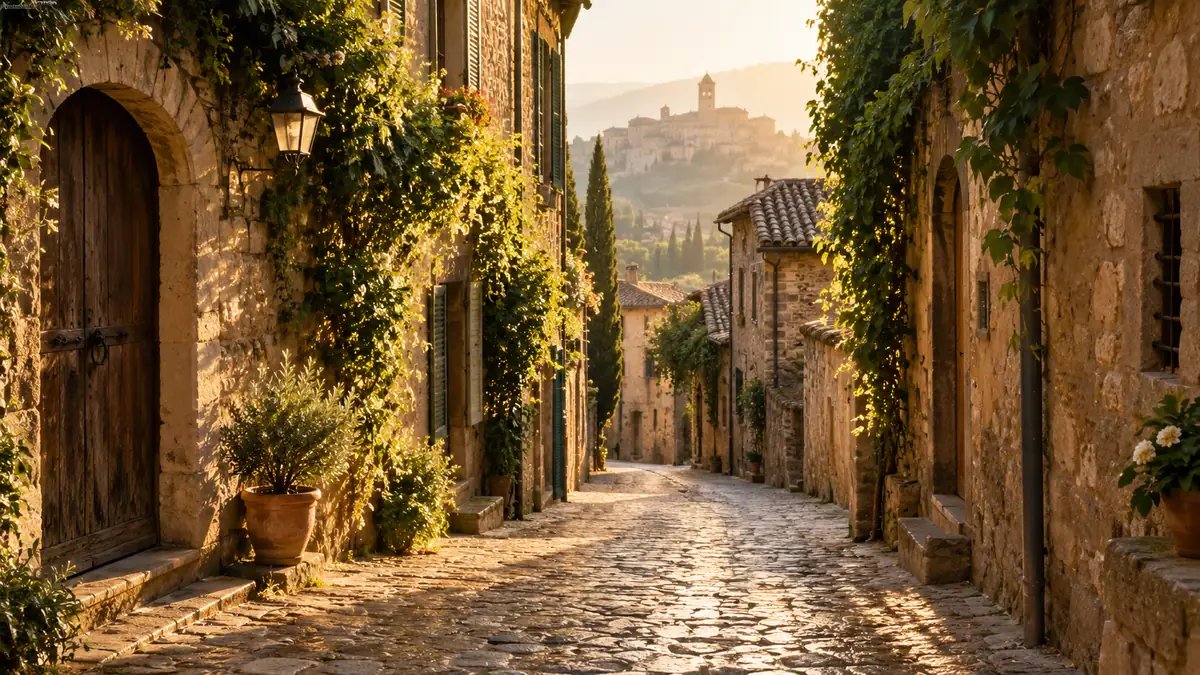
Arriving Where Nobody Knows Your Name
There is an immense, liberating clarity in choosing to go where nobody knows you.
When you shed your professional titles, your domestic obligations, and the expectations of your social circle, travel becomes an act of gentle reclamation.
You are no longer performing productivity; you are simply an observant, breathing soul meeting the world anew.
Embracing the Japanese wisdom of ichigo ichie reminds us that this exact encounter—this cup of tea, this slant of light against a mossy stone, this brief conversation with a stranger—will never repeat itself.
When you slow your pace, you allow the true medicine of travel to do its quiet work.
You discover that the most transformative souvenir you bring home isn’t a suitcase full of trinkets, but a spacious mind that knows how to breathe even amidst the noise.
Frequently Asked Questions About Slow Travel
Can I practice slow travel during a short weekend trip?
Yes. Slow travel is a mental posture rather than a calendar requirement.
Even on a forty-eight-hour getaway, you can choose to explore a single neighborhood deeply instead of crisscrossing an entire metropolis.
Is slow travel more expensive than budget travel?
In most cases, slow travel is significantly more economical.
By staying longer in one accommodation, walking on foot, and buying seasonal produce from neighborhood markets, you eliminate costly express trains and overpriced tourist transit.
Won’t I regret missing famous landmark attractions?
True regret rarely stems from skipping an overcrowded monument.
It stems from spending your precious days feeling exhausted, hurried, and emotionally detached from the wonder surrounding you.
How do I overcome the guilt of doing nothing while traveling?
Remind yourself that rest is not a waste of travel; it is the prerequisite for absorption.
Just as a sponge cannot absorb water when saturated, an overwhelmed mind cannot absorb beauty until it empties itself of urgency.
Philosophical & Mindful Travel Disclaimer: This essay is intended for reflective, contemplative, and emotional wellbeing exploration. Unrushed Mind advocates for unhurried living and mindful wandering as pathways to personal peace. Always travel respectfully, honor local cultural norms, and prioritize your personal safety wherever your slow steps lead.