



Have you ever looked back at a frantic week and felt as though you lived through none of it? The days blur together into a grey corridor of deadlines, glowing notifications, and half-remembered conversations. We move with relentless velocity, yet our inner world feels strangely hollow, stripped of sensory color and genuine emotional depth. When […]
Have you ever looked back at a frantic week and felt as though you lived through none of it?
The days blur together into a grey corridor of deadlines, glowing notifications, and half-remembered conversations.
We move with relentless velocity, yet our inner world feels strangely hollow, stripped of sensory color and genuine emotional depth.
When your attention is perpetually stretched into tomorrow, the present moment becomes an inconvenient obstacle rather than a place to dwell.
Quick Insight: The haiku mindset is an ancient Japanese contemplative practice pioneered by 17th-century poet Matsuo Bashō. By compressing our attention into immediate sensory facts—a single water ripple, an autumn leaf, or cool morning air—we dissolve chronic mental fatigue and awaken to timeless inner peace.
The Perceptual Blur of Modern Speed
Modern culture trains the mind to operate as an insatiable consumer of abstractions.
We skim headlines, measure our worth by digital outputs, and treat quiet stillness as a dangerous waste of time.
Yet neuroscience reminds us that when attention is permanently fractured, the autonomic nervous system remains locked in low-grade vigilance.
✦ The Cost of Haste: You may be physically sitting in a tranquil room, while your mind runs a frantic marathon through imagined catastrophes.
In doing so, we step over the quiet miracles unfolding right beside us: the steam curling from a warm ceramic cup, or the amber tilt of dusk.
We long for grandiose life transformations to rescue us from exhaustion.
However, the masters of Japanese aesthetics understood that true renewal never arrives through louder noise, but through deeper noticing.
The Ancient Pond: How Matsuo Bashō Compressed Eternity
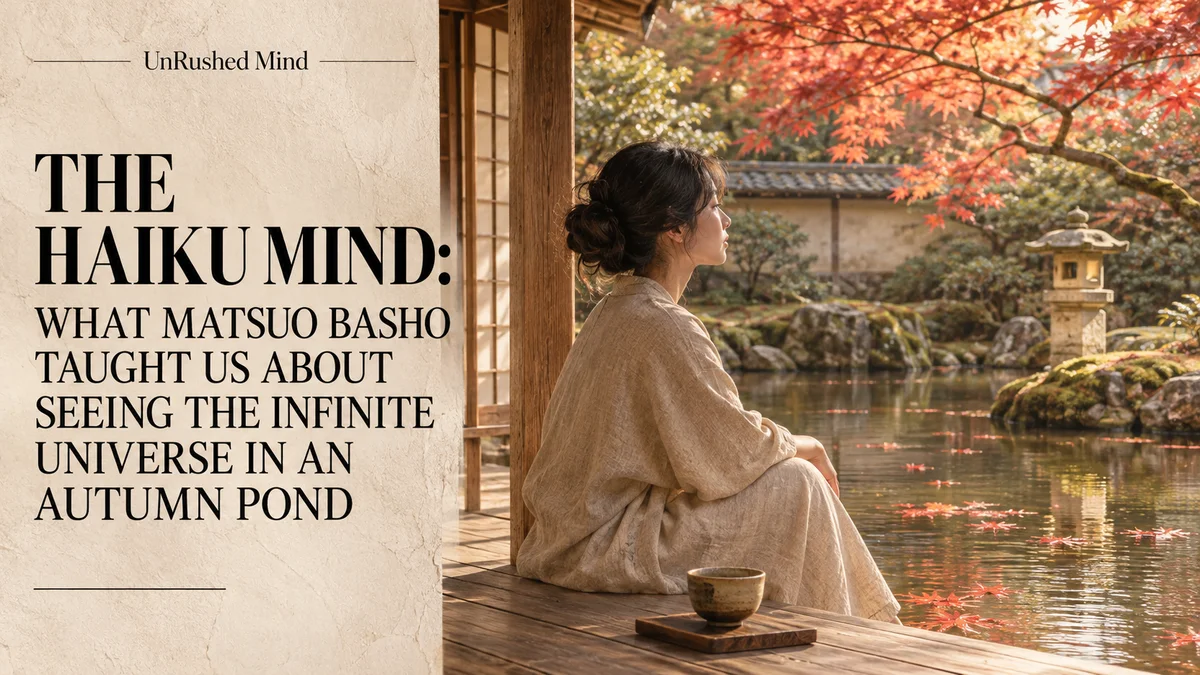
In the spring of 1686, near a modest cottage in Edo, Matsuo Bashō composed what would become the most famous poem in Japanese history.
He did not write of imperial battles, grand cosmic dramas, or philosophical treatises.
Instead, he observed an ordinary pond, a common frog, and the gentle disruption of water:
“Furuike ya / kawazu tobikomu / mizu no oto.”
(An ancient pond / a frog jumps in / the sound of water.)
✦ The Radical Architecture of 17 Syllables: Bashō paired the permanent (fueki) with the fleeting (ryuko).
The ancient pond represents timeless stillness, existing long before and persisting long after.
The frog represents the transient spark of living motion, entering and dissolving within a heartbeat.
The splash is the sensory portal where eternity and the immediate present collide.
Bashō taught that poetic enlightenment does not require escaping to distant mountains.
It asks only that you abandon your ego, quiet your internal monologue, and let the object speak for itself.
When you observe a simple thing with absolute devotion, the entire universe reveals its quiet coherence.

Chronos Frenzy vs. The Haiku Mind
To embrace this perspective in modern life, we must recognize the deep contrast between how we currently live and how the poetic mind perceives.
| Dimension | Chronos Frenzy (Modern Default) | The Haiku Mind (Bashō’s Way) |
|---|---|---|
| Perceptual Aperture | Broad, hyper-distracted, overwhelmed by future scenarios | Intentionally narrowed, tactile, grounded in current reality |
| Relationship to Time | Linear panic, fearing that every empty minute is wasted | Circular presence, treating each sensory instant as whole |
| Sensory Processing | Abstracted via glass screens, emotionally detached | Deeply embodied through texture, temperature, and breath |
| Inner Monologue | Relentless commentary, anxious judgment, and self-defense | Receptive stillness, allowing things to simply be as they are |
| Nervous System State | Sympathetic dominance, tight shoulders, shallow chest breathing | Parasympathetic settling, vagal tone renewal, somatic safety |
Practicing the Haiku Mind: 3 Gentle Anchors of Pure Attention
Cultivating a poetic consciousness does not require writing verse.
It is a daily choice to soften your gaze and inhabit your life with unhurried reverence.
1. The 17-Syllable Sensory Frame
Whenever racing thoughts begin to overwhelm your clarity, deliberately shrink the aperture of your attention.
✦ Name Three Concrete Sensory Facts: Silently identify what is immediately real around you without layering emotional drama over it.
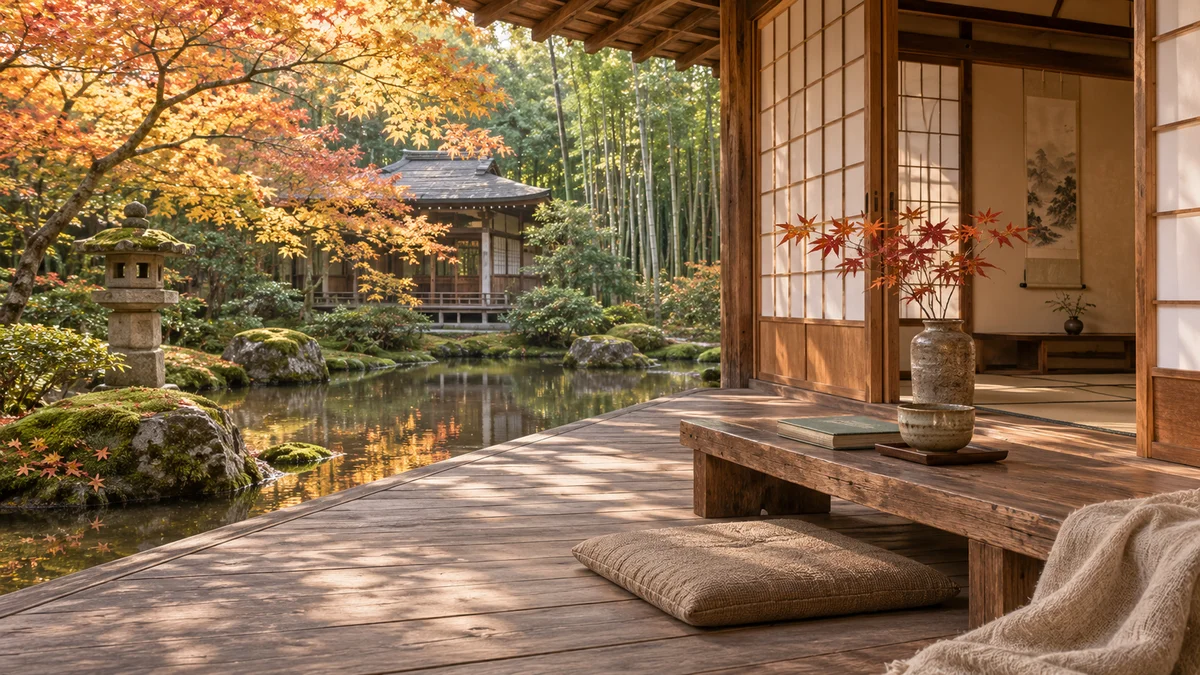
For instance: “Cool cedar wood under my fingers, the rhythm of autumn rain, and the amber rim of tea.”
By stripping away interpretations, you pull energy out of the narrative brain and anchor yourself in physiological safety.
2. Finding the Daily “Kigo” (Season Word)
In traditional haiku, every poem must contain a kigo—a word that firmly roots the text in the turning of the natural seasons.
Modern urban life attempts to sterilize seasonality through artificial air and perpetual artificial lighting.
✦ Seek One Earthly Marker Each Morning: Step outdoors and locate one seasonal detail that requires no human permission to exist.
Notice the brittle curl of a fallen leaf, the crisp bite of autumn wind against your cheeks, or the slow departure of daylight.
Connecting with nature’s rhythm reminds your body that life moves in patient cycles rather than linear emergencies.
3. The Bashō Pause (Honoring the Ripple)
Notice how modern living rushes from one task to the next without allowing the dust to settle.
When an email is sent, a meeting concludes, or a conversation ends, our instinct is to leap instantly into the next demand.
✦ Honor the Echo of Each Action: When a moment finishes, give yourself five seconds of quiet breathing before reaching for your phone.
Watch the ripple expand across the surface of the water and gently disappear.
In that unhurried interval, your mind discovers that nothing needs to be defended, proven, or manufactured.
🌿 Decoding Takeaway: The Haiku Mind in Daily Life
Inner State: Liberating the mind from chronic hurry and cognitive overload.
Underlying Mechanism: Down-regulating the Default Mode Network by engaging direct sensory observation.
Gentle Micro-action: Take one conscious pause today to notice a single ordinary object with complete reverent attention.
Mindful Reflection Notice: This essay explores ancient aesthetic philosophies for contemplative living and emotional tranquility. It is offered as a reflective guide to slow awareness and is not a substitute for clinical psychological care.
Frequently Asked Questions