



When your world shrinks to the boundaries of four drywall walls and a glowing glass screen, your thoughts inevitably become small, sharp, and hurried. Claustrophobia is rarely a matter of physical square footage; it is the tragic loss of a distant horizon. ✦ Quick Answer: Shakkei (借景) is the traditional Japanese landscape principle of incorporating […]
When your world shrinks to the boundaries of four drywall walls and a glowing glass screen, your thoughts inevitably become small, sharp, and hurried.
Claustrophobia is rarely a matter of physical square footage; it is the tragic loss of a distant horizon.
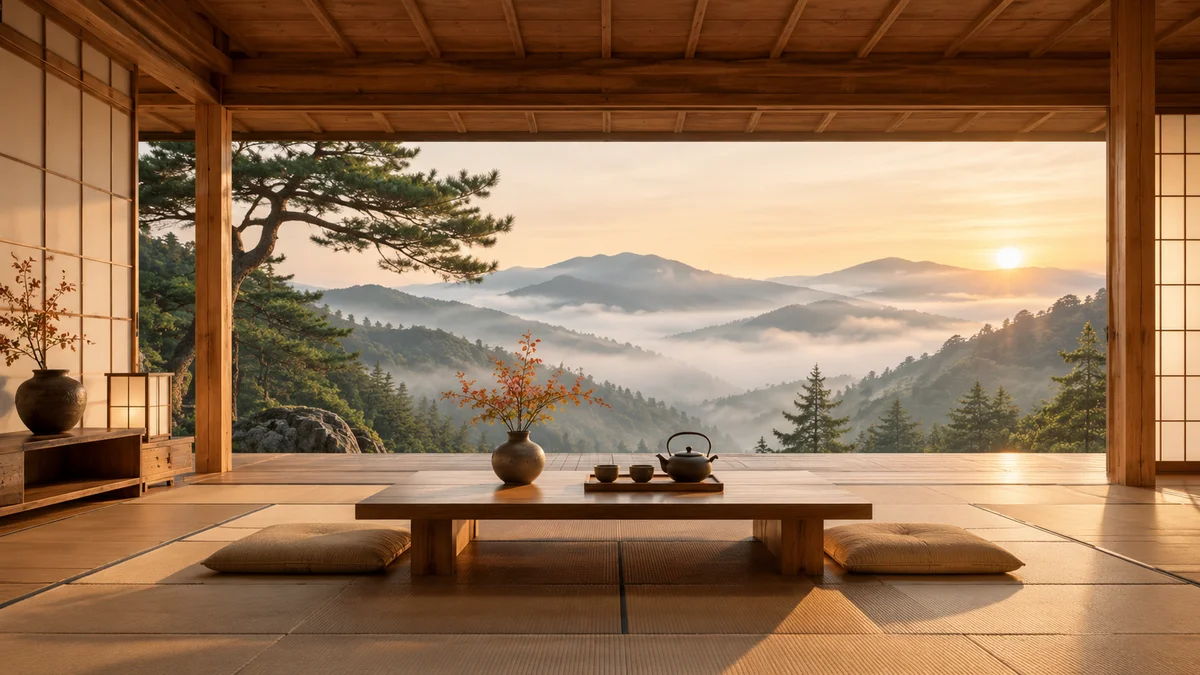
✦ Quick Answer: Shakkei (借景) is the traditional Japanese landscape principle of incorporating distant natural scenery—such as mountain ridges, clouds, or ancient forests—into a contained garden through deliberate architectural framing. Psychologically, it dissolves mental claustrophobia, disarms optical threat reflexes, and restores emotional serenity through unhurried panoramic perspective.
The Confinement of the Flat Horizon
Modern humans spend over ninety percent of their waking hours indoors, focusing their eyes on objects less than two feet away.
This perpetual near-point focus is biologically unnatural for a species that evolved scanning expansive savannas and rolling ridgelines.
When your gaze is locked into a tight focal cone, your autonomic nervous system interprets that visual compression as continuous vigilance or predatory threat.
Your breathing turns shallow, your neck muscles contract, and your mental field narrows to immediate irritations and impending deadlines.
We mistake this chronic tension for everyday fatigue or career burnout.
Yet beneath our exhaustion lies a simpler spiritual grief: our souls miss the wide, generous geometry of the horizon.
The Philosophy of Shakkei: To Borrow Without Possessing
In the seventeenth century, Zen garden architects in the ancient capital of Kyoto perfected a design concept known as Shakkei (借景), which translates poetically as borrowed scenery.
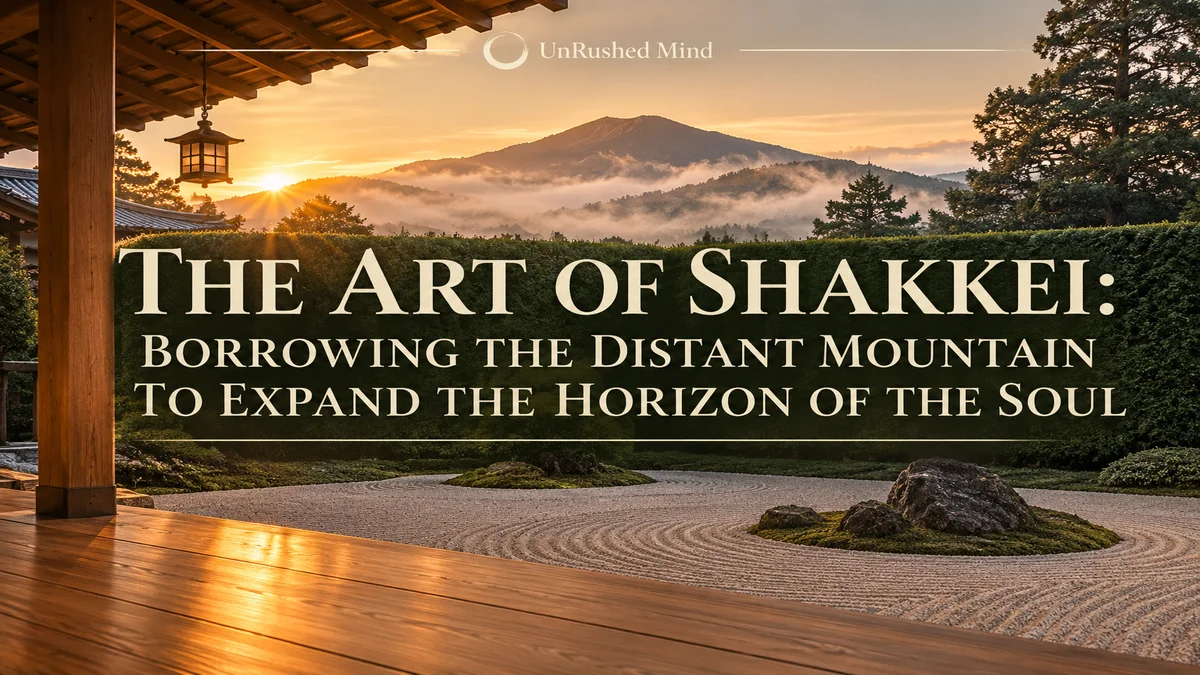
At temples like Entsu-ji and Tenryu-ji, the courtyards are modest, often bordered by low stone walls or clipped cryptomeria hedges.
Yet when you sit on the polished cedar veranda, the small garden does not feel constrained or suffocating.
Instead, the landscape masters trimmed the middle hedges with surgical precision to mask nearby rooftops and roads, creating a clean frame that captures Mount Hiei in the far distance.
The distant, mist-shrouded peak appears as if it belongs wholly to the temple’s private courtyard.
Here lies the revolutionary spiritual wisdom of the practice: the temple does not own the mountain, nor did the monks attempt to buy its slopes or build upon its ridges.
They simply opened a quiet threshold and invited its majestic presence into their daily consciousness.
| Dimension | Enclosed Confinement (The Cluttered Ego) | Shakkei Living (The Borrowed Horizon) |
|---|---|---|
| Visual Field | Tight focal tunnel vision (< 2 feet); locked on indoor screens. | Soft panoramic vision; intentional aperture to distant horizons. |
| Relationship to Space | Compulsive ownership; hoarding physical objects to feel secure. | Reverent borrowing; enjoying beauty and stillness without needing to possess it. |
| Mental Bandwidth | Cramped, reactive, hypersensitive to micro-frictions. | Expansive, patient, anchored in the slow rhythms of geological time. |
| Nervous System | Chronic sympathetic vigilance; fight-or-flight muscle bracing. | Ventral vagal ease; de-escalation of the brain’s alarm circuits. |
The Four Classical Layers of Shakkei
Traditional Japanese treatises on garden construction divide borrowed landscape into four subtle architectural relationships:
First is Kinkei (近景), the intimate foreground of raked gravel, smooth moss, and wooden floorboards where the physical body rests.
Second is Chukei (中景), the intentional middle hedge that acts as an acoustic and visual filter, hiding mundane human commotion.
Third is Enkei (遠景), the borrowed grandeur of the distant mountain peak, the drifting clouds, or the setting sun.
Fourth is Mitate (見立て), the contemplative recognition of the viewer who understands that the boundary between the inner garden and the outer world was always an illusion.
When these four layers harmonize, your psychological boundaries soften.
You realize that peace does not require a vast mansion; it requires only the humility to let the vastness of nature enter your small room.
Three Practices to Expand Your Internal Horizon
You do not need to move to a Kyoto monastery to integrate the healing medicine of Shakkei into your everyday routine.
You can cultivate the art of borrowed perspective through three gentle, deliberate rituals:
1. The Panoramic Gazing Pause
Twice every day, intentionally step away from your digital screens and approach the highest window or outdoor overlook available to you.
Instead of looking at a single vehicle or sign, soften your gaze and expand your visual field to take in the furthest horizon, noticing the edges of your peripheral vision simultaneously.
Neuroscientists confirm that shifting from focal vision to panoramic vision directly down-regulates the amygdala and disarms sympathetic threat arousal.
Let your eyes rest on the farthest horizon for two minutes, breathing deeply into your lower ribs.
2. Pruning the Middle Noise
Just as Kyoto masters sheared unsightly telephone poles from their view with evergreen hedges, you must actively prune the middle ground of your life.
The middle ground is the daily digital clutter: sensational headlines, algorithmic outrage, and unsolicited opinions that obscure your view of timeless truths.
Establish quiet boundaries around your mornings and evenings.
Clear the physical clutter from your desk so that your eyes naturally drift toward the sky or the canopy of a nearby tree.
3. The Grace of Borrowing Without Possessing
Modern culture measures wealth by what you own, accumulate, and control behind locked doors.
Shakkei teaches us the profound liberation of unowned wonder.
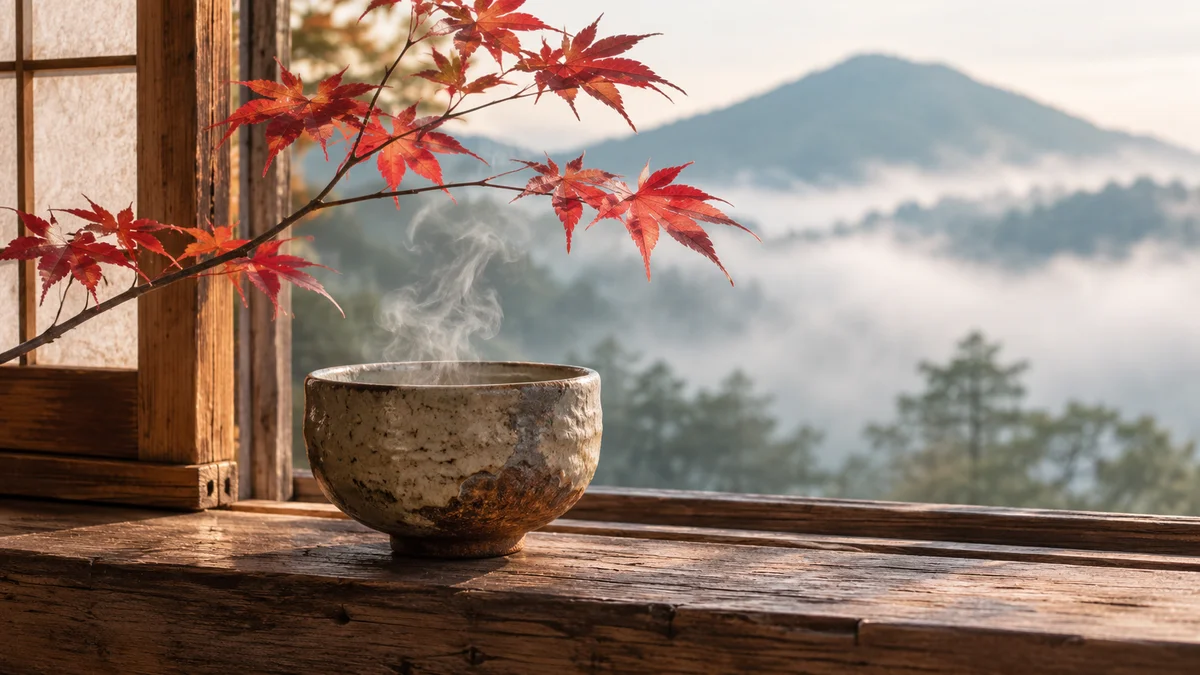
The morning sunlight filtering through autumn leaves, the silent silhouette of the mountain at dusk, and the rhythm of rain falling on slate belong to everyone and no one.
When you abandon the exhausting compulsion to possess the world, you become free to inhabit it with unhurried delight.
“The mountain does not belong to the courtyard, and the courtyard does not own the mountain. Yet when the window is opened with reverence, the heart finds room to breathe for a thousand miles.”
Returning to the Open Window
If your soul feels crowded and exhausted today, recognize that your pain is not an internal defect.
You have simply been living with your face pressed too close to the glass of life’s immediate demands.
Step back, open the partition of your mind, and look up toward the distant peaks.
The mountain has been standing there through every storm, patiently waiting to be borrowed by a quiet heart.
✦ Mindful Living Disclaimer: This essay is offered for reflective exploration, emotional validation, and general educational purposes. It does not replace professional medical, psychiatric, or clinical care. If you are experiencing acute nervous system distress, severe burnout, or persistent physical symptoms, please seek guidance from a qualified healthcare professional.