


We live in a culture that measures human dignity by continuous accumulation. We collect possessions, titles, and endless conveniences, hoping they will quiet an inner restlessness. Yet modern life often reveals a quiet tragedy: our rooms are full, but our attention is hopelessly scattered. The more we own, the more we find ourselves owned by […]
We live in a culture that measures human dignity by continuous accumulation. We collect possessions, titles, and endless conveniences, hoping they will quiet an inner restlessness.
Yet modern life often reveals a quiet tragedy: our rooms are full, but our attention is hopelessly scattered. The more we own, the more we find ourselves owned by the burden of keeping.
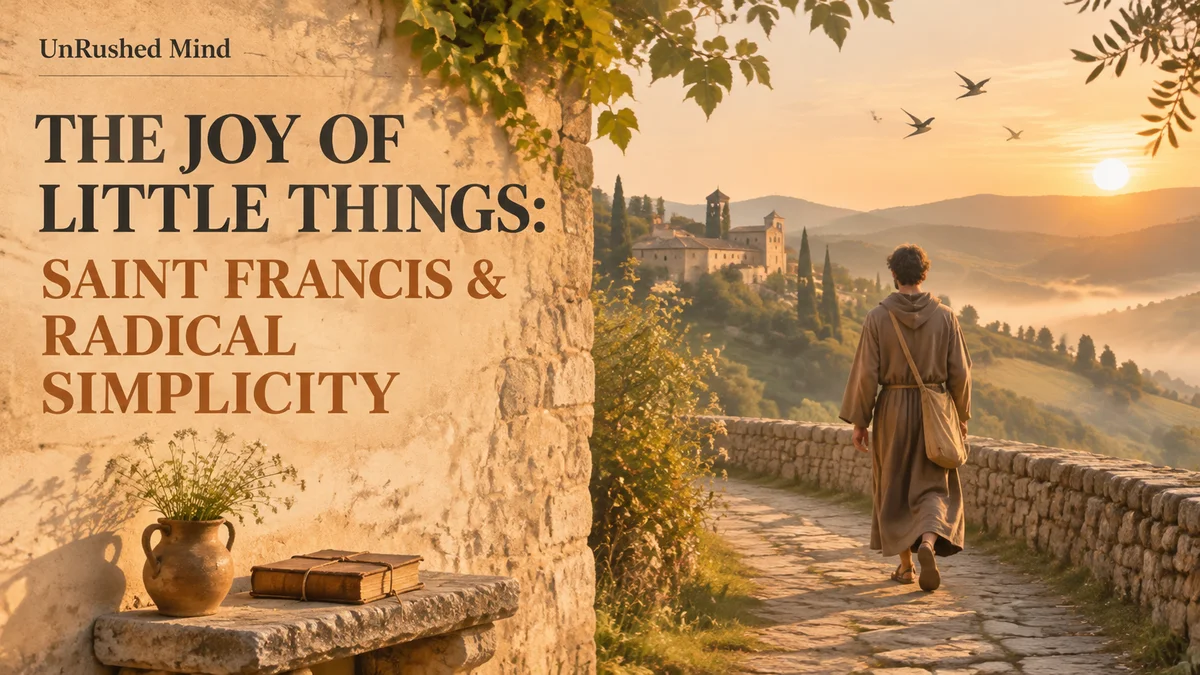
In the year 1206, in the central square of Assisi, a wealthy young merchant named Francis stripped off his fine dyed garments before the bishop and the stunned townspeople. He returned his inheritance and walked barefoot into the cold Italian hills with empty hands.
What he discovered on those misty roads was not deprivation, but an astonishing lightness of spirit. By shedding everything that weighed down his soul, he unlocked the timeless saint francis assisi voluntary poverty joy that modern hearts so desperately seek.
The Weight of Ownership: Why Having Everything Leaves Us Empty
Every physical object you bring into your life demands an unseen share of your nervous system. Possessions require insurance, cleaning, safeguarding, and constant mental vigilance against loss or decay.
When your energy is consumed by maintaining things, very little remains to experience the simple wonder of existing. Accumulation creates an invisible gravity that anchors the mind to chronic anxiety.
Voluntary poverty, as lived by Saint Francis, is not the tragic destitution of involuntary deprivation. Instead, it is the deliberate choice to unclench your grip so your hands are free to receive life.
It is the courageous realization that you cannot embrace the beauty of the dawn while clutching heavy chests of gold. When you willingly strip away the superfluous, your perception clears instantly.

Lady Poverty and the Canticle of the Sun: The Universe as Home
Francis affectionately referred to this uncluttered way of being as his bride, “Lady Poverty.” To him, poverty was simply the total absence of grasping.
When you possess nothing as your exclusive territory, you eliminate the fear of theft and loss. With no walls left to defend, the entire earth becomes your living room.
In his legendary hymn, the Canticle of the Sun, composed while suffering in physical illness, Francis celebrated the world with childlike joy. He did not admire nature as a consumer, but greeted the elements as his sacred kin.
He sang praises for “Brother Sun,” who brings the day, and “Sister Water,” whom he called humble, precious, and pure. He recognized that those who own nothing are granted the spiritual freedom to enjoy everything.
Heavy Accumulation vs. Franciscan Simplicity
To see clearly how shedding possessions restores inner peace, consider how the grasping mind differs from the unburdened spirit.
| Dimension | Heavy Accumulation | Franciscan Simplicity |
|---|---|---|
| Relationship to Possessions | Grasping tightly to define self-worth and security. | Holding lightly, recognizing everything is borrowed. |
| Nervous System State | Chronic vigilance, fearing loss, damage, or obsolescence. | Deep autonomic relaxation with zero assets to defend. |
| Source of Daily Joy | Brief spikes from acquiring novel consumer goods. | Enduring awe from common water, bread, and birdsong. |
| Perception of Nature | A resource to exploit, buy, or photograph for display. | A sacred family of living beings to reverence and protect. |
| Core Sense of Identity | Built upon the fragile pedestal of external abundance. | Rooted in the timeless richness of pure being. |
Three Practices of Sacred Simplicity for Modern Life
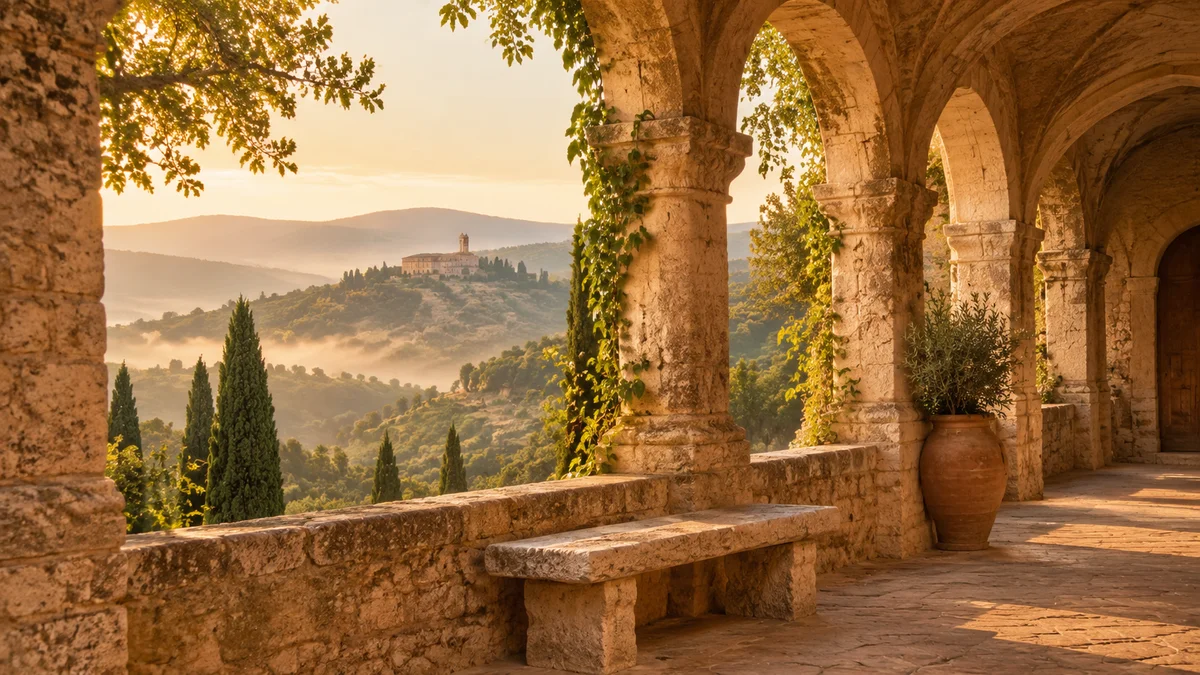
You do not need to walk barefoot through Umbria to taste the freedom of Saint Francis. You can weave this gentle unburdening into your everyday existence through small, quiet shifts.
✦ Practice the Unclenched Palm: Several times each day, physically open your closed fists and notice what your mind is clutching. Release the quiet impulse to control outcomes, preserve status, or prove your worth.
✦ Revere the Ordinary: Choose one ordinary element today—a cup of clear water, dry fallen leaves, or cool morning air. Gaze upon it without analyzing its utility, honoring it simply because it shares existence with you.
✦ The Gentle Emptying: Walk through your living space and find three items you haven’t touched in a season. Offer them generously to someone who needs them, feeling the immediate lightness that enters the room.
✦ The Franciscan Truth: True wealth is never found in the abundance of what you hold in your hands, but in the spaciousness of what your unburdened heart can love.
Inquiries on Simplicity, Travel, and Saint Francis
Does Franciscan voluntary poverty mean we must give up all modern tools?
Voluntary simplicity is not about performative asceticism or discarding practical instruments of service. It is about dissolving emotional dependence on luxury so your peace remains unshakable.
What makes the pilgrimage to Assisi so restorative today?
Walking the stone paths of Mount Subasio allows travelers to experience the physical acoustics of quietness. Traveling unhurriedly through Umbrian olive groves awakens an ancient rhythm untouched by modern hurry.
How does shedding material possessions soothe the human nervous system?
Fewer possessions eliminate thousands of daily micro-decisions and micro-vigilance triggers. When your surroundings reflect spaciousness, your vagal nerve recognizes safety, inviting profound restorative rest.
Mindful Reflection Notice: The journey toward sacred simplicity is an ongoing practice rather than an overnight destination. Treat your attachments with gentle curiosity rather than self-judgment, lightening your load one breath at a time.