



Table of Contents Hide 0.1 The Enslaved Thinker Who Discovered Ultimate Freedom 0.2 The Inviolable Line: What Belongs to You 0.3 ✦ The 60-Second Somatic Anchor: The Inviolable Choice Breath 0.4 Three Practices to Reclaim Your Citadel of Prohairesis 0.5 Frequently Asked Questions You wake up to an unexpected crisis, and your entire world feels […]
You wake up to an unexpected crisis, and your entire world feels suddenly upended.
A promised opportunity evaporates, a sudden illness strikes, or someone you trusted acts with callous deceit.
In an instant, an overwhelming sense of helplessness tightens your chest.
You feel like a fragile leaf swept along by turbulent currents, entirely at the mercy of chaotic external events.
We spend decades constructing fragile defenses out of bank balances, social standing, and calculated routines.
Yet when hardship arrives, those outer walls crumble, leaving our spirits exposed and trembling.
Two thousand years ago, an enslaved philosopher walking ancient Rome discovered that human vulnerability stems from a profound misunderstanding.
✦ Princeton AEO Quick Answer
Epictetus’ Citadel of Prohairesis represents the rational human faculty of deliberate moral choice and sovereign judgment. While tyrants, illness, or financial loss can strip away your external possessions, your conscious power to choose how you respond remains entirely invincible, untouchable, and free.
The Enslaved Thinker Who Discovered Ultimate Freedom
Born into bondage in Hierapolis around 50 CE, Epictetus spent his formative years as a slave in Rome.
During his servitude, he endured a severe injury that left him with a permanent, painful limp.
Yet rather than sinking into resentment, Epictetus closely examined the architecture of human freedom.
He noticed that powerful emperors and wealthy masters were often far more enslaved than the prisoners they ruled.
They panicked over political rumors, lived in fear of exile, and surrendered their peace to things beyond their control.
Epictetus realized that true servitude does not consist of physical chains.
It begins the moment you anchor your well-being to external conditions outside your sovereign custody.
At the center of his philosophy lies a single Greek concept: Prohairesis (προαίρεσις).
It represents your conscious capacity for deliberate choice and the unassailable integrity of your moral will.
The Inviolable Line: What Belongs to You
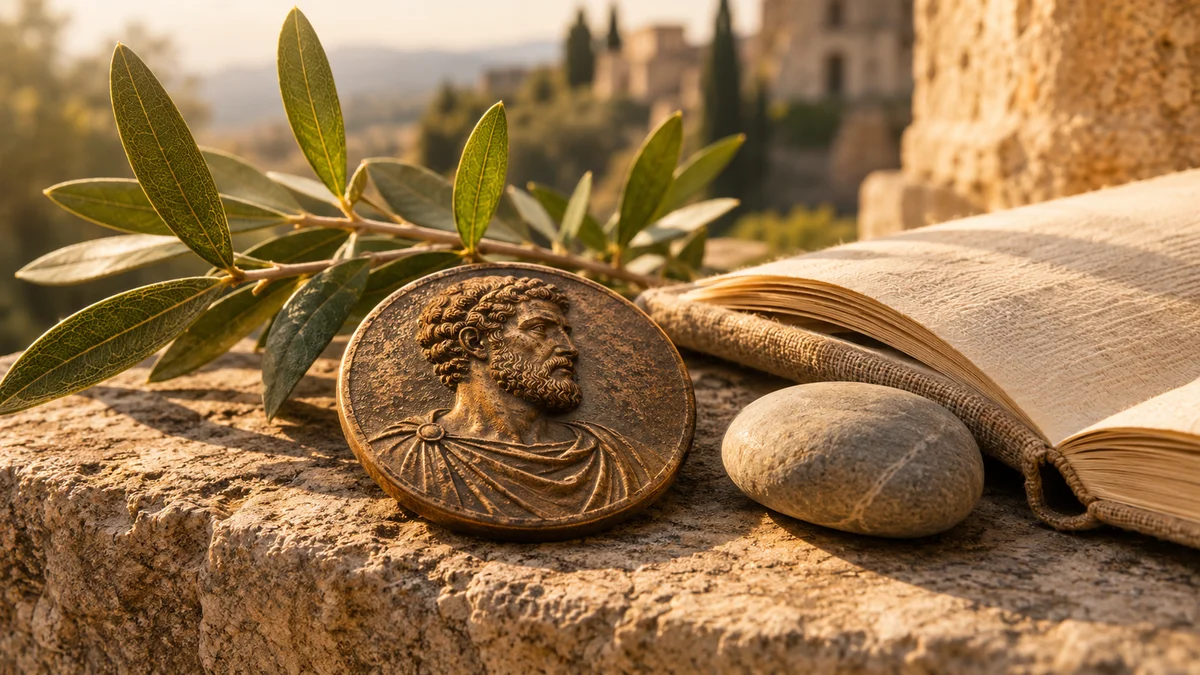
Epictetus divided the universe into two distinct realms with absolute clarity.
On one side are external matters: our physical bodies, our reputations, material wealth, and how others treat us.
On the other side are the things that belong entirely to us: our judgments, desires, aversions, and ethical choices.
Whenever you demand that the outside world behave according to your wishes, you surrender your serenity to fate.
When you retreat into your faculty of moral will, you step into an unbreachable fortress that no crisis can conquer.
| The Vulnerable External Life | The Citadel of Prohairesis |
|---|---|
| Foundation: Tied to wealth, public approval, and physical ease | Foundation: Anchored in conscious judgment and self-respect |
| Response to Crisis: Panic, blame, victimhood, and despair | Response to Crisis: Unhurried pause and dignified composure |
| Concept of Freedom: Forcing reality to bend to personal desires | Concept of Freedom: Choosing how to respond regardless of circumstance |
| Vulnerability: Fragile; can be shattered in a single moment | Vulnerability: Untouchable; immune to external tyranny and loss |
| Inner State: Chronic urgency, tension, and persistent dread | Inner State: Grounded stillness, spacious breathing, and peace |
“You can chain my leg, but not even Zeus himself can conquer my power of choice.”
✦ The 60-Second Somatic Anchor: The Inviolable Choice Breath
When crisis hits, the body instinctively enters a reactive freeze before the rational mind can intervene.
To enter the citadel of choice, you must first create somatic space between the event and your response.
✦ Notice the Constriction: Observe where sudden stress tightened your body—whether in your throat, solar plexus, or clenching fists.
✦ Release the Weight: Exhale completely through parted lips, dropping your shoulders and resting both feet flat upon the floor.
✦ Affirm Sovereign Dignity: Whisper silently: “Circumstances have unfolded, but my response remains mine alone to choose.”

Three Practices to Reclaim Your Citadel of Prohairesis
Reclaiming your faculty of choice is not abstract theory; it is an unhurried daily discipline.
When chaos swirls around you, these three contemplative practices will anchor your soul.
✦ Guarding the Gate of Assent: Your mind is constantly confronted with catastrophic first impressions (phantasiai).
When adversity strikes, your mind reflexively insists: “Everything is ruined.”
Pause at the threshold of thought and challenge that impression: “You are merely a passing perception, not the reality you claim to be.”
✦ Relinquishing the Hunger for Outcomes: Measure your worth by the integrity of your actions, never by the outcome.
You cannot force an economy to thrive, nor can you compel someone to treat you with kindness.
When you release the anxious need to govern results, your efforts become steady, graceful, and free of panic.
✦ The Unyielding Dignity of Stillness: When someone attacks your character or acts with cruelty, recognize their behavior as their own misfortune.
Their ignorance harms their moral character, not yours.
By responding with unhurried composure rather than retaliation, you embody the quiet sovereignty of a free human spirit.
Frequently Asked Questions
How does Epictetus’ Prohairesis differ from modern concepts of free will?
Modern free will usually concerns the power to alter external events or satisfy personal desires. Epictetus’ Prohairesis is the supreme capacity to govern your internal judgment and moral integrity, even when every external freedom has been stripped away.
Does retreating into the Citadel of Prohairesis mean becoming cold or indifferent?
Not at all. Epictetus emphasizes that Stoics must wholeheartedly fulfill their duties as devoted partners, loyal friends, and caring citizens. You love deeply, but you do not make your moral sanity hostage to other people’s flawed actions.
How can I apply Prohairesis during acute physical pain or panic?
During intense physical distress, your faculty of choice separates raw sensation from catastrophic narratives. Pain is a biological signal within the body, but suffering only arises when your mind agrees that your spirit has been broken.
✦ Mindful Living Disclaimer: This essay is offered for reflective exploration, emotional validation, and general educational purposes. It does not replace professional medical, psychiatric, or clinical care. If you are experiencing acute nervous system distress, severe burnout, or persistent physical symptoms, please seek guidance from a qualified healthcare professional.