


There is a familiar exhaustion that modern travelers know intimately. You return with hundreds of sharp photographs, yet your chest feels hollow and your muscles remain clenched. You boarded bullet trains, rushed between terminals, and checked off every landmark on your itinerary. Yet somewhere between rapid transit and frantic sightseeing, the essence of the journey […]
There is a familiar exhaustion that modern travelers know intimately.
You return with hundreds of sharp photographs, yet your chest feels hollow and your muscles remain clenched.
You boarded bullet trains, rushed between terminals, and checked off every landmark on your itinerary.
Yet somewhere between rapid transit and frantic sightseeing, the essence of the journey slipped away.
We cross continents at high speeds, but our awareness often lags hundreds of miles behind.
### ✦ Quick Answer: What Does the Nakasendo Trail Teach About Pacing? The ancient Nakasendo Trail through Japan’s Kiso Valley demonstrates that true somatic restoration requires trading high-speed transit for intentional pedestrian pacing. Walking step by step along mossy stone paths between preserved post towns calms the nervous system, proving that presence resides in the journey rather than the destination.
The Illusion of Speed and the Modern Itinerary Trap
For centuries, human beings moved across geography at the natural rhythm of their own legs.
Every mountain pass was climbed, and every change in weather was registered against the skin.
Modern tourism has largely severed this grounding connection with distance.
High-speed trains pierce mountain ranges, reducing ancient landscapes to a blurry reel.
When travel becomes merely a race between photo stops, it turns into another demanding shift of consumption.
We arrive home needing rest because we never allowed our body to decelerate.
The longing is not for more destinations, but for a deeper quality of presence where we walk.
“Do not seek to follow in the footsteps of the wise; seek what they sought. Every day is a journey, and the journey itself is home.”
— Matsuo Bashō, The Narrow Road to the Deep North
Walking the Kiso Valley: The Quiet Wisdom of the Edo Highway
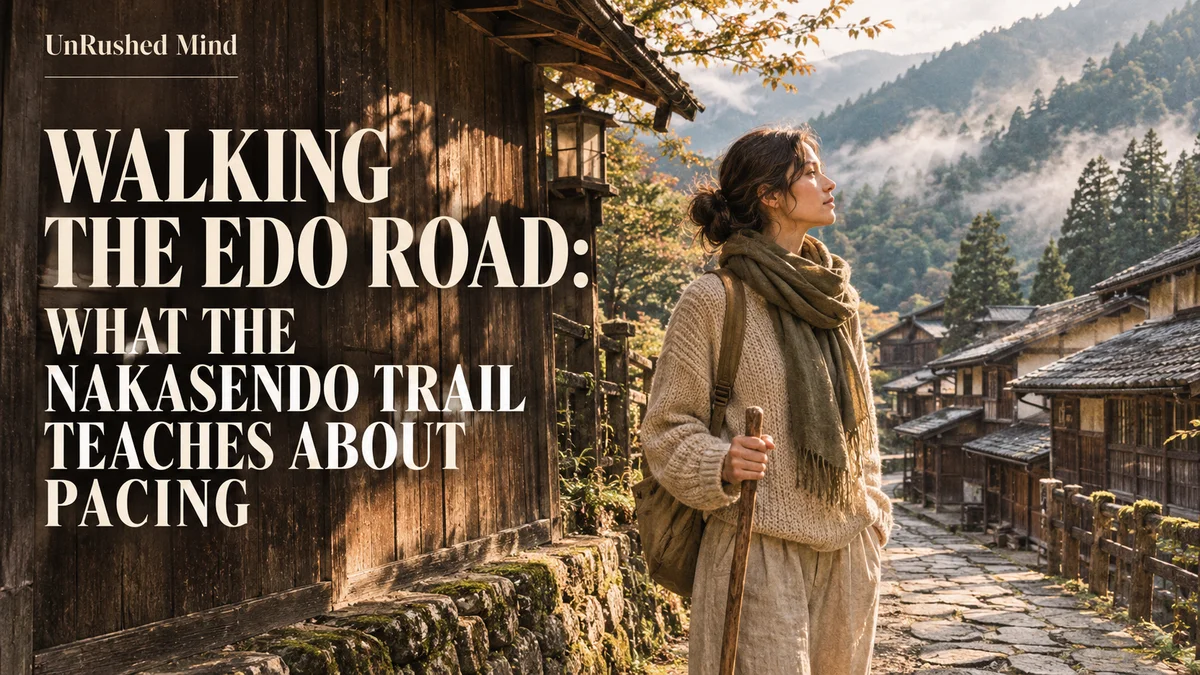
Tucked into central Japan lies the legendary Nakasendo Trail, an overland highway carved during the Edo period.
Connecting Kyoto with Edo (modern Tokyo), this route wound through steep valleys and forests of Hinoki cedar.
Travelers walked this path on foot, measuring progress in the number of post towns (shukuba) reached before nightfall.
Walking the preserved trail between Magome and Tsumago offers an immediate antidote to modern hurry sickness.
Stepping onto the weathered cobblestones (ishidatami), the artificial urgency of digital life begins to soften.
You hear the crunch of gravel underfoot and the murmur of mountain streams carving through green ravines.
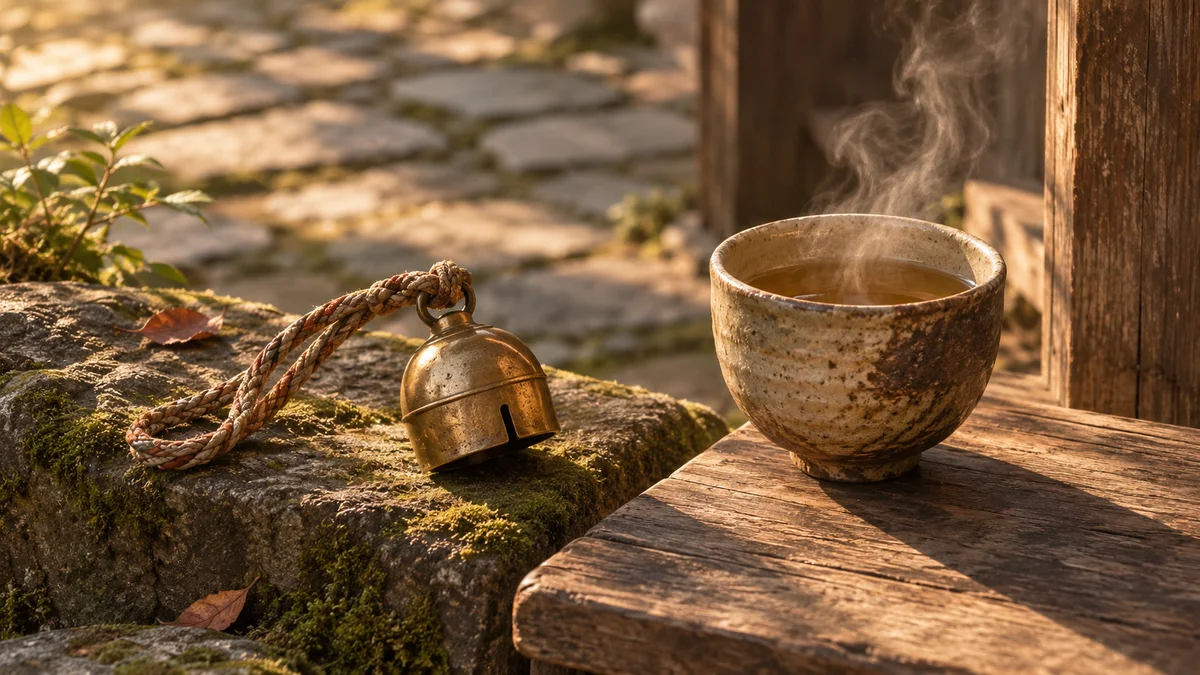
Along the path, brass bells hang from cedar posts, sending a clear chime into the mist.
There are no neon billboards and no notifications demanding a reply.
There is only the rise of the hill, the scent of damp moss, and the unhurried discipline of walking forward.
| Dimension of Travel | The Rushed Modern Itinerary | The Unrushed Edo Pacing on Nakasendo |
|---|---|---|
| Primary Metric | Number of tourist attractions checked off. | Depth of sensory immersion per mile. |
| Pacing & Transit | High-speed trains rushing past scenery. | Grounded, rhythmic foot travel on cobblestones. |
| Sensory State | Framing landscapes through glass screens. | Inhaling mountain cedar and listening to streams. |
| Nervous System | Overstimulated, anxious, and chronically hurried. | Deep parasympathetic grounding and calm clarity. |
The Medicine of Foot-Level Pacing
Neuroscientists call the healing power of slow travel soft fascination, where nature gently holds our attention without mental strain.
Navigating an uneven trail, your brain stops ruminating on deadlines and attends to the physical step.
Your gaze softens as daylight filters through towering cedar canopies.
The repetitive bilateral motion of walking stimulates calming neurotransmitters while regulating cortisol levels.
In the old post towns of Tsumago and Magome, traditional dark timber facades stand quiet and preserved.
At dusk, paper lanterns cast a warm amber glow over flagstones, inviting travelers to embrace the quiet grace of rest.
Ancient travelers walked slowly not from lack of technology, but at the true speed of contemplation.
✦ The 60-Second Somatic Anchor: The Earthbound Step & Hinoki Breath
When your mind begins racing with travel logistics or everyday worry, pause where you stand.
Bring your full attention to the soles of your feet, feeling the solid earth supporting your weight.
Take a slow inhalation through your nose for 4 counts, visualizing the crisp resin of mountain cedar.
Hold the breath gently for 2 counts, noticing the steady stability of your spine.
Exhale through softened lips for 6 counts, allowing your shoulders to drop and releasing jaw tension.
Silently whisper: “My worth is not measured by speed; I arrive with every single step.”
Three Gentle Micro-Practices for Modern Nomads
You do not need a ticket to Japan to weave the pacing of the Nakasendo into your daily life.
✦ Walk Without a Destination Metric: Walk forty minutes weekly without a fitness tracker. Let sensory curiosity guide your cadence rather than an algorithm.
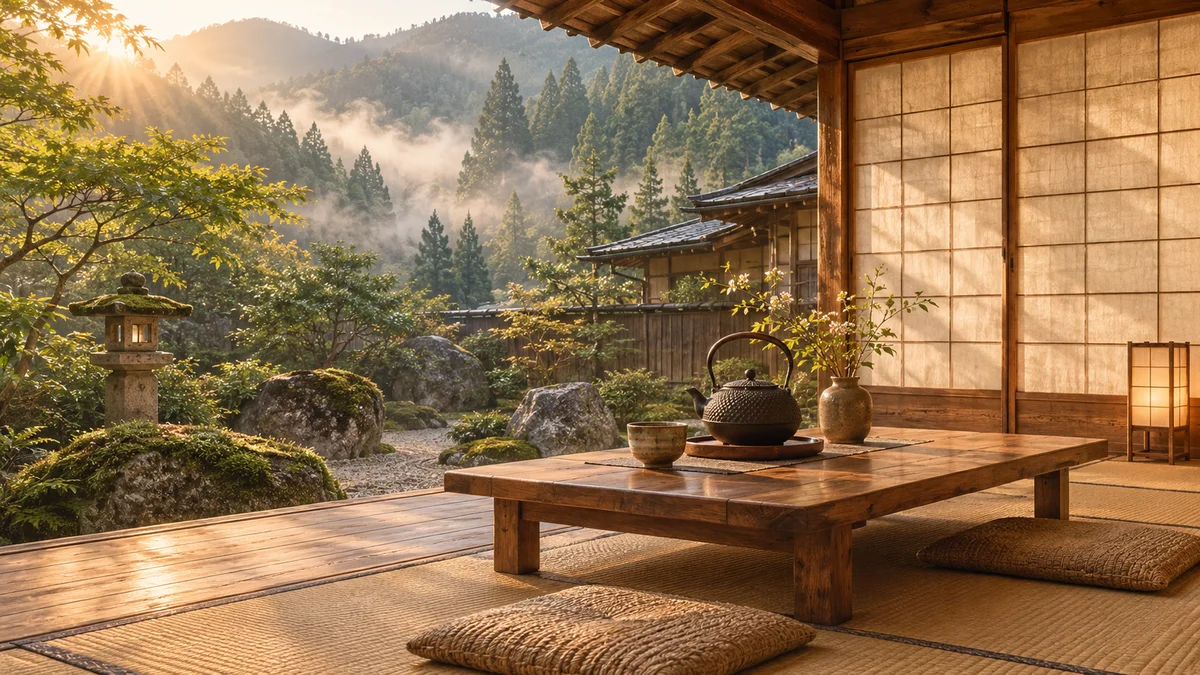
✦ Honor the Post Towns in Your Day: Create intentional pauses between tasks mirroring the Edo resting stations. Sit quietly for ten minutes with warm tea before evening rest.
✦ Tune to the Terrain Underfoot: When walking outdoors, leave earbuds behind and attend to ambient sound. Notice the dry crunch of leaves and the steady rhythm of your breath.
Frequently Asked Questions
Coming Home to Your Natural Stride
In a culture addicted to velocity, choosing to slow your stride is an act of quiet liberation.
The stones of the Nakasendo remind us that profound vistas cannot be grasped from a train window.
They are earned through the patient cadence of your breath and feet against the earth.
When you surrender the impulse to conquer geography, travel ceases to be an exhausting escape.
It becomes an unhurried return to yourself, one grounded and peaceful step at a time.
✦ Mindful Living Disclaimer: This essay is offered for reflective exploration, emotional validation, and general educational purposes. It does not replace professional medical, psychiatric, or clinical care. If you are experiencing acute nervous system distress, severe burnout, or persistent physical symptoms, please seek guidance from a qualified healthcare professional.