
A double-click of a button, a flash of facial recognition, and the transaction is complete. No bills change hands, no coins clink, and no deliberate signature is required. Within seconds, digital commerce whisks away your earnings before your conscious mind registers the trade. Days later, brown cardboard boxes arrive at your doorstep in relentless succession. […]
A double-click of a button, a flash of facial recognition, and the transaction is complete.
No bills change hands, no coins clink, and no deliberate signature is required.
Within seconds, digital commerce whisks away your earnings before your conscious mind registers the trade.
Days later, brown cardboard boxes arrive at your doorstep in relentless succession.
The momentary dopamine rush of opening packaging quickly fades into a quiet, hollow residue of remorse.
When you glance at your bank balance at month’s end, a sinking wave of bewilderment washes over your chest.
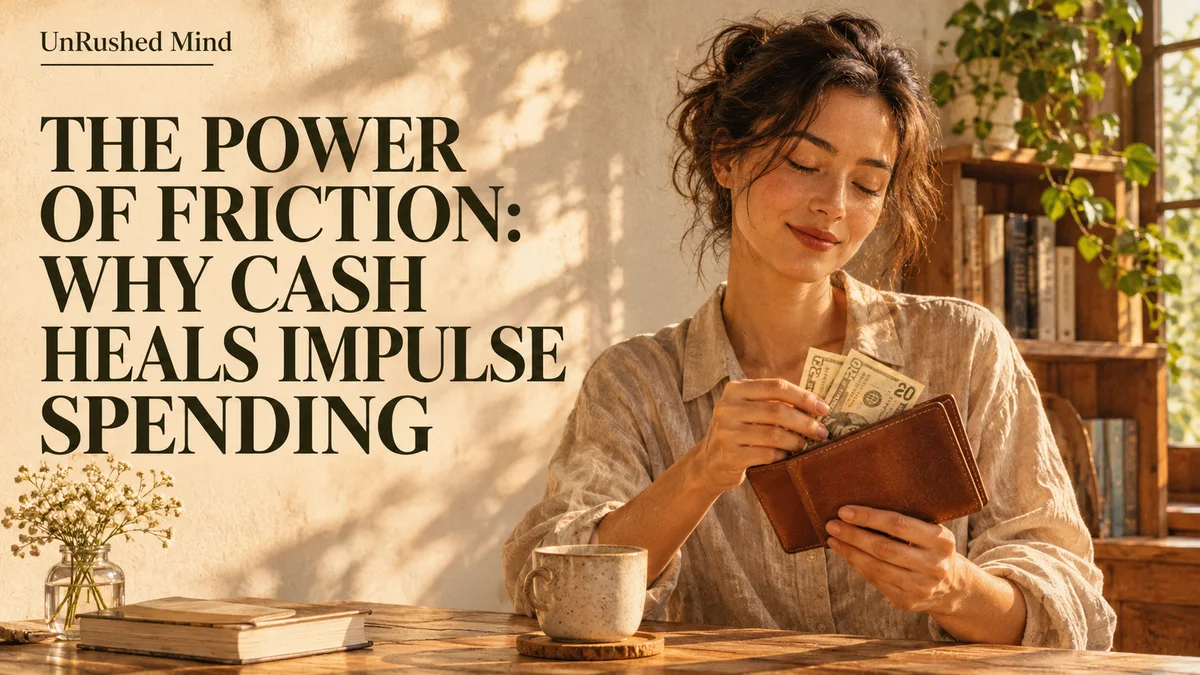
Friction-based spending is an intentional behavioral practice that introduces deliberate sensory, physical, or temporal pauses into purchasing decisions, reawakening the brain’s insular pain response to interrupt dopamine-driven impulse consumption and restore conscious financial peace.
The Frictionless Trap: How Convenience Mutes Somatic Resistance
Modern commerce has invested fortunes in one singular pursuit: the total elimination of purchase friction.
From one-click ordering to contactless cards, every barrier between impulse and acquisition has been erased.
Yet friction was never an annoying defect of human trade.
Friction was nature’s protective boundary, serving as an essential cognitive checkpoint that safeguarded your finite resources.
When you remove the physical friction of exchange, you dismantle your nervous system’s financial immune system.
Without resistance, consumption transforms from a deliberate value choice into an unconscious reflex.
The Neurobiology of the Tap: Silencing the Insular Cortex
To understand why seamless digital shopping drains your peace, we must examine neuroeconomics.
In fMRI studies at Carnegie Mellon University, neuroeconomist George Loewenstein discovered that spending money activates the insula—the brain’s physical pain center.
When subjects parted with physical paper currency, their insular cortex fired similarly to touching a hot stove.
This visceral phenomenon is known as the pain of paying, an evolutionary reflex designed to prevent resource depletion.
However, frictionless transactions administer local anesthesia to the insular cortex.
Because tapping a phone carries zero sensory weight, your brain registers no immediate loss.
Meanwhile, the nucleus accumbens surges with dopamine, rewarding the fantasy of ownership without registering financial cost.
Your ancient biology was simply never built to withstand invisible money.
Seamless checkout does not offer convenience to you; it removes the biological hesitation that protects your hard-earned labor from extraction.
Reclaiming the Tangible: The Calming Dignity of Paper Currency
The simplest antidote to dopamine-driven spending is the intentional restoration of physical resistance.
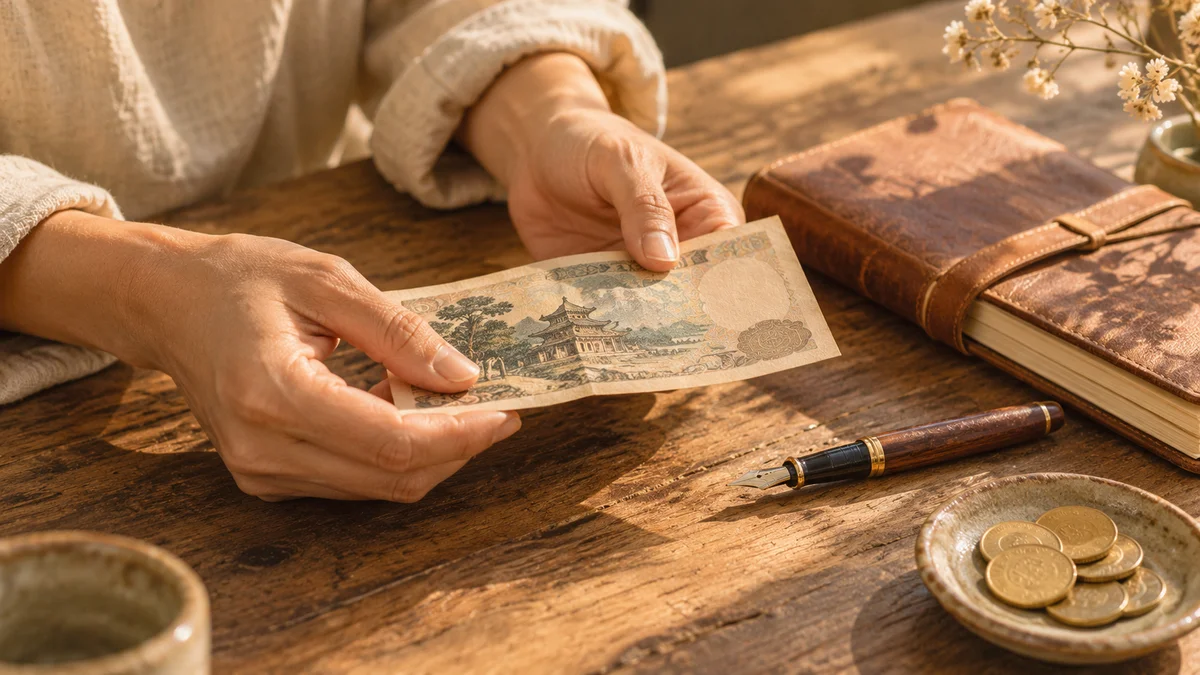
When you hold a crisp banknote between your fingers, your senses awaken to its textured cotton-linen weave.
Paper currency introduces biological weight, translating abstract mathematical figures into tangible units of your finite life energy.
Paying with cash forces an unhurried slowdown at the cash register.
You must pause, count the bills, hand them across the counter, and wait for your change.
In that quiet three-second interval, your prefrontal cortex evaluates true value, determining whether the item justifies trading your life’s precious hours.

Frictionless Impulse Spending vs. Friction-Based Slow Buying
Understanding the divergence between frictionless consumption and intentional acquisition clarifies why slow buying restores peace:
| Dimension | Frictionless Impulse Spending | Friction-Based Slow Buying |
|---|---|---|
| Neural Processing | Anesthetizes insular pain center, triggers runaway dopamine loops. | Engages prefrontal deliberation, respects natural pain-of-paying warnings. |
| Pacing & Friction | Instantaneous zero-click checkout, zero temporal pause. | Deliberate 72-hour delay, physical handling of paper currency. |
| Emotional Outcome | Brief gratification followed by lingering regret and financial anxiety. | Enduring fulfillment, deep alignment with intentional living. |
| Material Impact | Accumulation of disposable clutter and forgotten subscriptions. | Curated possession of durable, meaningful tools and goods. |
✦ The 60-Second Somatic Anchor: Holding the Paper Currency
Before making any non-essential purchase, take sixty seconds to ground your somatic body in physical reality:
- ✦ Hold the note: Place a physical paper bill flat across both open palms.
- ✦ Sense the texture: Notice the cool, fibrous weave and quiet weight of the paper beneath your fingertips.
- ✦ Connect with life energy: Inhale deeply for four seconds, acknowledging that this paper embodies hours of your devoted human focus.
- ✦ Exhale and ask: Release a long six-second breath and softly ask: “Does this object honor my finite life energy?”
- ✦ Dissolve the urge: Notice any frantic craving in your chest softening into stillness.
Three Mindful Friction Practices to Restore Financial Sovereignty
You do not need to abandon modern banking entirely to reclaim sovereignty; you simply need to build conscious dams along the river of convenience:
- ✦ Institute the 72-Hour Waiting Chamber: For any non-essential purchase over fifty dollars, wait three full days. If the desire evaporates, the urge was merely a transient dopamine spike.
- ✦ Unlink Auto-Fill Payment Credentials: Remove stored cards from browsers and apps. Forcing yourself to type sixteen digits manually reintroduces precious seconds of conscious deliberation.
- ✦ Adopt the Weekly Cash Envelope for Daily Pleasures: Withdraw physical cash each Monday for dining out, coffee, and spontaneous treats. When the envelope is empty, the celebration rests until next week.
🌿 The Gentle Takeaway
True wealth is not measured by the speed at which you acquire novel things, but by the stillness with which you enjoy what you already possess. Reintroducing friction is how you reclaim your peace in an unhurried life.
Frequently Asked Questions