


You glance across your room at an old leather boot with scuffed toes, or a brass fountain pen resting silently in a drawer. The immediate reflex of modern life whispers a familiar urge: toss them into the trash bin and purchase a shiny, frictionless replacement. We inhabit a culture obsessed with disposable novelty, where worn […]
You glance across your room at an old leather boot with scuffed toes, or a brass fountain pen resting silently in a drawer. The immediate reflex of modern life whispers a familiar urge: toss them into the trash bin and purchase a shiny, frictionless replacement.
We inhabit a culture obsessed with disposable novelty, where worn possessions are discarded before they can ever become familiar. Beneath this constant churn lies an unspoken exhaustion, a quiet hollowness born from living among objects that hold no soul and ask nothing of us.
The zen of repairing old possessions is the mindful practice of restoring worn, utilitarian objects—such as leather boots, fountain pens, and wooden tools—to extend their functional life. Rather than discarding imperfections, repair honors craftsmanship, cultivates tactile mindfulness, and dissolves consumer anxiety by transforming passive consumption into emotional durability and enduring self-reliance.
The Restorative Touch of Somatosensory Grounding
When you sit down to mend an object, a profound neurological shift occurs. The incessant mental loop of problem-solving and digital noise dissolves into the immediate world of tactile feedback.
Your fingers register the coarse grain of thirsty leather, the cold heft of a brass barrel, or the fragrant resistance of cedar shavings. In neuroscience, this tactile immersion acts as a potent anchor for somatosensory grounding, lowering autonomic arousal and silencing cognitive fatigue.
Repair demands patience, slowing your breathing to match the physical rhythm of your hands. Unlike the frantic rush of digital commerce, tangible restoration cannot be accelerated with a faster internet connection.
The Soul of Worn Materials: Three Vessels of Daily Grace
Certain everyday possessions possess an innate dignity that deepens as they weather the passage of time. They are crafted from authentic materials—leather, metal, and hardwood—that respond generously to patient human attention.
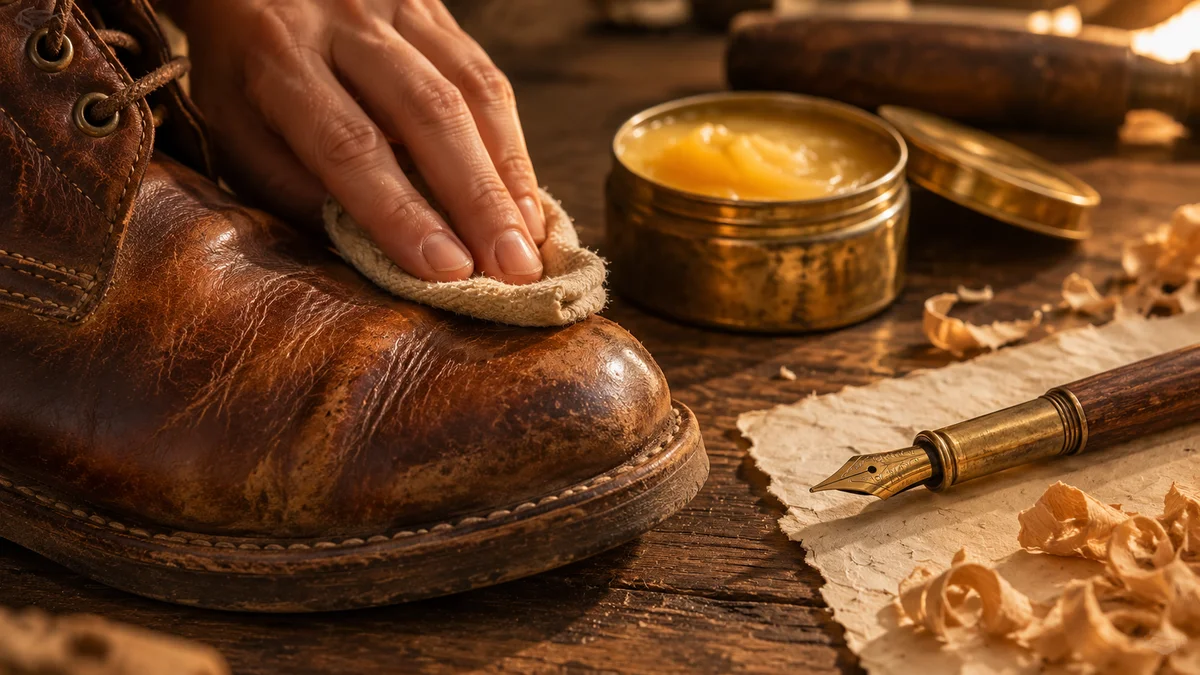
Consider a pair of Goodyear-welted leather boots after seasons of rugged walking. When you massage warmed beeswax into the creases, you are nourishing the loyal companion that carried your body through rain and stone.
Or observe an heirloom fountain pen whose nib has grown stubborn and parched. Disassembling the feed, soaking the tines in tepid water, and refilling the reservoir is a contemplative ritual that reawakens the joy of unhurried handwriting.
Then there is the ash-wood handle of an honest garden trowel or hand plane, weathered gray by sun and soil. Running fine-grit sandpaper along its contours and sealing the grain with pure linseed oil awakens the wood’s inner warmth, turning an ordinary implement into a faithful partner.
“A life lived among mended things is a quiet rebellion against the illusion that freshness equals worth.”
In Japanese aesthetic philosophy, this reverence is celebrated as wabi-sabi and the kindred art of kintsugi. The crack, the scuff, and the patina are not flaws to conceal, but visible testaments to shared survival and patient care.
Disposable Convenience vs. The Restorative Craft of Repair
| Dimension of Living | Frictionless Consumption | The Zen of Mending |
|---|---|---|
| Material Connection | Synthetic, fragile plastics designed for planned obsolescence and quick disposal. | Organic, repairable raw goods that mature and gain character through time. |
| Psychological State | Fleeting dopamine spikes followed by lingering emptiness and recurring financial anxiety. | Deep tactile grounding, sustained nervous system peace, and inner sovereignty. |
✦ The 60-Second Somatic Anchor: Grounding in the Texture of Time
Before you decide to abandon a damaged possession, take one minute to settle your nervous system through direct physical touch. This simple exercise breaks the reactive cycle of impulse purchasing.
- Pick up a worn, familiar object with both hands and close your eyes.
- Notice the weight in your palms and trace the natural texture—the soft indentations, the ridges, and the cool metallic edges.
- Inhale gently through your nose for four counts, acknowledging the miles, words, or labor this object has absorbed on your behalf.
- Exhale smoothly for six counts, releasing the artificial urge to replace what is merely tired, letting yourself feel anchored in sufficiency.
Three Gentle Micro-Actions for Mindful Mending
Cultivating an unhurried relationship with your belongings does not require master craftsmanship. You only need a willingness to slow down and offer your possessions the dignity of attentive stewardship.
- ✦ Condition Before You Discard: Assemble a humble mending kit containing raw beeswax, fine sandpaper, and a cotton cloth, turning maintenance into an unhurried meditation.
- ✦ Embrace the Thirty-Day Repair Window: When an essential tool falters, grant yourself thirty days to research its anatomy and attempt a repair before ordering a replacement.
- ✦ Celebrate the Visible Seam: Allow patched stitching, darkened leather, and polished brass to remain visible, treating these marks as badges of living an intentional life.

The Sovereign Wealth of Wanting Nothing New
True financial freedom is rarely about the ability to purchase whatever you desire at a moment’s notice. It resides in the serene conviction that what you currently hold is entirely enough.
When you care for what you already own, the relentless clamor of modern consumerism loses its grip upon your peace of mind. Your space becomes populated by loyal companions that mirror your own capacity to heal, adapt, and embody quiet resilience.
Frequently Asked Questions