




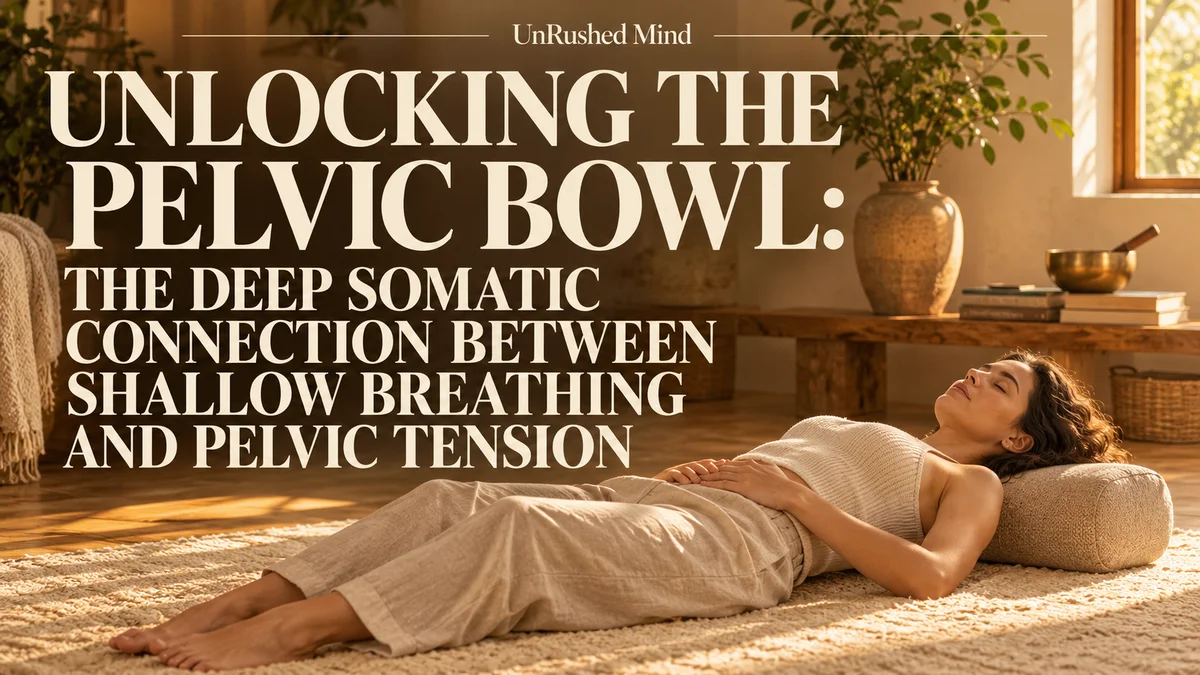
Take a quiet moment right now, without shifting your posture, and notice what the lower half of your body is doing. You will likely discover that your glutes are gripped, your tailbone is subtly tucked, and your pelvic floor is pulled upward like an invisible shield against the world. ✦ Quick Answer: The respiratory diaphragm […]
Take a quiet moment right now, without shifting your posture, and notice what the lower half of your body is doing.
You will likely discover that your glutes are gripped, your tailbone is subtly tucked, and your pelvic floor is pulled upward like an invisible shield against the world.
✦ Quick Answer: The respiratory diaphragm and psoas connect directly through fascial arcuate ligaments. When chronic stress restricts breathing to the upper chest, the pelvic floor contracts defensively, locking survival alarm and the psoas release pelvic breath trauma deep into the pelvic bowl.
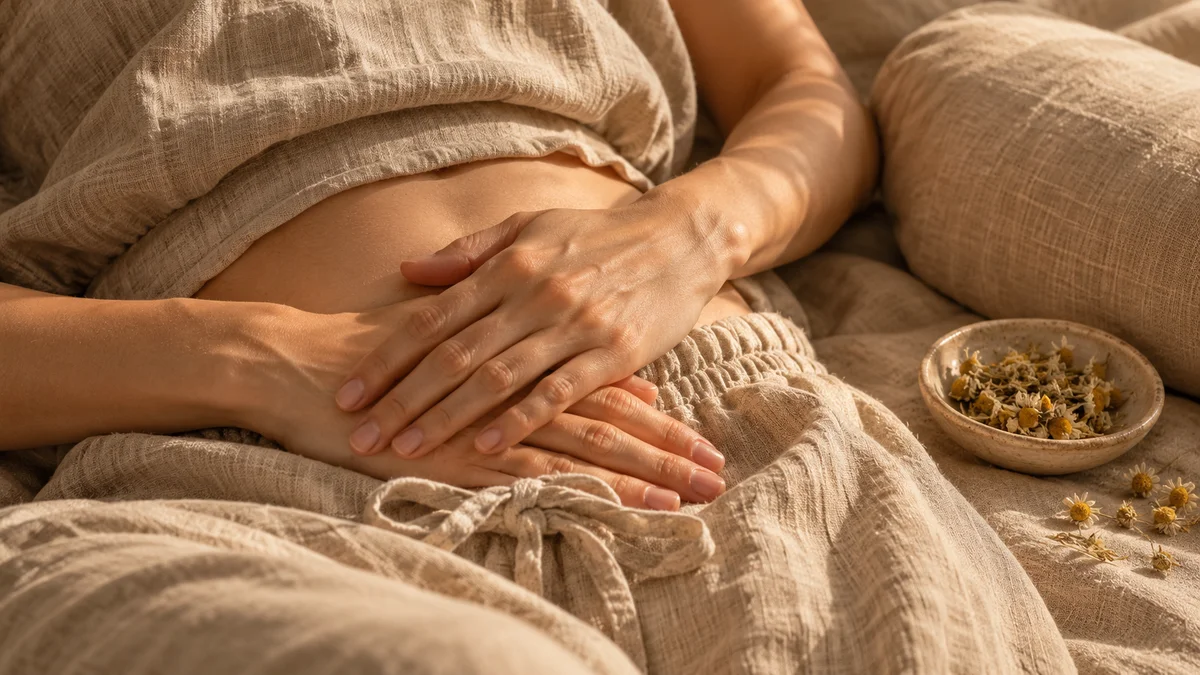
The Armor Beneath the Navel
Most modern adults spend their waking hours living entirely from the collarbones upward.
We inhabit our intellects, react to glowing notification screens, and habitually pull in our bellies to maintain a flat silhouette.
When you hold your stomach in, your breath has nowhere to travel except upward into the shallow apex of the lungs.
This chronic thoracic breathing triggers a silent chain reaction throughout your core musculature.
Deprived of the rhythmic downward wave of the breath, the base of your torso tightens into somatic pelvic armor.
You do not clench your pelvic bowl because you are broken; your nervous system simply perceives continuous threat and braces for impact.
The Dual Pistons of the Breath
To understand why tight hips resist conventional stretching, you must look at anatomy through the lens of fascial continuity.
Your torso houses two primary horizontal diaphragms: the respiratory diaphragm beneath your ribs, and the pelvic diaphragm spanning the base of your pelvis.
In a state of biological ease, these two muscular structures act as synchronized pistons.
When you inhale through your nose, your respiratory diaphragm moves downward, gently compressing the abdominal organs.
In response, the pelvic floor expands downward and outward like a soft bowl to receive that descent.
When you exhale, both diaphragms float upward together in effortless, elastic recoil.
When chronic stress arrests your breath in the upper chest, this rhythmic diaphragmatic-pelvic piston freezes.
The pelvic floor remains locked in chronic, exhausting contraction, unable to yield or soften.
| Dimension | Chronic Pelvic Bracing (Thoracic Alert) | Somatic Pelvic Release (Diaphragmatic Coherence) |
|---|---|---|
| Breathing Vector | Shallow vertical movement confined strictly to the collarbones and throat. | Expansive 360-degree descent radiating into the pelvic floor and lower ribs. |
| Psoas State | Chronically shortened, hypertonic; pulls the lumbar spine forward into tension. | Hydrated, supple, and dynamic; resting naturally along the spine. |
| Pelvic Floor Tone | Constant defensive hyper-contraction; loss of tissue sensation and chronic fatigue. | Responsive elasticity; rhythmic expansion on inhalation and soft release on exhale. |
| Nervous System | Persistent sympathetic survival alarm; elevated resting cortisol. | Ventral vagal ease; restorative parasympathetic safety and deep tissue regeneration. |
The Psoas: Where Survival Reflexes Anchor
Weaving directly between your breathing diaphragm and your pelvis is the psoas major, renowned in somatic biology as the muscle of instinct.
The upper fibers of the psoas blend seamlessly into the crura and the medial arcuate ligaments of your breathing diaphragm.
Whenever your brain registers fear, hurry, or digital overload, the psoas contracts first in the mammalian flee-or-freeze reflex.
It pulls your knees toward your chest and curls your pelvis forward to shield your vulnerable belly.
When you sit for hours while absorbing stressful deadlines, this defensive contraction becomes a chronic holding pattern.
This creates an enduring neuromuscular loop: shallow breath tightens the psoas, and a shortened psoas forbids the breath from dropping into the pelvis.
Over time, this dynamic solidifies into lower back strain, locked hip joints, and unexplained physical exhaustion.
✦ The 60-Second Somatic Anchor: Constructive Rest and Pelvic Bowl Breath
You cannot force a guarded muscle to relax through willpower; you must offer the body an environment of absolute mechanical support.
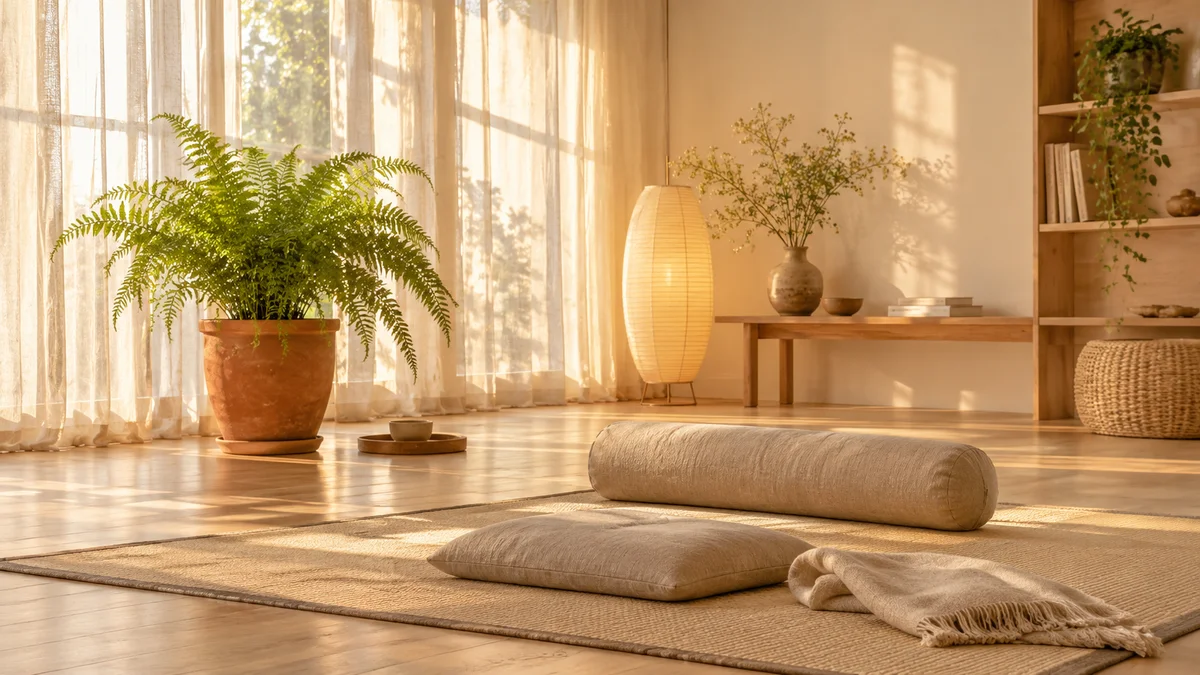
The most restorative protocol for releasing the psoas and softening the pelvic floor is the Constructive Rest Position (CRP).
Lie flat on your back on a firm rug, bend your knees at ninety degrees, and place your feet flat on the floor hip-width apart.
Rest your hands gently over your lower abdomen, just above the pubic bone, with elbows supported by the floor.
Inhale slowly through your nose for a count of four, imagining your breath sinking past your navel like warm liquid filling an earthen bowl.
Feel the pelvic bones widen subtly and the pelvic floor yield downward against gravity.
Open your mouth slightly and exhale for a count of six with an unhurried, audible sigh.
Allow your sacrum to feel heavy, as if the floor were rising up to carry the weight you have borne all day.
Practice this rhythm for five to ten breath cycles, resting in the quiet release of tension in your deep hips.
Three Daily Practices to Unburden the Pelvic Bowl
Beyond floor rest, you can weave three gentle somatic cues into your daily routine:
1. Soften the Sit Bones
Twice each day while seated, consciously release the subconscious clenching in your buttocks, feeling your sit bones spread wide and settle downward.
2. The Jaw and Pelvis Harmonic Link
Whenever you clench your jaw or press your teeth together in frustration, your pelvic floor contracts in direct mechanical sympathy.
Part your back teeth, let your lips touch softly, and exhale with a gentle hum to invite instant softening in the pelvic floor.
3. The Twilight Gravity Surrender
Before dinner, spend ten minutes resting in Constructive Rest without a screen or book.
Allowing your thigh bones to rest effortlessly in their hip sockets permits the psoas to hydrate and release without force.
“The body does not hoard tension out of stubbornness. It holds on because no one told the nervous system that the struggle was over and it was finally safe to let down its guard.”
Resting in the Root
True vitality requires a grounded foundation.
When you allow your breath to drop beneath your navel, you reclaim a forgotten half of your physical existence.
Your hips are meant to be a basin of grounded stillness, not a fortress of survival defense.
Give yourself permission today to uncross your legs, soften the base of your spine, and let your breath anchor deeply into the earth.
✦ Mindful Living Disclaimer: This essay is offered for reflective exploration, emotional validation, and general educational purposes. It does not replace professional medical, psychiatric, or clinical care. If you are experiencing acute nervous system distress, severe burnout, or persistent physical symptoms, please seek guidance from a qualified healthcare professional.