
Have you ever felt as though your inner weather is entirely at the mercy of the outside world? A sharp remark or an unexpected news alert can send your thoughts spiraling into unrest. In our connected era, the mind often feels like a fragile leaf caught in a gale. We react instantly to every breeze, […]
Have you ever felt as though your inner weather is entirely at the mercy of the outside world?
A sharp remark or an unexpected news alert can send your thoughts spiraling into unrest.
In our connected era, the mind often feels like a fragile leaf caught in a gale. We react instantly to every breeze, mistaking vigilance for control.
Yet thousands of years ago, ancient thinkers uncovered an enduring refuge.
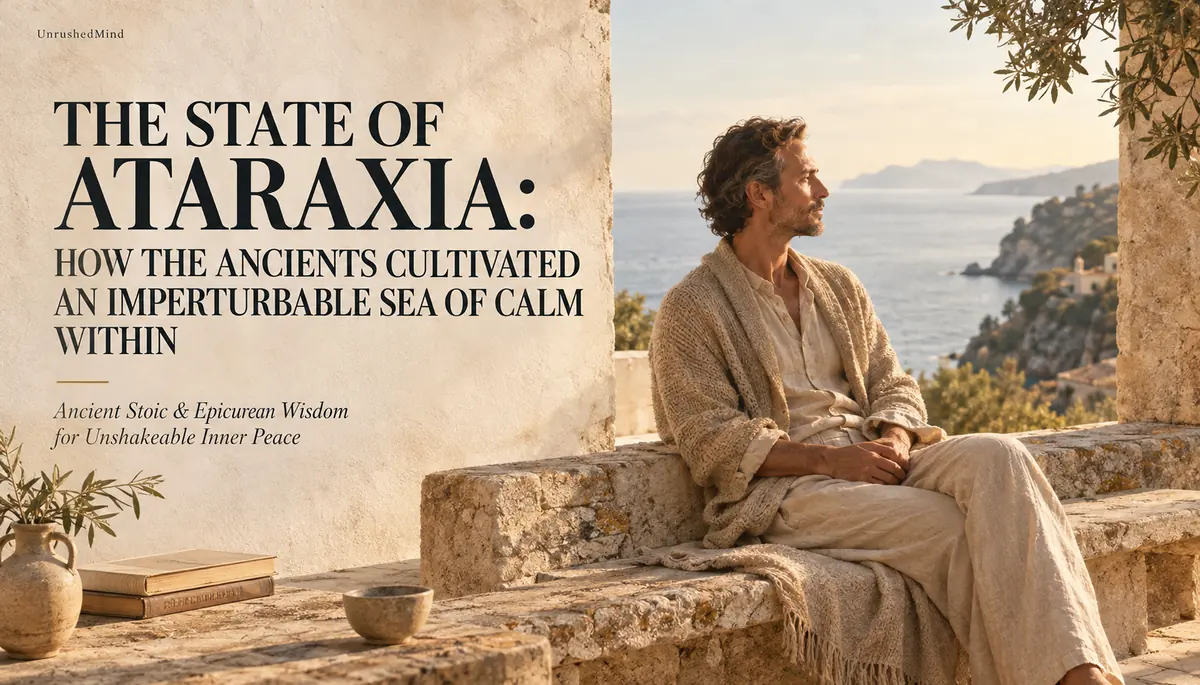
They called this inner sanctuary Ataraxia—the art of keeping an unshakeable, tranquil sea within, no matter how fiercely the storm rages outside.
What Is Ataraxia? The Untroubled Soul in Greek Philosophy
In ancient Greek philosophy, ataraxia describes an untroubled and lucid state of mind characterized by ongoing freedom from emotional turmoil and anxiety. Rather than suppressing human feelings, it represents a profound psychological equilibrium where external events no longer hold the power to shatter your inner composure.
Both the Stoics and the Epicureans regarded ataraxia as the highest aim of practical wisdom.
To the Epicureans, peace was found in the absence of mental agitation rather than sensory indulgence.
Meanwhile, the Stoics saw ataraxia as the natural fruit of virtue and reason. When you understand what is truly yours to govern, the world loses its ability to terrify you.
Tranquility was never conceived as a luxury reserved for hermits on distant mountaintops.
It was practiced in bustling market squares and crowded homes as an essential shield for the human spirit.
The Architecture of Inner Stillness: How We Lose Our Peace
We rarely lose our peace because of events themselves; we lose it because of the rapid judgments we attach to them.
When an obstacle arises, the reactive mind instantly creates a narrative of grievance or panic.
Epictetus famously reminded us that people are disturbed not by things, but by the views they take of things.
The ancient path to ataraxia begins with pausing this automatic machinery of interpretation.
By inserting a conscious breath between the event and your response, you create an inviolable space of choice.
Consider the fundamental difference between living in habitual reaction and abiding in contemplative stillness:
| Dimension of Experience | The Reactive Mind | The Imperturbable Mind of Ataraxia |
|---|---|---|
| Perception of Events | Viewed as personal threats requiring instant emotional expenditure. | Recognized as neutral phenomena belonging to the flow of nature. |
| Locus of Control | Attempting to force other people and circumstances to behave favorably. | Anchoring firmly in one’s own intentions, boundaries, and compassionate response. |
| Inner Emotional State | Swinging violently between fleeting gratification and deep despair. | A grounded, lucid sea of calm that remains unshaken beneath surface ripples. |
When you withdraw your demand that reality must cater to your preferences, a quiet lightness enters your chest.
You begin to recognize that peace is not the absence of external storms, but the absence of internal rebellion.
Three Gentle Rituals to Cultivate Daily Ataraxia
Restoring inner tranquility does not require renouncing modern life or retreating into seclusion.
It asks only for a few deliberate micro-moments throughout your day to reset your nervous system.
1. The Citadel of the First Breath
Whenever sudden tension arrives, resist the reflex to respond within the first few seconds.
Take two slow, unhurried breaths and softly remind yourself: “This is an external event; it is not my identity.”
This brief pause prevents your nervous system from treating psychological noise as a physical emergency.
2. Cataloging the Sphere of Choice
When anxiety creeps in, write two short columns on paper: what belongs to you, and what does not.
Your effort, kindness, and focus belong entirely to you; other people’s opinions and tomorrow’s uncertainties do not.
Offer your devotion to what you govern, and gently release your grip on the rest.
3. The Evening Cleansing of Judgments
Before sleep, spend three quiet minutes without any glowing screens or notifications.
Review the day not as a stern prosecutor, but as an understanding friend observing a journey.
Forgive the moments where you were hasty, acknowledge where you remained steady, and let the day dissolve.
Mindful Philosophy & Quiet Contemplation Note
A Note on Emotional Depth: Cultivating ataraxia is not an exercise in cold emotional detachment or cynical indifference. True tranquility softens the heart rather than hardening it. When your mind is liberated from chronic panic, you possess far greater empathy and presence for those around you.
Frequently Asked Questions About Cultivating Inner Peace
Does practicing ataraxia mean suppressing grief or joy?
Not at all. The ancients never advocated becoming unfeeling stone statues. Ataraxia allows you to feel emotions deeply without letting them drag you into prolonged misery.
What is the core difference between Stoic and Epicurean tranquility?
The Stoics cultivated tranquility through moral virtue and accepting fate (Amor Fati). The Epicureans sought tranquility by simplifying desires and enjoying gentle friendships.
How can I stay tranquil when my daily schedule is chaotic?
Begin with micro-sanctuaries of attention. Dedicate five minutes each morning to quiet tea without screens, or take three conscious breaths before checking messages. Stillness is built one intentional pause at a time.
The ancient philosophers left us a quiet truth: the world will never be completely orderly or silent.
There will always be noise, unexpected changes, and demanding tides.
Yet tucked beneath the surface of your awareness lies an untouched sanctuary waiting to be remembered.
Breathe deeply, loosen your grip on what you cannot govern, and step softly back into your own imperturbable sea of calm.