


You have likely experienced the silent crash that follows a hard-won victory. You cross the finish line, sign the long-awaited contract, or land on a sunlit holiday island, expecting an enduring state of euphoria. Yet within forty-eight hours, the ecstatic rush evaporates like morning mist. You are left standing in the quiet of an ordinary […]
You have likely experienced the silent crash that follows a hard-won victory.
You cross the finish line, sign the long-awaited contract, or land on a sunlit holiday island, expecting an enduring state of euphoria.
Yet within forty-eight hours, the ecstatic rush evaporates like morning mist.
You are left standing in the quiet of an ordinary afternoon, wondering why the hollow inside your chest remains unhealed.
Modern culture has conditioned us to treat happiness as a biochemical spike.
We chase it through retail therapy, viral validation, and relentless consumption, treating joy as an emergency mood we must continually manufacture.
When happiness is reduced to a transient emotion, you become an anxious hostage to fluctuating circumstances.
Every quiet moment feels like a personal failure, and every dip in enthusiasm triggers a frantic search for the next emotional stimulant.
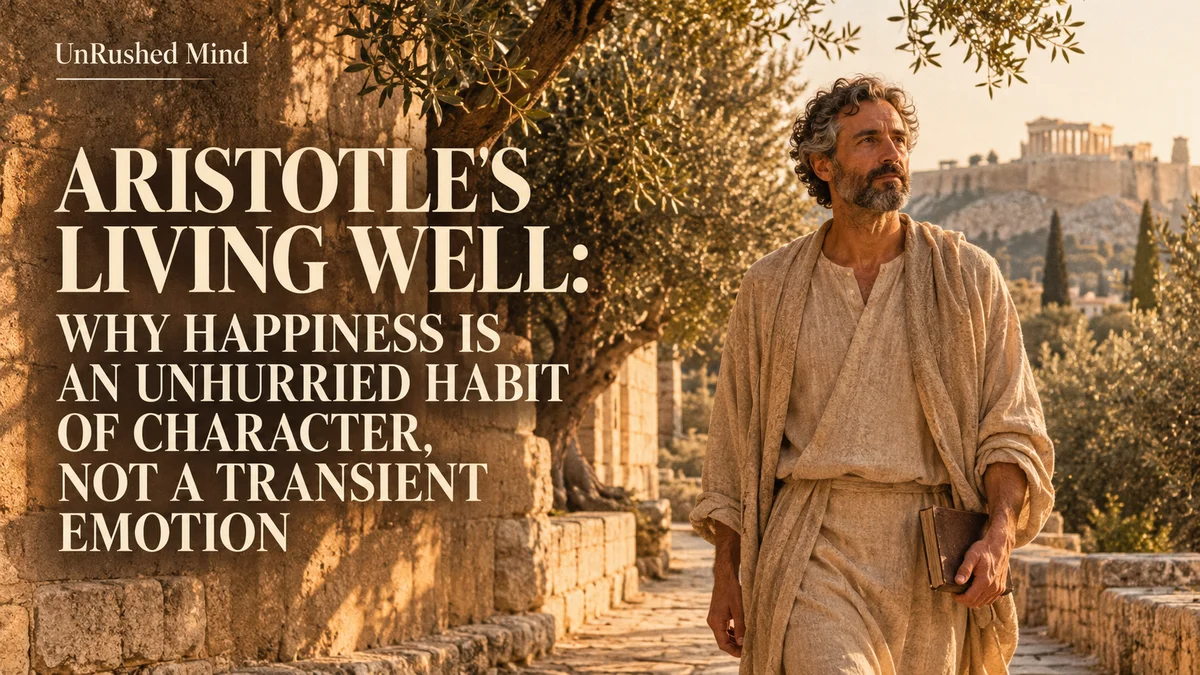
Aristotle defined living well (Eudaimonia) not as a fleeting emotional high, but as the lifelong flourishing of human potential through virtue (Arete). It is an unhurried habit of character cultivated through deliberate, balanced choices rather than external circumstance.
The Ancient Greek Distinction: Hedonia Versus Eudaimonia
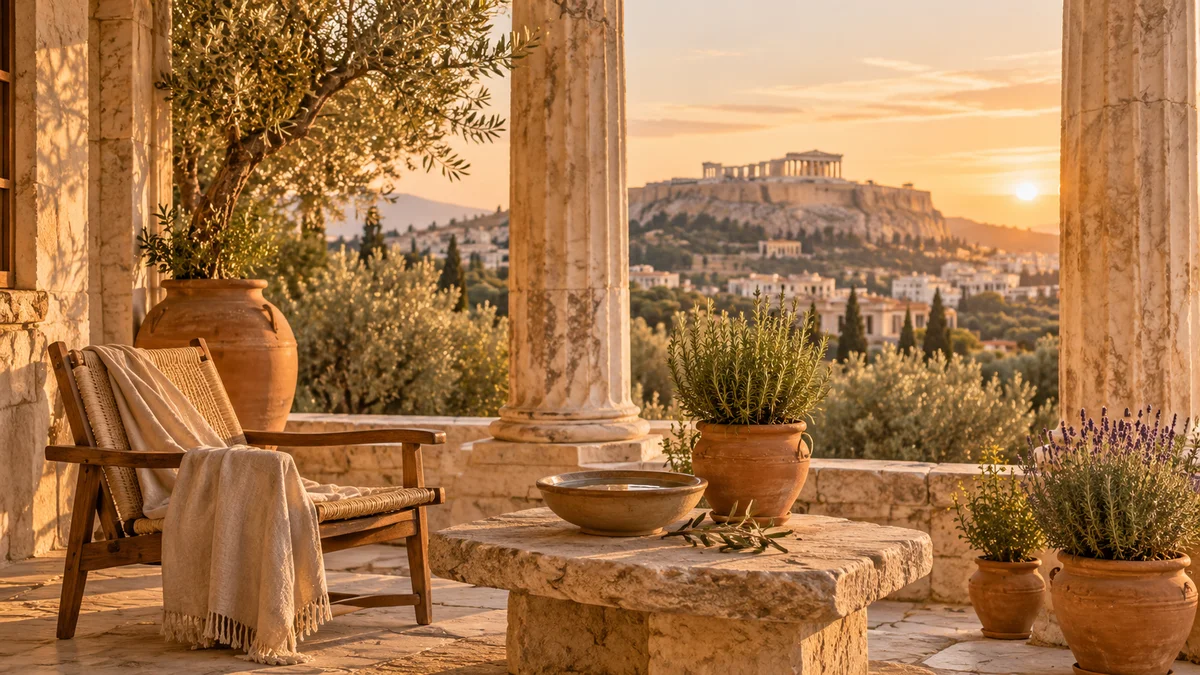
Over twenty-three centuries ago, Aristotle walked the covered colonnades of the Lyceum in Athens, teaching his students to distinguish between two radically different forms of well-being.
The first he called Hedonia, which represents sensory pleasure and immediate emotional gratification.
Hedonia is not inherently evil, but it is intrinsically fragile and short-lived.
Like a spark of dry tinder, hedonia burns brilliantly for an instant and instantly collapses into cold gray ash.
If you build your life solely upon hedonic pursuit, you trap your mind in the exhausting gears of the hedonic treadmill.
The second form of happiness Aristotle named Eudaimonia, often translated as human flourishing or the art of living well.
Eudaimonia is not a passive mood that happens to you from the outside.
It is an active, unhurried condition of the soul that arises when you express your highest human faculties with noble purpose.
In his Nicomachean Ethics, Aristotle noted that one swallow does not make a spring, nor does one sunny day.
In the same way, a single afternoon of pleasure cannot make an entire human life blessed or whole.

The Anatomy of Flourishing: Fleeting Euphoria Versus Cultivated Character
To step off the carousel of emotional volatility, we must clearly discern how ancient Greek wisdom separates sensory highs from true character flourishing.
| Dimension | Fleeting Euphoria (Hedonia) | Cultivated Flourishing (Eudaimonia) |
|---|---|---|
| Core Nature | A transient biochemical surge in mood | An enduring baseline of character integrity |
| Primary Anchor | External events, applause, and novel stimuli | Internal choices, quiet discipline, and virtue |
| Duration | Hours to days before sensory numbness sets in | A lifelong foundation that outlasts circumstance |
| Adversity Response | Crumbles into resentment when life turns difficult | Deepens through trials as virtue is tested |
| Daily Practice | Chasing stimulation and escaping quietness | Living in alignment with the unhurried mean |
When you anchor your sense of worth in Eudaimonia, you no longer panic when a quiet sadness visits your doorstep.
You recognize that sadness is merely weather, while your character remains the unshakable mountain beneath.
The Doctrine of the Golden Mean: The Restorative Art of Balance
Aristotle observed that human character rots at two opposite extremes: excess and deficiency.
A life lived in constant rush and aggressive striving is an excess of ambition, culminating in physical collapse.
Conversely, a life of chronic passivity and avoidance is a deficiency of courage, culminating in quiet despair.
True virtue (Arete) always resides in the golden mean—the balanced, unhurried center between emotional extremes.
Courage is the graceful midpoint between paralyzing cowardice and blind recklessness.
Generosity is the dignified midpoint between tightfisted greed and reckless self-depletion.
An intentional life is the patient midpoint between frantic burnout and numb resignation.
“We are what we repeatedly do. Excellence, then, is not an isolated act, but an unhurried habit of character cultivated through patient daily repetition.”
Living well is therefore not an elusive treasure you stumble upon at the end of a long journey.
It is the architectural rhythm of how you speak, how you work, and how you treat your own heart today.
Three Daily Practices to Cultivate Aristotle’s Eudaimonia
Flourishing does not require retreating to an isolated mountaintop.
It is forged quietly within the mundane textures of modern existence through unhurried daily rituals.
✦ The Golden Mean Pause: When faced with emotional turbulence or demanding deadlines, pause for three breaths before reacting. Ask yourself where the balanced midpoint lies between impulsive aggression and fearful retreat.
✦ The Evening Character Review: Before closing your eyes, set aside the spreadsheet of your external achievements. Review how honorably, patiently, and gently you showed up for others and for yourself throughout the day.
✦ The Sovereign Craft Practice: Devote thirty uninterrupted minutes each day to an activity that engages your highest faculties without demanding applause. Whether writing, caring for living plants, or mastering a difficult craft, practice excellence purely for the sake of the good.
True happiness is not a frantic sprint toward emotional ecstasy.
It is the gentle, lifelong art of becoming an honorable human being at an unhurried pace.
Frequently Asked Questions