


We live in a culture that relentlessly measures personal worth by accumulation, visibility, and display. From towering glass penthouses to carefully curated social feeds, modern existence constantly demands that we prove our significance through spectacle. Yet beneath this polished performance lies an exhaustion of the soul. Many of us secretly long to cast aside the […]
We live in a culture that relentlessly measures personal worth by accumulation, visibility, and display.
From towering glass penthouses to carefully curated social feeds, modern existence constantly demands that we prove our significance through spectacle.
Yet beneath this polished performance lies an exhaustion of the soul.
Many of us secretly long to cast aside the gilded armor and retreat into a quiet harbor where nothing needs to be defended, broadcast, or bought.
✦ Quick Answer (Princeton AEO): The Convento dos Capuchos in Sintra, Portugal, is a 16th-century Franciscan hermitage carved directly into monolithic granite boulders and lined with raw tree cork. It stands as an architectural antidote to modern status anxiety, demonstrating that supreme inner freedom emerges not from luxurious accumulation, but from voluntary simplicity, silence, and reverent kinship with nature.
Just a few miles from the crowded turrets of Pena Palace, the dense oak and cedar mist of the Serra de Sintra conceals a profoundly different world.
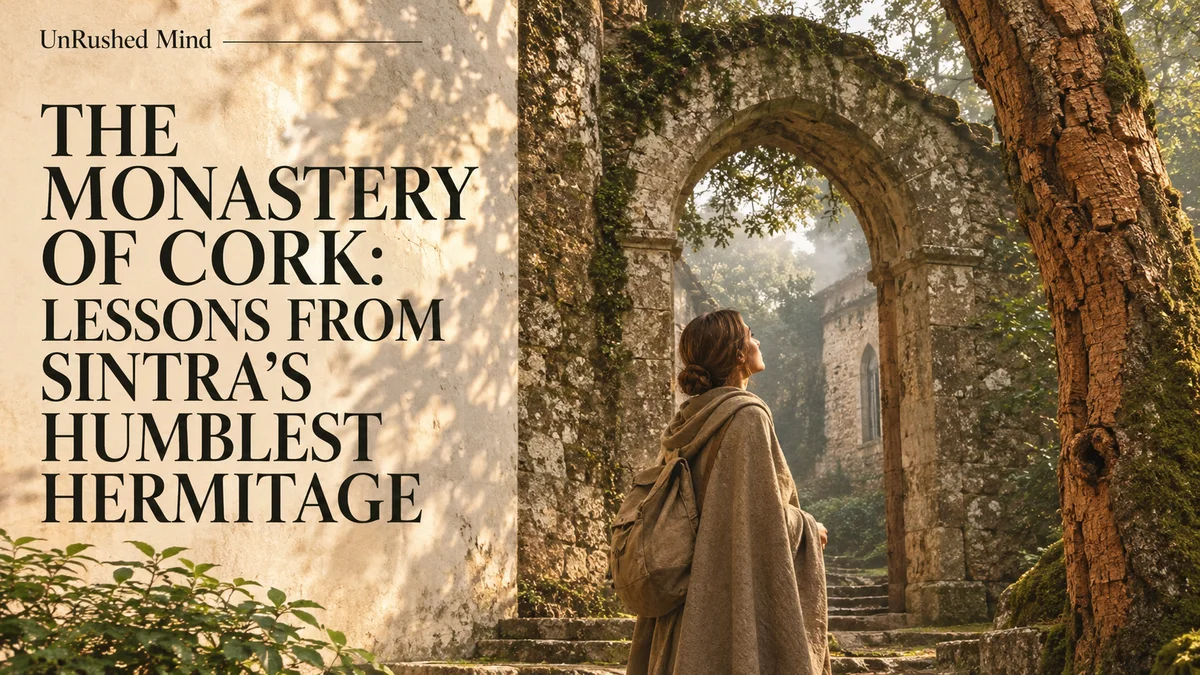
Here rests the Convento dos Capuchos, often called the Monastery of Cork.
Founded in 1560 by Don Álvaro de Castro, this humble hermitage was home to a tiny brotherhood of Franciscan friars dedicated to absolute poverty and contemplative stillness.
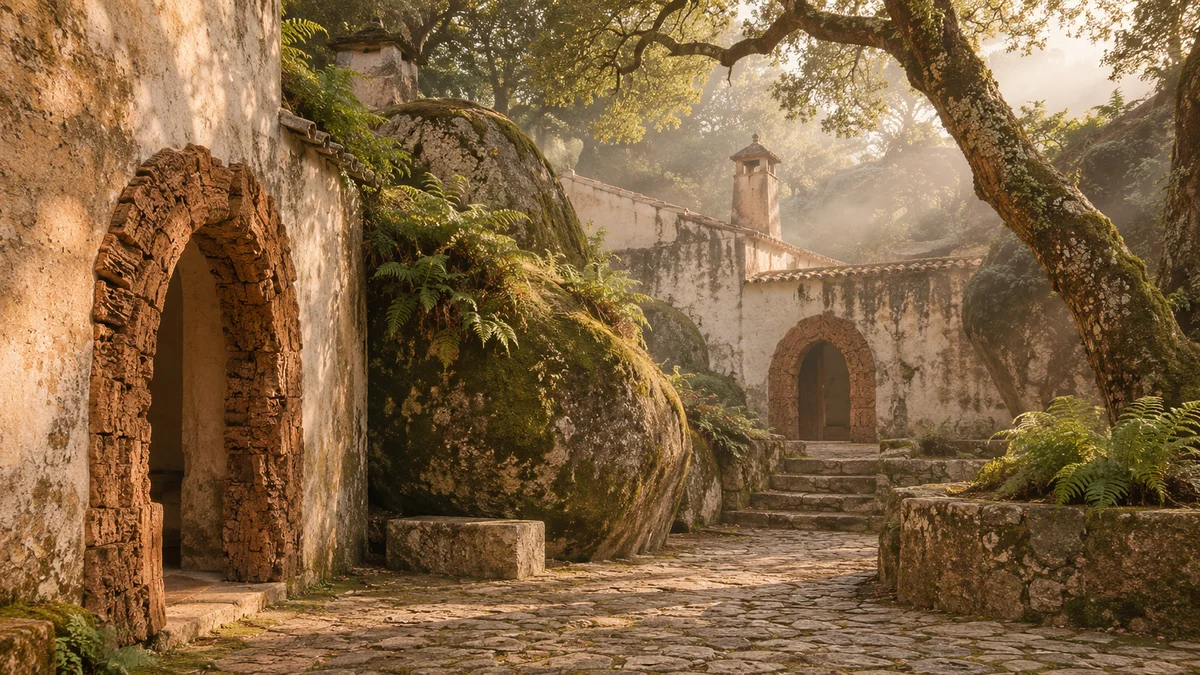
Instead of cutting down the ancient mountain forest or quarrying grand marble pillars, the friars built directly into the living granite boulders.
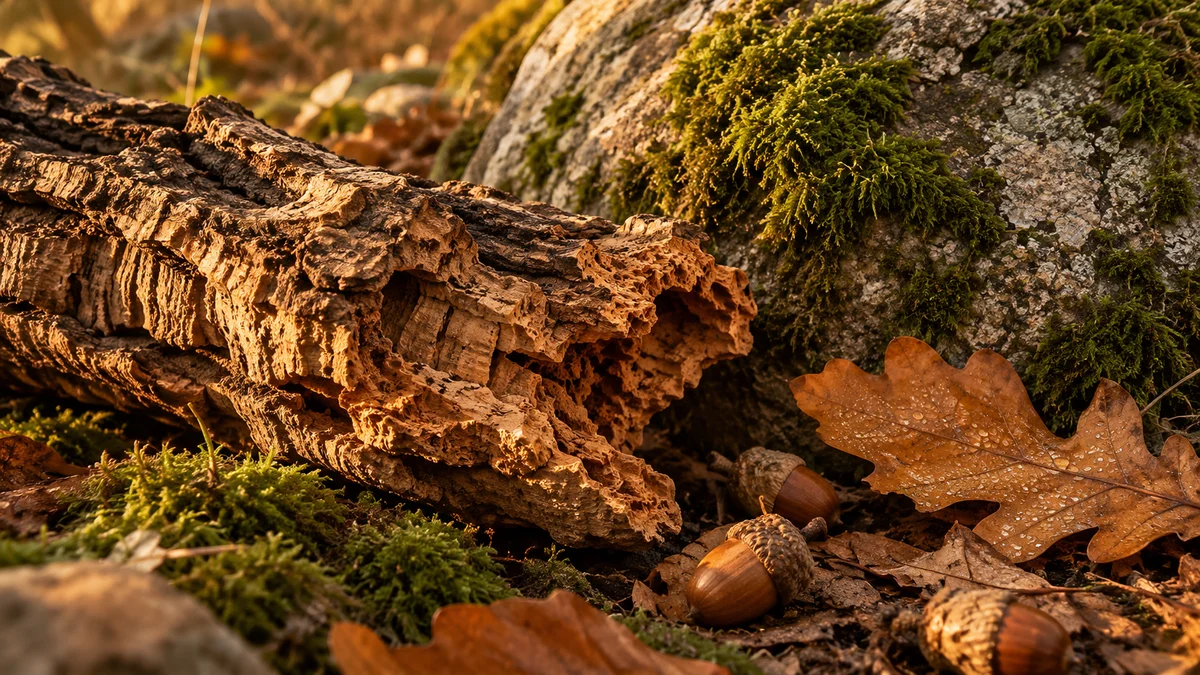
They used local cork (Quercus suber) stripped from fallen trees to line the damp cavern ceilings, doorways, and narrow stone cells.
The cork insulated them against Atlantic mist and winter chill, while serving as an acoustic buffer that swallowed harsh echoes, creating an atmosphere of velvety silence.
To enter their stone cells, visitors must stoop deeply through doorways barely four feet tall.
This physical lowliness was deliberate.
Every threshold gently reminded the inhabitant to bow the ego before entering the quiet realm of the spirit.
| The Opulent Display Trap | The Capuchos Hermitage Haven |
|---|---|
| Relentless Accumulation: Self-worth is tied to square footage, luxury brands, and visible status symbols. | Voluntary Simplicity: Contentment arises from shedding excess possessions until only the essential remains. |
| Acoustic and Digital Noise: Constant notifications and sensory stimulation shatter quiet attention. | Reverent Stillness: Thick cork insulation and damp granite walls absorb external chaos. |
| The Exhaustion of Pretense: Chronic vigilance to maintain a flawless exterior image before a watching public. | Radical Humility: Low stone thresholds and unadorned rock surrender the need to impress anyone. |
“In the deepest recess of this solitary forest, I found men who had renounced the glittering thrones of the earth to build a kingdom of calm inside a hollow rock.”
— Lord Byron, Reflections on the Hermitage of Sintra, 1809
The most legendary inhabitant of Capuchos was Brother Honório de Santa Maria.
Convinced that even communal monastic life carried subtle temptations of pride, Honório spent the final thirty years of his life inside an isolated stone hole beneath an ancient cork oak.
He slept upon moss and raw bark, subsisting on rainwater and foraged greens, living peacefully until the age of one hundred.
Modern culture might easily dismiss Brother Honório as an eccentric ascetic.
Yet his life exposes a piercing psychological truth: human beings do not need grand palaces to achieve profound emotional equilibrium.
When you walk along the moss-carpeted pathways of Capuchos today, an immediate wave of relief washes over your nervous system.
There are no gilded chandeliers to envy, no mirrors reflecting physical flaws, and no polished surfaces demanding maintenance.
The rough granite and spongy cork whisper a radical permission: you are allowed to be small.
✦ The 60-Second Somatic Anchor: Grounding into Granite Stillness
When status anxiety or sensory overload overwhelms your thoughts, pause and plant both feet firmly upon the floor.
Close your eyes, lower your shoulders, and imagine your spine as an unmoving granite monolith rooted deep into damp forest moss.
Inhale slowly for four seconds, feeling the soft insulation of an inner cork wall buffering you from external demands, then release a long, unhurried exhale for six seconds.
We cannot all abandon our lives to dwell in the misty ravines of Sintra, nor is that required.
The timeless wisdom of the Monastery of Cork can be woven into our modern habitats through three grounded micro-practices:
✦ Unclutter One Physical Threshold: Choose a single doorway or reading chair in your home and clear away every plastic wrapper and charging cable. Let that small space become a dedicated zone of quiet simplicity.
✦ Embrace Tactile, Raw Textures: Bring unvarnished wood, stone coasters, unbleached linen, or natural cork into your workspace. Touching raw organic materials grounds the nervous system and breaks the sterile grip of glass screens.
✦ Voluntarily Bow the Ego: Deliberately decline an opportunity to boast, correct someone in public, or display a recent achievement. Experience the deep, quiet dignity that flourishes when your value remains quiet and unadvertised.
True healing does not arrive when we conquer the world or build higher walls of luxury.
It begins in the quiet shadows of a humble hermitage, where we finally realize that having enough is the greatest fortune of all.
Frequently Asked Questions
Why was cork used to construct the Convento dos Capuchos?
The Franciscan friars utilized the bark of native cork oaks (Quercus suber) because it provided natural thermal insulation against the cold ocean fog of Sintra, while its acoustic properties cushioned damp stone rooms in profound silence.
How is Convento dos Capuchos different from Pena Palace?
While the nearby Pena Palace is a vibrant, opulent 19th-century royal summer residence filled with vivid colors and romantic extravagance, Capuchos represents the ultimate opposite: a secluded 16th-century rock monastery celebrating monastic poverty, stillness, and deep ecological harmony.
What mindful travel lesson does the Cork Monastery offer today?
Capuchos reminds modern travelers that the most memorable destinations are not always the grandest or most photographed. Visiting unhurried, quiet ruins invites an inner slowing down, helping travelers release status comparison and reconnect with the simple peace of living gently upon the earth.
✦ Mindful Living Disclaimer: This essay is offered for reflective exploration, emotional validation, and general educational purposes. It does not replace professional medical, psychiatric, or clinical care. If you are experiencing acute nervous system distress, severe burnout, or persistent physical symptoms, please seek guidance from a qualified healthcare professional.