




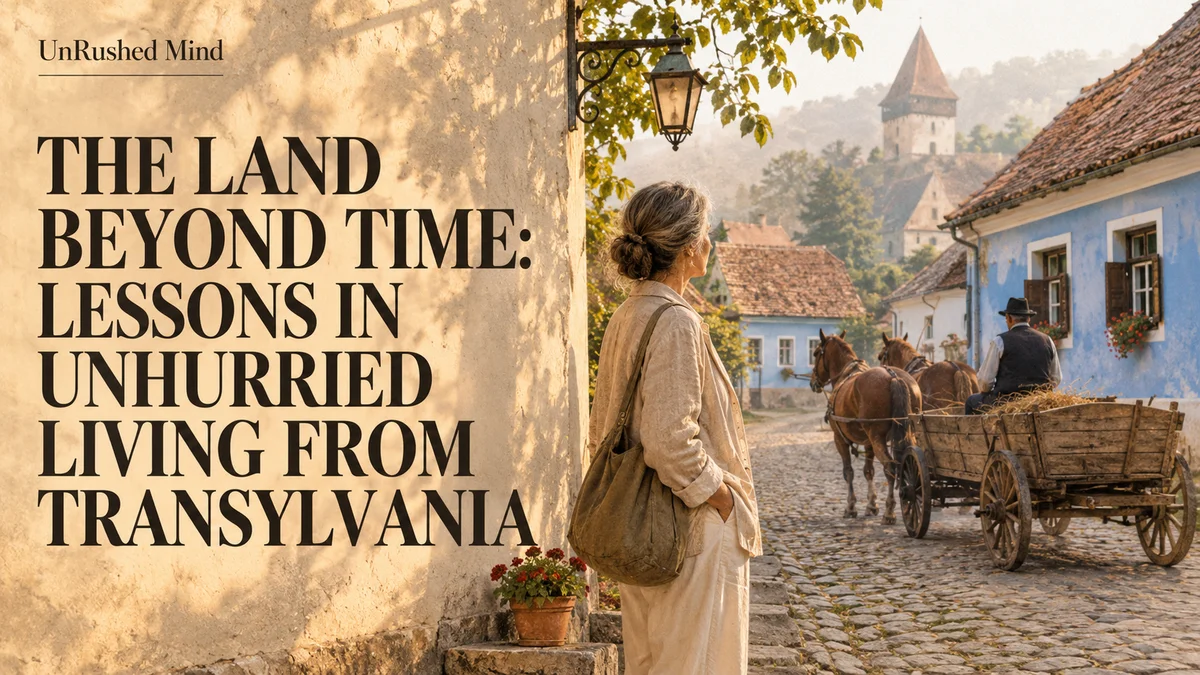
The morning in Viscri does not arrive with the shrill chime of an alarm. Instead, morning announces itself through the hollow clatter of wooden horse carts rolling over cobblestones. You wake to the smell of woodsmoke and damp limestone, noticing that the persistent tension behind your temples has vanished. For anyone exhausted by the relentless […]
The morning in Viscri does not arrive with the shrill chime of an alarm.
Instead, morning announces itself through the hollow clatter of wooden horse carts rolling over cobblestones.
You wake to the smell of woodsmoke and damp limestone, noticing that the persistent tension behind your temples has vanished.
For anyone exhausted by the relentless acceleration of urban life, stepping into this Romanian valley feels like crossing an invisible boundary into an unhurried epoch.
Here, time is not chopped into billable minutes or frantic notifications.
Time breathes with the rhythm of hand-shaped clay, seasonal harvests, and pastures grazed as they were in the fourteenth century.
The fortified Saxon villages of Transylvania preserve an unhurried cadence where medieval architectural resilience, hand-fired ceramic craft, and seasonal community traditions protect human dignity against modern mechanical rush, offering a profound living blueprint for restorative presence and unhurried living.
The Illusion of Hurry: What Modern Walls Forgot
Modern urban centers are engineered for velocity, yet that very speed leaves the human spirit starved for permanence.
We live surrounded by materials designed to expire quickly, trading lasting substance for instant gratification.
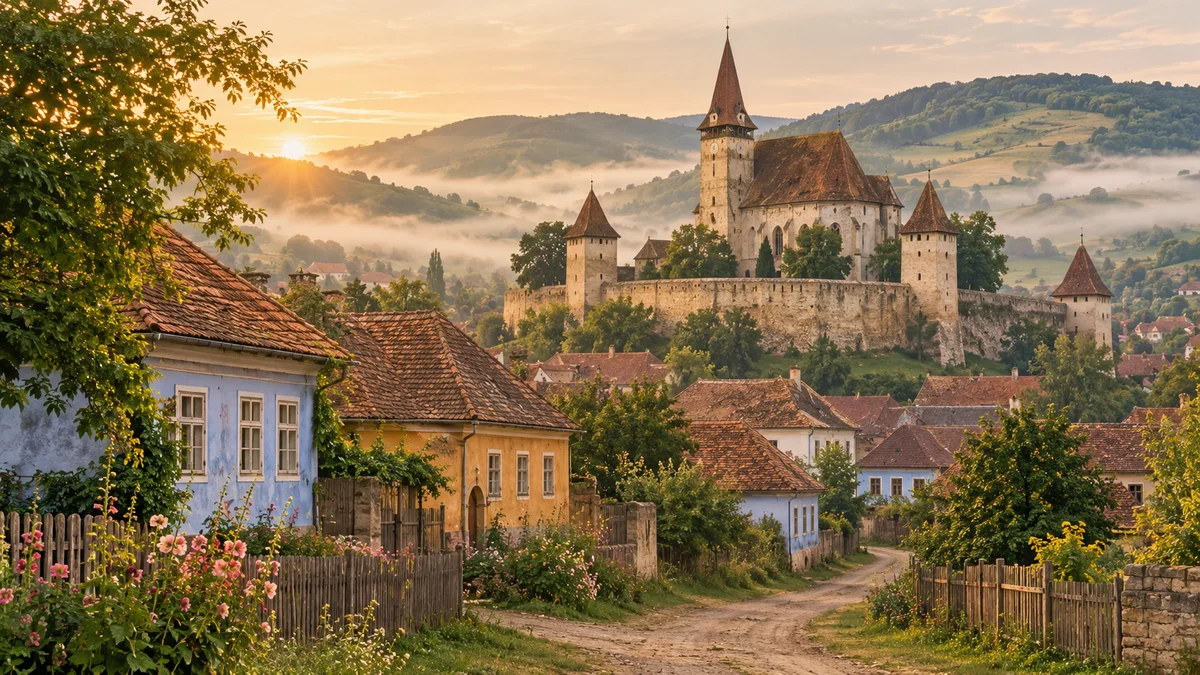
In the southern hills of Transylvania, the Saxon settlers who arrived in the twelfth century chose a fundamentally different architecture.
They erected fortified churches—thick defensive ramparts surrounding gothic spires—designed to shield entire communities during sieges.
Yet inside those massive stone walls, the community stored not weapons of war, but their communal grain, cured meats, and ancestral seeds.
The architecture was born of fortified patience, proving that security is built through collective preservation rather than hurried defense.
Every home along the unpaved streets of Viscri and Biertan reflects this deep groundedness.
The houses feature arched wooden carriage gates, thick mortar walls painted in pale Saxon blue, and terra-cotta roofs shaped by hand.
When you touch these ancient stones, your nervous system registers something our glass-and-steel cities cannot supply: unshakeable endurance.
The Dignity of the Hand-Fired Tile
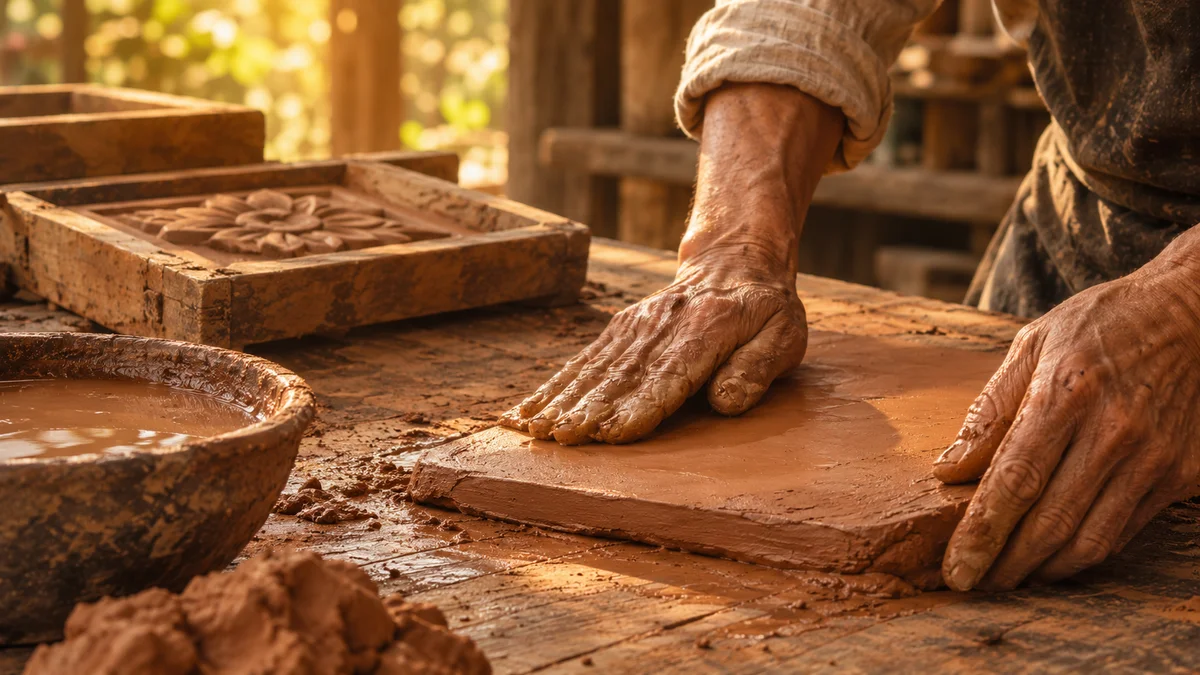
In a world driven by automated mass production, the village artisans still knead clay with their bare feet.
They press each roof tile into wooden molds, smoothing the surface with damp fingers before firing them in traditional wood-burning kilns.
True craftsmanship is not merely an economic task; it is an active meditation where human attention refuses to be hurried by the mechanical clock.
Each tile carries the faint thumbprint or leaf-vein impression of its maker.
These tiles last more than three hundred years because they are made with patience rather than shortcuts.
When a craftsperson spends an entire day shaping fifty tiles, they are not falling behind.
They are investing their biological presence into objects that will shelter future generations.
This devotion to slow craft exposes our modern obsession with multitasking as an anxious illusion.
When you do one thing with complete presence, time ceases to be an adversary and becomes a generous harbor.
✦ The 60-Second Somatic Anchor: Grounding in Unhurried Clay
When the pace of modern demands begins to fracture your inner calm, borrow this simple somatic ritual inspired by the Saxon craftsmen:
- ✦ Touch Raw Texture: Place your palms flat against an unpolished natural surface—rough linen, unvarnished oak, or a cool ceramic mug.
- ✦ Drop the Jaw and Gaze: Soften your jawline and allow your eyes to rest on a single horizon point without scanning or searching.
- ✦ Breathe the Hearth Rhythm: Inhale gently through the nose for four seconds, feeling the cool breath descend into your belly, and exhale through open lips for six seconds, releasing the pressure to produce.
The Contrast of Pacing: Machine Rush vs. Saxon Cadence
To understand why the fortified villages feel so deeply restorative, examine how they order daily life:
| Dimension | The Modern Machine Rush | The Transylvanian Saxon Cadence |
|---|---|---|
| Concept of Time | Fragmented into minutes, alarms, and deadlines | Organic flow governed by sunlight, seasonal chores, and community |
| Material Culture | Disposable goods made for short-term consumption | Hand-hewn oak and kiln-fired tiles built to endure for centuries |
| Social Connection | Hyper-connected digital feeds paired with physical isolation | Communal courtyard benches and shared evening bread |
| Daily Rhythm | Multitasking urgency and constant nervous arousal | Single-task immersion and restorative evening stillness |
Three Unhurried Practices to Weave Into Modern Living
You do not need to move to a medieval hamlet to reclaim your sovereignty over time.
You can cultivate the quiet dignity of the Saxon valley wherever your life unfolds:
- ✦ Honor the Unscheduled Stroll: Dedicate twenty minutes each evening to walking without destinations, headphones, or fitness trackers, letting your feet find their own cadence.
- ✦ Care for One Enduring Object: Choose a single handmade possession—a cast iron skillet, a fountain pen, or a wooden table—and clean it with meditative reverence.
- ✦ Create an Unplugged Twilight: Extinguish artificial ceiling bulbs forty minutes before bed and rely on soft 2700K lamplight or beeswax candles to invite natural biological quiet.
🌿 The Gentle Takeaway
Slowness is not an archaic relic of the past; it is the ultimate form of modern rebellion that preserves your peace against the noise of a rushing world.
Deepening Your Mindful Journey